There are many stories surrounding the American Christmas tree. One little known, at least on a national level, is a tradition that started shortly after the Civil War.
The demand for Christmas trees grew significantly in American after the Civil War, due largely to the influence of German immigrants who brought their traditions with them to America. That influence and the economic improvement that followed the Civil War resulted in the increasing popularity of “O Tannenbaum” in American homes. According to history.com:
By the end of the war in 1865, Christmas had gone from a relatively unimportant holiday to the opposite—a day rooted in an idealized vision of home. The way Americans observed the holiday changed too, setting the stage for the more modern Christmas holiday we know today.
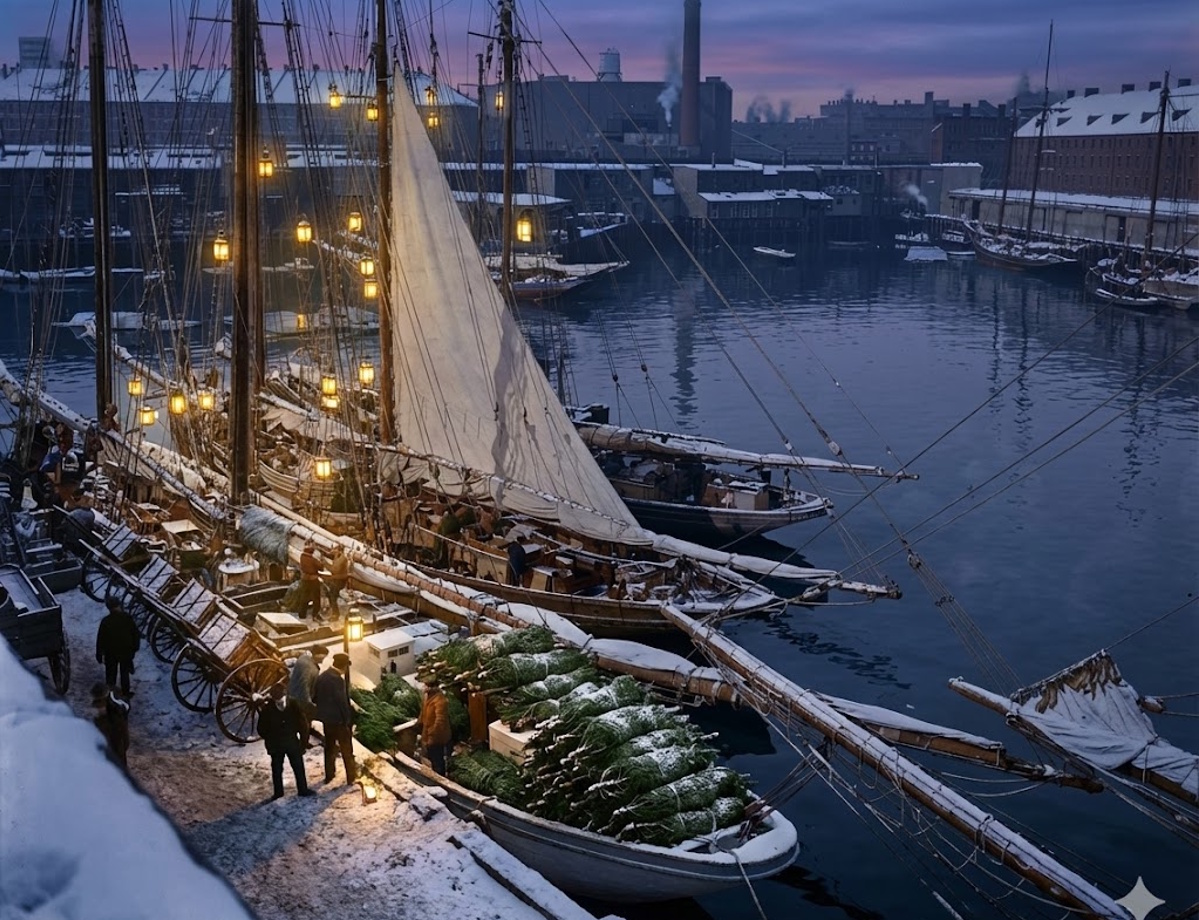
Only four wooden schooners delivered the first shipment of a meager 6,000 trees from the New England States (primarily Maine) and Canada to cities along the East Coast. The small fleet struggled to meet the demand in cities like Portland, Maine, Boston, Massachusetts, New York City, New York and Baltimore, Maryland. In 1905, the demand exceeded the schooner fleet’s capacity.
“The Christmas Tree Ship”
Christmas tree supply shortages also existed in the Midwest, exacerbated by the disastrous Chicago Fire of 1871. The need for lumber to rebuild the City filled schooner with trees from Wisconsin and Michigan, ordered by lumber mills and yards in Chicago needed to rebuild the City.


Christmas tree ships were the last ships to dock in Chicago at the end of the shipping season. Late November and early December were dangerous shipping times for wind powered schooner voyages. Christmas tree ships would have faded into history had it not been for one tragedy that occurred on the Great Lakes in November 1912.
A schooner name after businessman Rouse Simmons, built in 1868, was purchased by a wealthy lumber magnate, Charles H. Hackley, of Muskegon, Michigan. The ship was a workhorse of Hackley’s fleet delivering lumber to ports around the Great Lakes for 20 years.
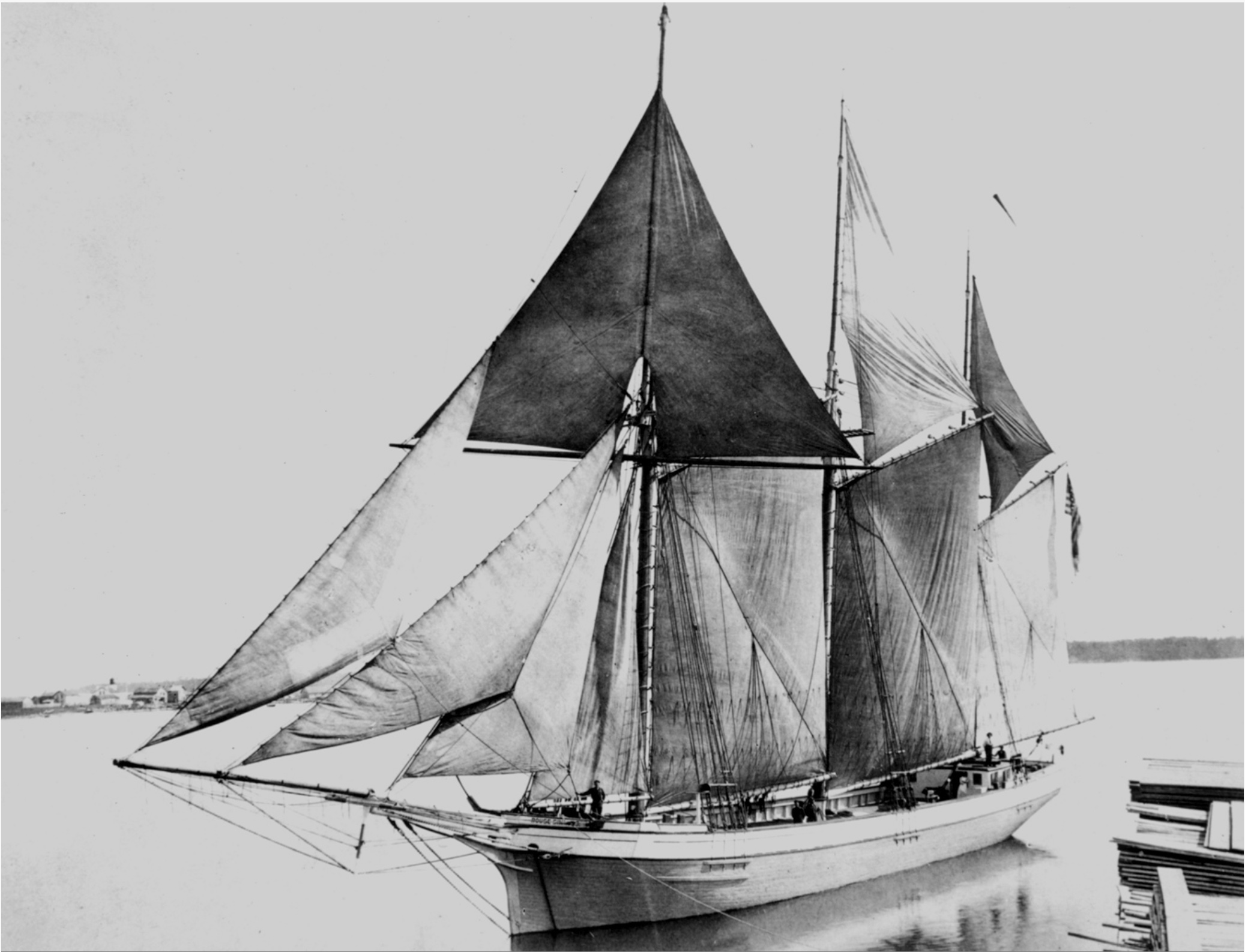
After service for Hackley the schooner changed ownership several time (such ships were called “tramp ships”), eventually being owned by multiple investors. One fractional owner of the schooner invested in 1910; his name was Herman Schuenemann. Herman and his brother, who died in a ship disaster, traded Christmas trees in Chicago around the start of the 20th Century. After the death of his brother, Herman became the sole owner of the Rouse Simmons.
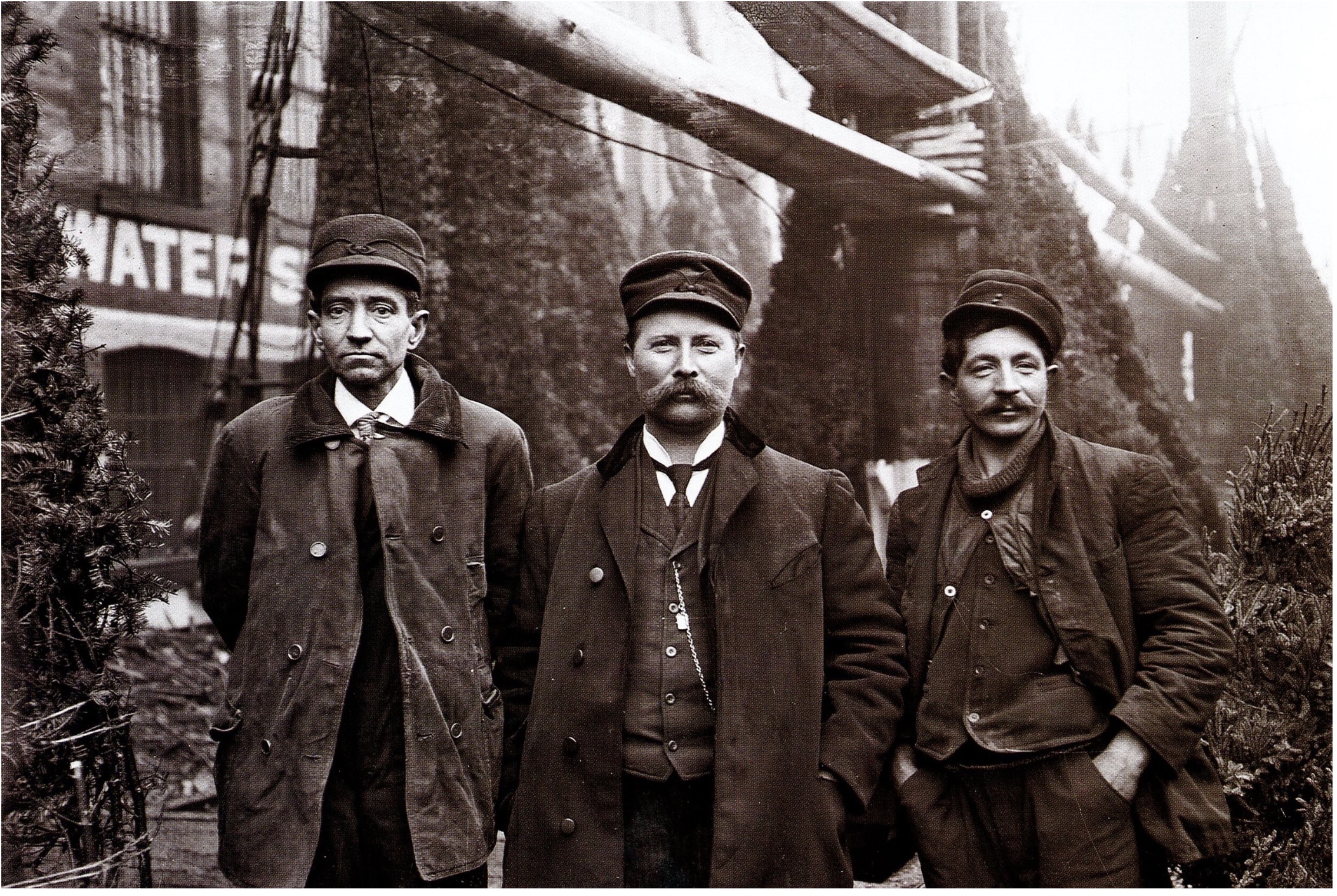
The month before Christmas, Schuenemann traditionally cut out the middle man and sold Christmas trees directly to customers off the deck of the schooner docked on the Chicago River. Some called the schooners that sold Christmas trees “floating tree lots.” Captain Schuenemann welcomed customers aboard, taking great pride and profound satisfaction in selling his trees at a lower cost. Herman’s motto was: “Christmas Tree Ship: My Prices are the Lowest.”
To attract customers, Herman decorated a tree, hoisted it up the mast of the schooner, strung electric lights throughout the rigging, making the entire schooner a Christmas ornament. Schuenemann was also philanthropic, giving away many trees to the city’s churches and the poor, earning him the name “Captain Santa”

The Last Voyage
November around Lake Michigan had a reputation for especially violent storms and 1912 was not any different. Nonetheless, Herman Schuenemann decided to deliver one last shipment of Christmas trees despite the loss of his brother doing the same thing years earlier.
Late in the afternoon of November 22nd, the atmospheric pressure was dropping on the barometer. (Though unsubstantiated, legend is that a few of the Rouse Simmons’ crew refused to board the ship because they assessed the ship as unseaworthy.) No storm warnings had been issued so Schuenemann felt he had no options . . . after all, he was a Christmas tree merchant!
Herman’s benevolence that day also extended to a few lumberjacks who wanted transport back to Chicago to be with family for Christmas. The total lives on board the Rouse Simmons was 16 when it set sail from Thompson, Michigan, loaded from bow to stern with evergreens to sell and give away in Chicago.
The Rouse Simmons never arrived in Chicago. It was last sighted by the Kewaunee Life-Saving Station flying a distress flag about 5 miles offshore, being pushed south by a northwest gale. A search for the ship failed to find any signs of the it or any survivors.

A Generational Mystery
For nearly 60 years the mystery of what happened to the Rouse Simmons remained unanswered. Despite the family history surrounding the business and Christmas tree delivery, “Captain Santa’s” widow, Barbara, and her oldest daughter Elsie, continued the legacy of delivering Christmas trees — by railroad cars — until her death in 1933. (The Schuenemanns had three daughters: Elsie, Hazel M. and Pearl.)


A scuba driver looking for a different shipwreck in 1971 learned of a shipwreck from local fishermen. The shipwreck was on the bottom of Lake Michigan, six (6) mils off Point Beach, Wisconsin, at a depth of approximately 170 feet. (Another sources reports the location as nine (9) miles northeast of Two Rivers, Wisconsin.) When located and surveyed, the remains of the ship were identified as the Rouse Simmons, resting 178 miles directly north of Chicago, as a “seagull flies.” Some of the Christmas trees were still stacked on the schooner, some on the bottom had needles still in place.


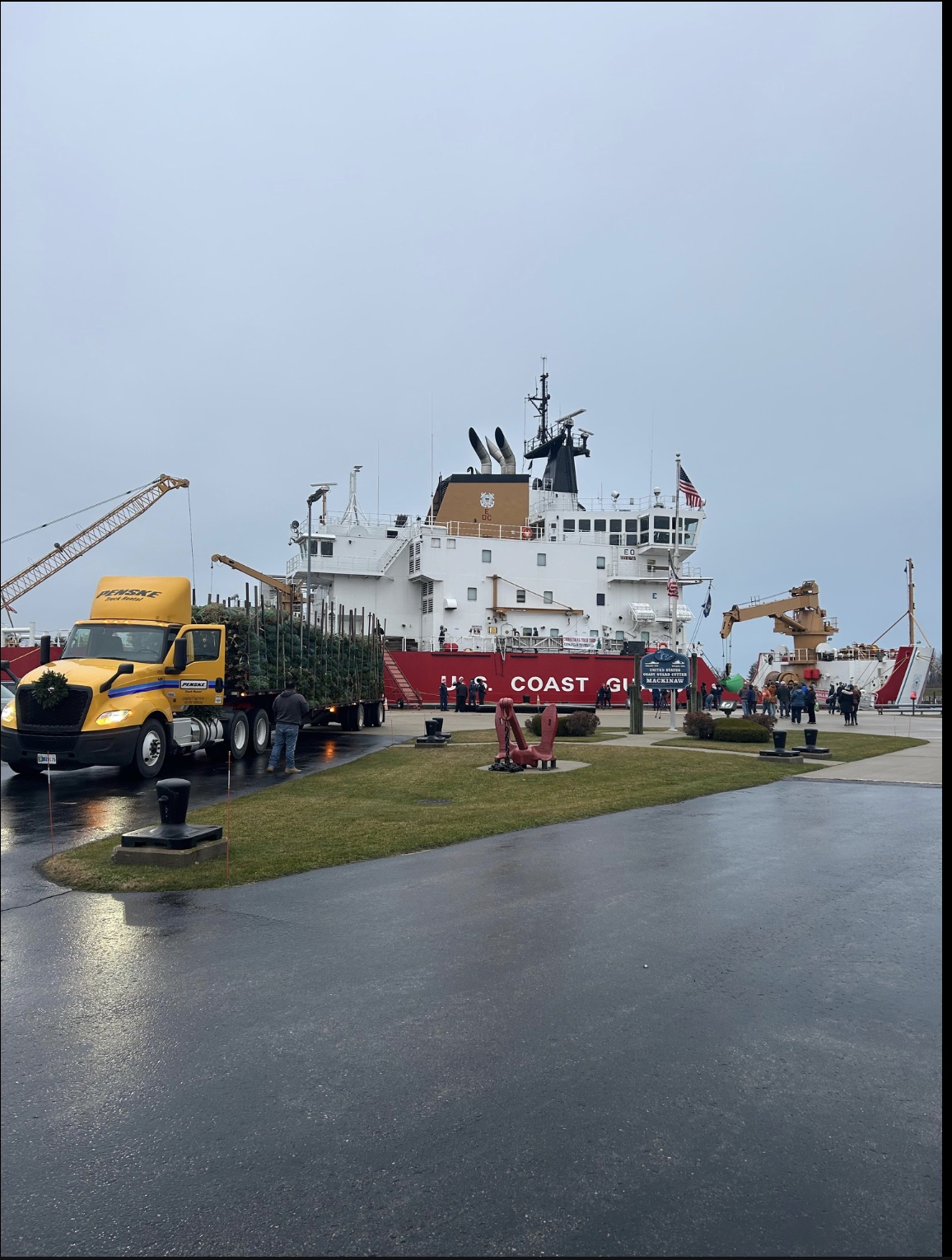
The tradition of delivering Christmas trees to Chicago for donation to churches and families in need continues to this day. Thousands of Christmas trees are delivered to the docks in Chicago by the U.S. Coast Guard and have been for the last several decades. This year the Coast Guard Cutter Mackinaw loaded 1,200 Christmas trees at Cheboygan County, Michigan on November 25, 2025 and made the trip to Chicago.
“The Christmas Tree Ship” story may be depressing to read during the Christmas season, but it exemplifies the American character and the true meaning of Christmas.
 old spirituals
What an interesting little bit of American history! Very nice read, Nicola!
LikeLike
American history is filled with entertaining anecdotes. I’m pleased that you and others found this chronicle of American history interesting.
LikeLike