Most of us are familiar with the 1939 movie The Wizard of Oz starring Judy Garland. The movie, of course, was made from Frank Baum’s 1900 book, The Wonderful Wizard of Oz.
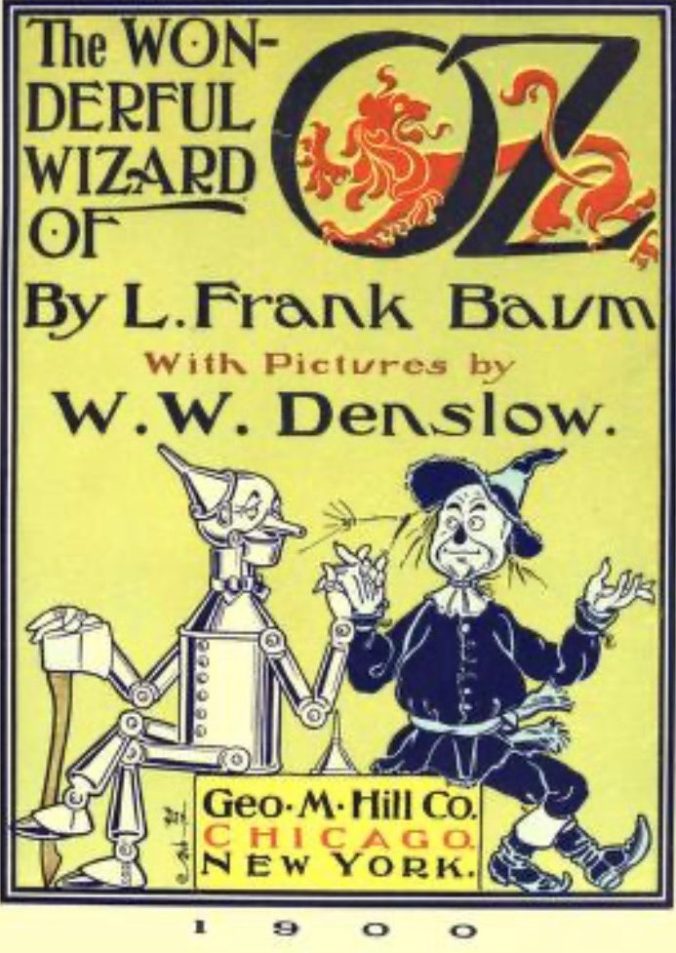
I came across the original book from 1900 and the illustrations are bizarre and fascinating. Some of them are quite beautiful! A few examples:
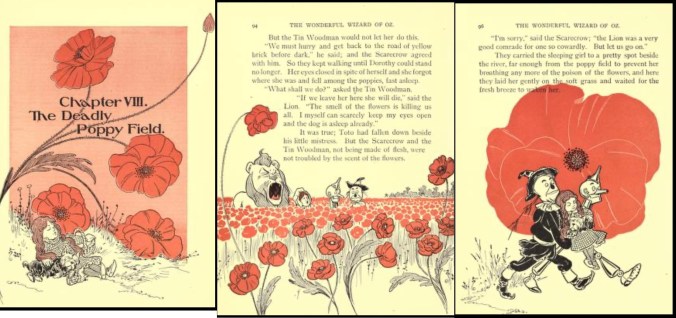

Let’s take a look at how Baum’s original vision transformed.
The first thing you notice is that in the original, Dorothy Gale was a very young girl. I didn’t see that her age was given anywhere in the book but the illustrations make her look to be four or five years old. Originally, studio executives thought they would cast Shirley Temple in the role. Temple was 10 years old at the time, but eventually the nod went to Judy Garland, who was 16 during filming. Toto looks like Toto.

The Good Witch looks somewhat elderly in the original version but was replaced by glamorous Broadway and film star Billie Burke in 1939.

Glinda the Good Witch, played by Billie Burke
Dorothy meets the Scarecrow.

The meeting with the Tin Man was pretty faithful to the original vision.

The Scarecrow and the Tin Man were definitely looking less pleased with the Cowardly Lion in the 1939 version.
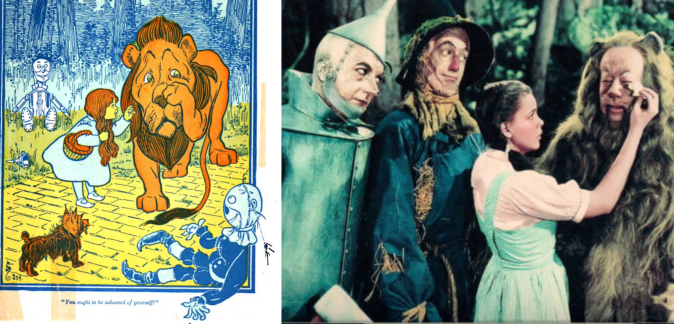
Dorothy’s first meeting with the Wizard was a bit more scary in 1939.

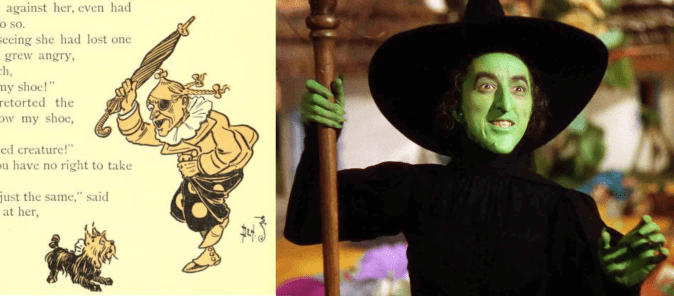
In the biggest surprise, the Wicked Witch of the West, played by Margaret Hamilton, who was the most awesome character in the movie, wasn’t as big of a deal in the book. Definitely, the 1939 version was a BIG upgrade.
When Dorothy and her friends return with their proof they’ve vanquished the witch, they meet the real Wizard. Once again, a faithful representation!

Of course, some of Baum’s original version didn’t make the cut for the final 1939 product… but it wasn’t necessarily a bad thing! These little Quadlings are a bit freaky!

Lastly, L. Frank Baum wrote an introduction to his famous book that gives us a glimpse into his creative and unusual mind. Have a look!
Folk lore, legends, myths and fairy tales have followed childhood through the ages, for every healthy youngster has a wholesome and instinctive love for stories fantastic, marvelous and manifestly unreal. The winged fairies of Grimm and Andersen have brought more happiness to childish hearts than all other human creations.
Yet the old-time fairy tale, having served for generations, may now be classed as “historical” in the children’s library; for the time has come for a series of newer “wonder tales” in which the stereotyped genie, dwarf and fairy are eliminated, together with all the horrible and blood-curdling incident devised by their authors to point a fearsome moral to each tale. Modern education includes morality; therefore the modern child seeks only entertainment in its wonder-tales and gladly dispenses with all disagreeable incident.
Having this thought in mind, the story of “The Wonderful Wizard of Oz” was written solely to pleasure children of today. It aspires to being a modernized fairy tale, in which the wonderment and joy are retained and the heart-aches and nightmares are left out.
L. Frank BAUM.
CHICAGO, APRIL, 1900.
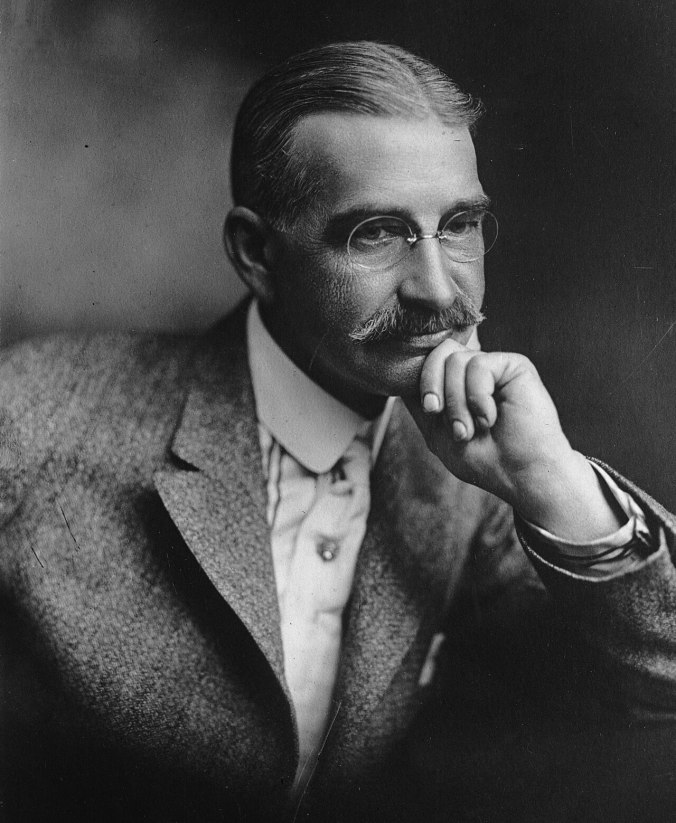
L. Frank Baum in 1911, from Wikipedia
Would you like to read the original book and see all of the illustrations? You can view the The Wonderful Wizard Of Oz book on Archive.org!
 old spirituals
Some children’s books today force young minds to confront issues not appropriate for their mental maturity or physical development.
LikeLiked by 1 person
100%
LikeLike