I read an article last week about a woman who had been cured of tuberculosis in Washington state. Tuberculosis–once a dreaded disease known as consumption or the White Death–which was caused by bacteria that attacks the lungs, can spread when a person with an active case coughs, sneezes or speaks. A person with active, untreated tuberculosis (TB) is likely to infect 15 people or more per year. This particular woman refused treatment for years. State authorities contacted her repeatedly and finally pursued legal action to isolate and treat her. She was finally arrested last year after she was seen boarding a bus. Once in custody, she agreed to treatment.
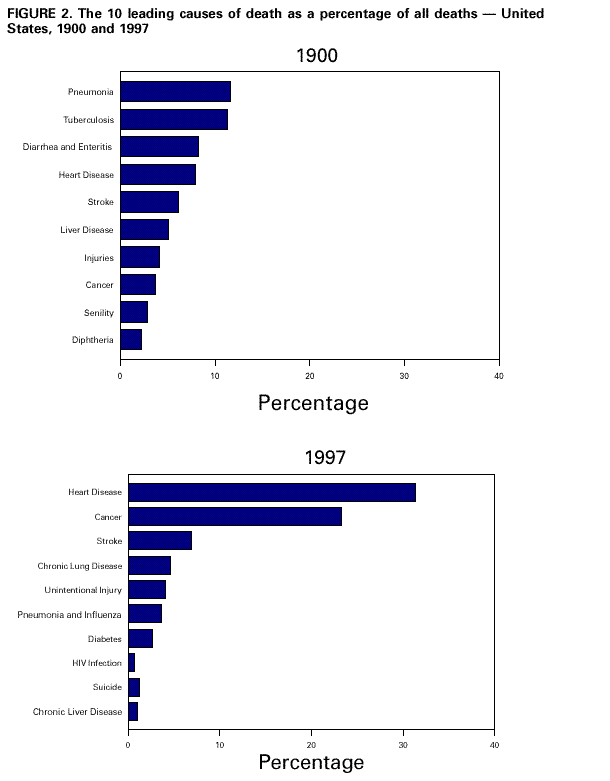
We rarely hear of tuberculosis today, though over 13 million people in the US presently have latent infections, meaning they’re asymptomatic and are not contagious. Today, TB can be prevented with a vaccine and treated with antibiotics. Active cases have been on the rise over the past four years after decades of decline. Even this hasn’t caused the alarm that it would have years ago, as effective treatment does exist. But consumption was not always so easy a problem to handle. In 1900, TB was one of the top three leading causes of death, accounting for over 10% of all deaths in the United States. By 1997, it was no longer in the top 10.
 CDC
CDCStrangely enough, during the period when TB was wreaking havoc in the population, it was also called a romantic disease. It was almost fashionable to have it. Perhaps that was due to so many great artists, composers, musicians, and poets had the disease or created art representing it. Women wore makeup to make their skin paler, like a TB patient. I’ve read many books that feature characters who have consumption and it is romanticized. Even the wildly popular poet Lord Byron once wrote, “I should like to die from consumption.”
I found a group of photos related to TB in the first half of the twentieth century, before there was effective prevention and treatment. Back then, infected people were quarantined in sanatoria, such as Kentucky’s Waverly Hills Sanatorium.
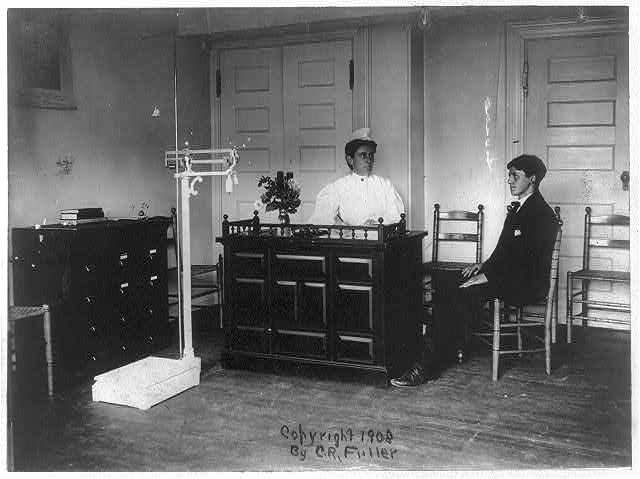 Receiving room of tuberculosis clinic, Schenectady, N.Y. 1908 LOC. Looks grim.
 Waverly Hills sanatorium. The building is said to be one of the most haunted places in America.
 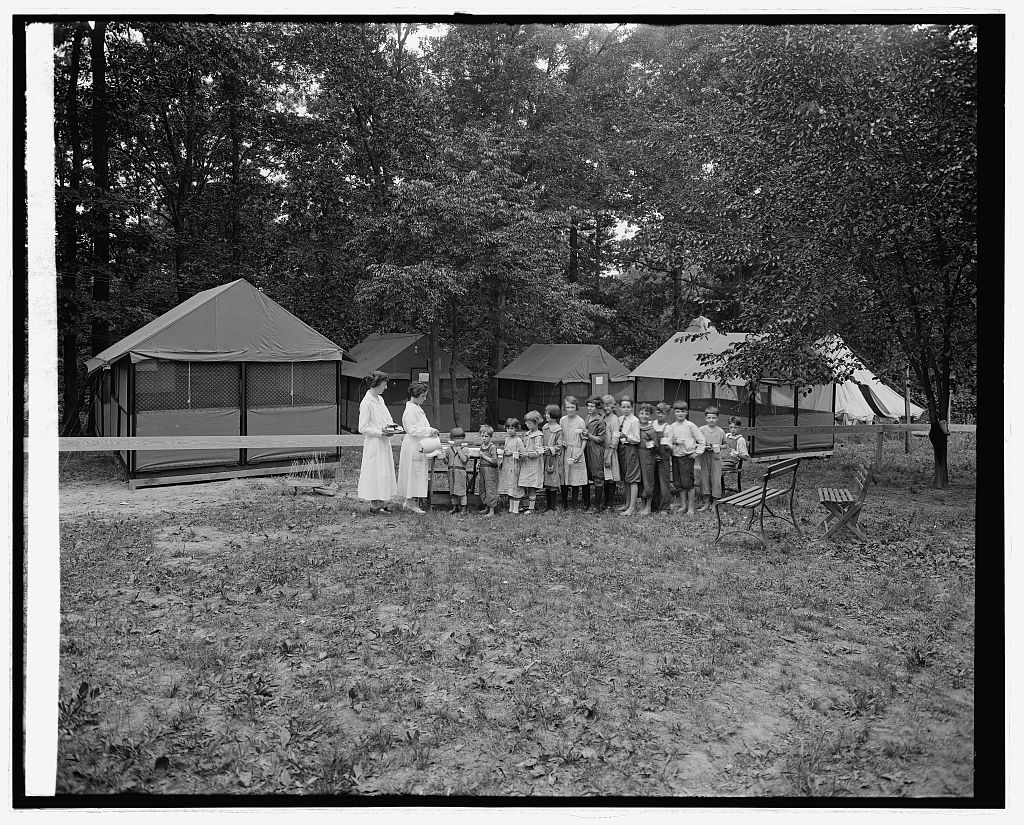 TB Camp 1910 (LOC)
 Chateau Hachette, ARC., Tuberculosis Hospital 1914 (LOC)
 TB Barracks, Paris 1917
 County Tuberculosis Society 1919 LOC
 Pres. Coolidge buys tuberculosis seals, 1924
 Mrs. Hoover buying tuberculosis seals Dec 17 1929
 Hassler Health Farm in San Carlos, CA. Feb 1934
https://digicoll.lib.berkeley.edu
 old spirituals
A drug originally developed as a vaccine for tuberculosis, BCG (Bacillus Calmette-Guérin, pronounced “buh-SIH-lus KAL-met-gay-RIN), is now used as an immunotherapy drug for early stage bladder cancer. It is amazing how research to cure one deadly disease can positively impact the treatment of another deadly disease.
LikeLiked by 1 person
I love that! A lot of times off-label works just as well or better than the FDA approved indication
LikeLike
Years ago I was on jury duty with a county nurse that went to patient’s homes to make sure they took their medicine. If they were irresponsible and went without their medication, the meds had to be stronger each time which could cause deafness, among other problems. There was an incurable strain of TB in Los Angeles in recent years. I was a field rep for a medical company and had to go into Los Angeles many times during the year. I made sure to be tested for TB since it was a real issue.
LikeLiked by 1 person
That sounds dangerous! Was that strain treatable at least?
LikeLike
I don’t know. I know it was antibiotic resistant according to the Los Angeles network news.
LikeLiked by 1 person
My great-grandfather died of TB at a young age. The great saint, St. Thérèse of Lisieux died of TB at a young age. Today, TB rates are 455 times higher in the Inuit communities than in other Canadian-born, non-Indigenous communities. Today in the other Indigenous communities of Canada it is 71 times higher than in Canadian-born, non-Indigenous communities and 4 times higher than Canadians over all. Do you see how it is a much higher percentage as compared to those born in Canada as opposed to only 4 times higher than all Canadians. That is because it is still endemic in many countries and as they immigrate here they bring it with them. I worked for a respirologist for seven years, what you in America call a pulmonologist I believe. She warned my daughters when they were in college to NEVER go near international students who were coughing because the incidence of TB in them was very high even though they were apparently screened at home before coming to the country. They would bribe the medicals over there to wipe their slate clean of it, but while here it would act up again. When applying for refugee status overseas, they are medically screened and must be treated before being allowed in. When they come in on their own claiming asylum, all bets are off. It’s out there, believe me and it would take very little to tip the bucket of TB all over the place again.
LikeLiked by 2 people
The new biologic drugs that work through the autoimmune system all have a warning that the drug may lower a person’s resistance to TB. Before a patient can start one of those drugs the doctor must test for TB.
LikeLiked by 1 person
That’s very strange. Like Jennie was saying the doctors still know it’s a threat, it seems
LikeLike
That is terrifying. And surprising there are still so many deaths but you’re right. According to WHO:
A total of 1.3 million people died from TB in 2022 (including 167 000 people with HIV). Worldwide, TB is the second leading infectious killer after COVID-19 (above HIV and AIDS).
In 2022, an estimated 10.6 million people fell ill with tuberculosis (TB) worldwide, including 5.8 million men, 3.5 million women and 1.3 million children. TB is present in all countries and age groups.
LikeLike
Historically, India has been the country with the most cases of TB. Here is an excerpt from a January 3, 2024, BBC story:
According to the report, India accounted for the highest global TB burden, with 27% of the 10.6 million people diagnosed with the disease in 2022. The country is also home to 47% of people who developed multi-drug resistant infection which is unresponsive or resistant to at least two of the first line of anti-TB drugs the same year.
LikeLiked by 1 person
And guess where most of Canada’s immigrant and international community is from these days? You guessed it, India. The ones we treated in the clinic were from India if they were students, though there were a few from other countries as well, ALL screened pre-entry – supposedly – because they were students. There were also some much older Europeans who were found to have it, some from Italy, others from Eastern Europe, where they probably had picked it up as children and it remained dormant until age and compromised immune systems took over.
LikeLike
That is so frightening!
LikeLike
That is some scary info, Jennie and Jax! We had Ellis Island for this reason, but our government has let us down for many years. You know things are bad when you go in for a knee replacement (my husband) and the doctors tell you when you’re going home to not go into a hospital unless you get sick. True story!
LikeLiked by 1 person
My great aunt died of consumption when she was quite a young woman. There was a picture of her my great grandmother kept. As a child, seemed like a beautiful ghost to me.
LikeLiked by 1 person
Wow… I could see that somehow.
LikeLike