What is Dogtown?
A leisurely stroll through an area known as Dogtown, just outside of Gloucester, Massachusetts, can inspire the casual outdoor enthusiasts in a positive way. It is not the flora and fauna that is inspirational, those aspects of the place are pretty normal for a coastal New England landscape. Rather, it is the many large rock outcrops that contain the inspiration.
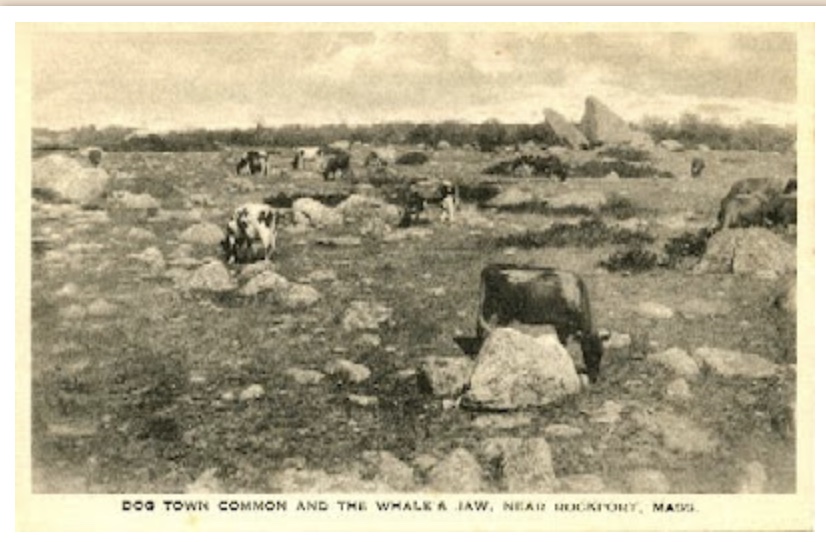
Dogtown was once known as the Common Settlement back in 1693. At one time it contained about 80 homes, although “today it is a dense woodland, criss-crossed and bisected by trails and old roads.” The name Dogtown evolved because the wives of sailors and soldiers who lived there kept dogs for protection while their husbands were away at sea or fighting in a war —like the American Revolution.
Dogtown’s Attraction
As homeowners moved out of Dogtown, the 3,600 acre area became pasture land for locals to graze cows and sheep. The Babson family of Gloucester was one of the families that lived in that city dating back to the arrival of Isabel Babson in 1637, along with her two sons. Her husband, unfortunately, did not survive the voyage from England. Ten generations of Babsons lived in Gloucester when its most prominent Native Son made his impact on the America.
The attraction of Dogtown to visitor dates back to The Great Depression, the result of what one man did to 36 of the large rock outcrops. That solo, renaissance man was Roger Babson, a child of The Golden Age and a 20th Century mastermind.

Babson was a product of Gloucester and spent many hours of his youth herding sheep in Dogtown. That time spent walking the former enclave instilled a great affection for Dogtown; it was that affection that motivated him to write a book, Dogtown – Gloucester’s Deserted City. His tome was the source document used by planners to label the remaining foundation holes of the homes that once were scatter around the landscape of Dogtown.
Roger Babson’s Bequeathal
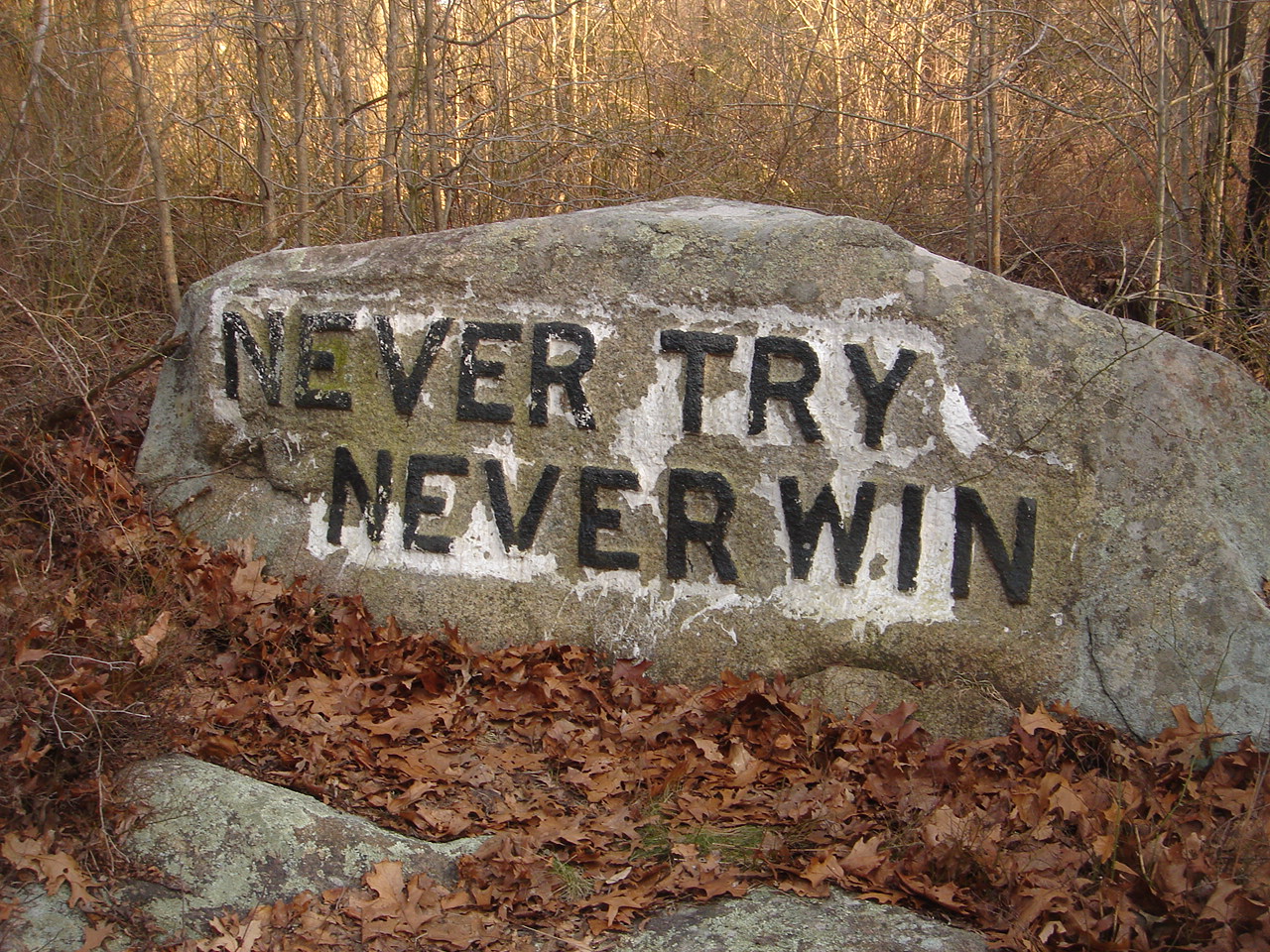
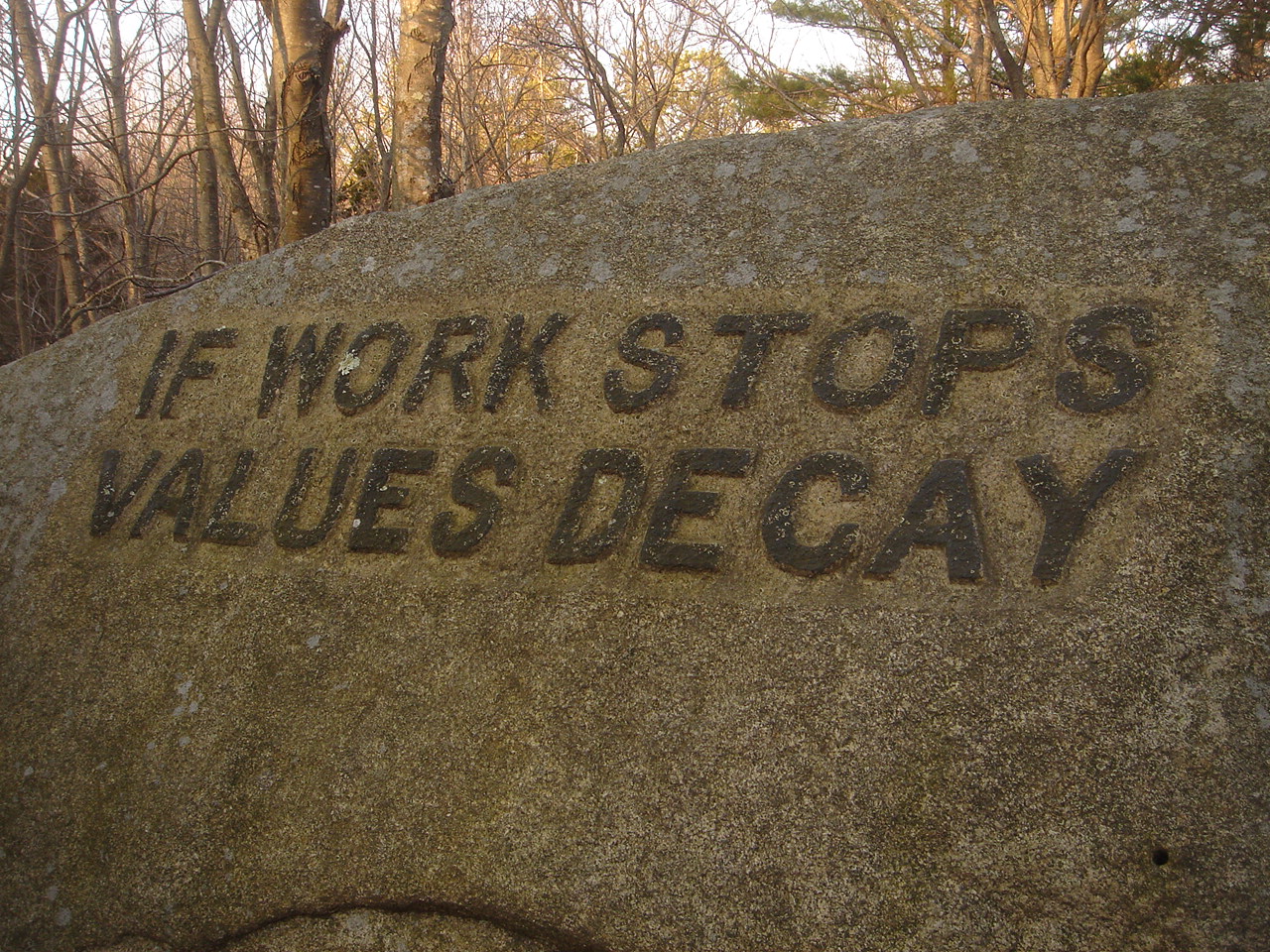
Roger Babson knew Americans were suffering during the Depression, so he decided to find a way to lift the spirits of as many people as he could. His first step was to buy a portion of land in Dogtown. Next he commissioned an unemployed stonecutter to accomplish his desired objective. Providing instructions, Babson gave the stonecutter 36 inspirational messages to chisel into an equivalent number of large boulders located in his beloved Dogtown. A few of them are included here. (I think of them more as Life Lessons.)



Postscript
Roger Babson was a Massachusetts Instituted of Technology engineering graduate who became very wealthy from his expertise in stock and bond investing and analytical reporting, and selling his reports to institutional and individual investors. Today, Babson’s analytical reports are part of the Standard & Poor’s publication, The Outlook. Roger also wrote dozens of books on a myriad of subjects ranging from investing to religion. He, as one might expect, wrote an autobiography.
A man that had an enthusiasm for educating others, Roger Babson is credited for starting the first correspondence course, something he did to help a young man who asked to learn the business of investing.
Babson also espoused Ten Commandments of Investing. I suspect these Commandments are good advise even today:
- Keep speculation and investments separate.
- Don’t be fooled by a name.
- Be wary of new promotions.
- Give due consideration to market ability.
- Don’t buy without proper facts.
- Safeguard purchases through diversification.
- Don’t try to diversify by buying different securities of the same company.
- Small companies should be carefully scrutinized.
- Buy adequate security, not super abundance.
- Choose your dealer and buy outright (don’t buy on margin).
A lasting monument to his belief in educating others is his founding of Babson College in 1919 in Wellesley, Massachusetts. The latest U.S. News & World Reports ranking places Babson College #1 in Entrepreneurship and The Wall Street Journal ranks Babson #2 Best College in the U.S. for its strong emphasis on preparing students for financial success and entrepreneurial leadership. Babson also founded Webber College, in Florida, and Utopia College, in Kansas, both of which are closed today.
One last piece of historic trivia and attribution to Roger Babson. Carl Magee is generally credited as being the first person to patent the parking meter on May 13, 1935. That is not necessarily the case because Roger Babson, an Isaac Newton enthusiast, believed in the combination of practical and theoretical knowledge. It is not surprising to learn that Roger Babson filed a patent for a parking meter on August 30, 1926, nine years before Magee. The difference between the two patents was the source of energy. Babson’s parking meter was power by connecting the meter to the parked car’s battery. As you might expect, his idea was never accepted by the public.
 old spirituals
if work stops
values decay
that’s powerful!
LikeLiked by 1 person
It certainly is powerful, Ruby. And, it is true!
LikeLiked by 1 person
I like this post a lot Nicola! The Dogtown history is interesting, and especially the idea of carving words of wisdom into the rocks to remain there for all time. Very cool find!
LikeLike
Yes, it is a fascinating piece of history.
LikeLiked by 1 person