A few years ago, I was a guest on the Inside the War Room podcast. I was promoting Grievous Deeds and had a fun conversation with the host, Ryan Ray. He was shocked when I said newspapers in 1900 often published jurors’ names and addresses in advance of a trial.
I remembered that conversation when I saw this picture of a 1906 Alabama jury, with a few court officers.
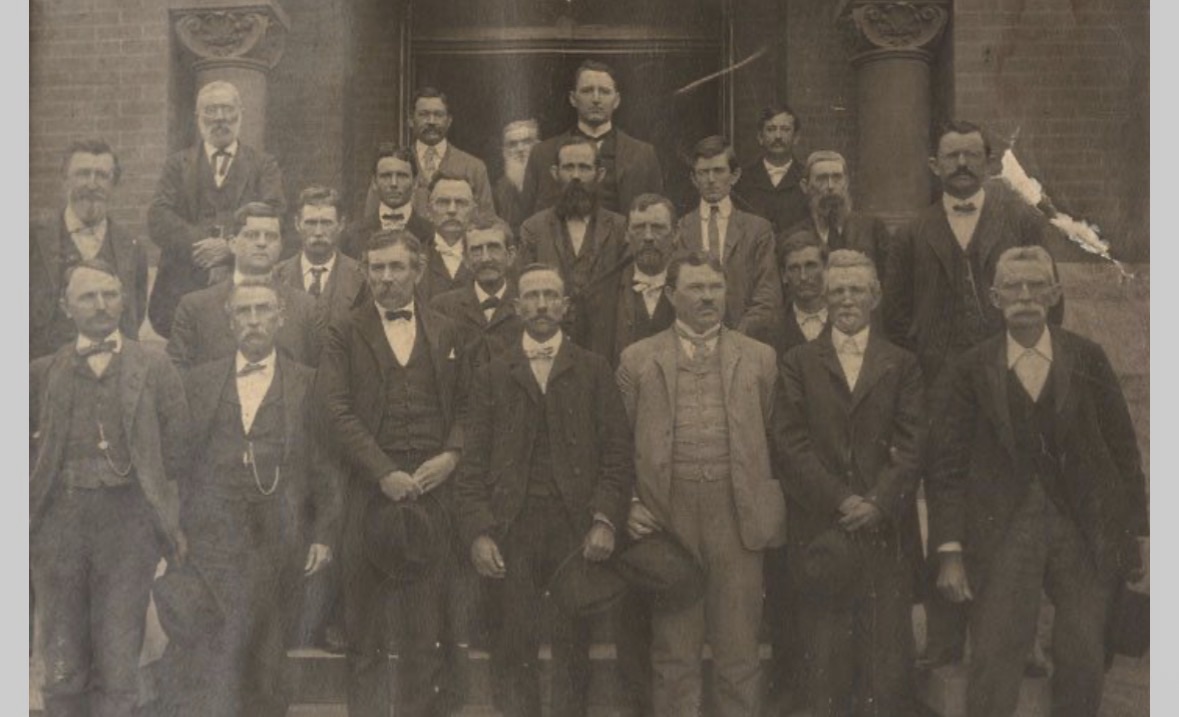
Alabama Dep’t of Archives & History
No wonder the host was surprised. The Post and Courier is South Carolina’s largest newspaper. Can you imagine if they published the names and addresses of the jurors at the Alex Murdaugh trial? They would be sued into oblivion. It would look like doxxing, opening the door to any number of unsavory consequences.
The mindset in 1900 was different. Being selected to serve on a jury was an honor. Society trusted your judgement and character. Your community was proud of you. The courts treated jurors like respected guests, often supplying them with nice cigars.
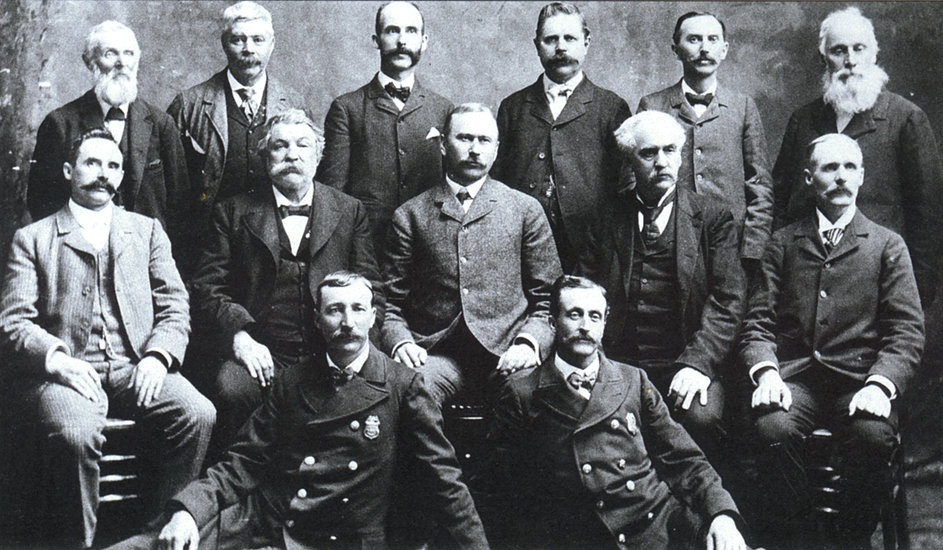
When anarchist Leon Czolgosz was tried for assassinating William McKinley in 1901, his jurors were named. Their photograph, posing with the police who arrested Czolgosz, was reproduced widely.
Today few people are overcome with delight when they receive a jury summons. And courts are not the gracious hosts they once were.
And what is the result? I could see it from a few different perspectives.
How you treat people matters a lot. People live up (or down) to your expectations. When jurors were honored and respected, maybe they took their role more seriously. If you were known to be a juror, you may feel compelled to pay extra close attention and be as fair as possible.
But jurors might become overly punitive. If I was a juror on a murder trial and I acquitted the defendant, I’d be concerned if there was a ghost of a chance he might commit murder in the future. I wouldn’t be held legally responsible but people would blame me for setting him free.
It’s also possible the things we fear today were happening then. The verdicts were not the result of thoughtful juries but of bribery and intimidation.
What do you think? Is this shift away from publicly naming and honoring jurors a good thing?
Quick note, I refer to jurors as men because nearly all juries were exclusively male. One exception occurred in 1919 when a Cleveland, Ohio judge created a non-binding female advisory jury. Their conclusions might be an interesting case study! See For the Love of Mr. Buttery.
 old spirituals
Wow! This post opens Pandora’s box. I believe in the law that establishes the requirement a jury is to be a group of the defendant’s peers. A jury of all men cannot, in my mind, be peers if the defendant is a female.
I jokingly say, “I am a professional juror.” The truth is I have served as a Petite Court Juror in 4 different States plus a Federal Court case that was 4 weeks long. I can emphatically say that no jury I served on took its role casually, though once a specific individual on one jury tried to expedite the decision to return to self-employment.
I have always considered jury duty a civic obligation as an American. I am not in favor of publishing juror’s names. The Federal case I adjudicated was a RICO case involving a family in a Southern State. During the trial our vehicles were guarded by Federal agents because the case involved bombing of Federal facilities and utility companies towers. The courtroom had an extraordinary number of Federal Marshals for security. I should mention, F. Lee Bailey testified as a character witness for one of the defendants.
LikeLiked by 2 people
Wow! F. Lee Bailey is a legend. I know people don’t like to be torn away from their lives for a week or more and that’s a lot to ask. Being self-employed, I absolutely understand. It could very well be disastrous to have nobody steering the ship for a week.
LikeLike
I, too, believe that jury duty is a citizen’s duty to their community. I always served when called. Dr. Gary Brucato’s book, The New Evil, comes to mind when subjects such as doxxing appear. Although Dr. Brucato’s book deals with the very extreme evil that is new in our country, we’re also seeing doxxing to harm law enforcement, politicians and just regular people. I consider this another type of “new evil” when personal information can be put online in the hopes that some unhinged person will act on it. Gone are the days when marriage, birth announcements and personal photos with names and addresses can be put out for the general public. Remember telephone books with names, addresses and phone numbers included? I think the 1970’s became the era when addresses were dropped upon request from phone books.
LikeLiked by 2 people
That’s true, and it’s a huge loss to us. I don’t know how to fix it or if, once unleashed, such an evil could ever be vanquished. I suppose we all have to combat it in our own way so people remember, it doesn’t have to be like this!
LikeLike