This is Part 4 of a Moral Quandary. Click here to read Part 1.
The jury deliberated four-and-a-half hours and reached a verdict at ten minutes to midnight on April 5, 1927. The plasterer and longshoreman was guilty of first-degree murder. The jury cited the 12-foot walk Caruso took to seize the bread knife he used to kill the doctor. That time should have been enough for him to stop himself. Therefore he was guilty of the murder of Dr. Casper Pendola. He would not be sentenced until April 18, but it was only a formality as the punishment was a forgone conclusion: Caruso must die in the electric chair. The prisoner was in a state of shock as officers escorted him back to Raymond St. Jail.
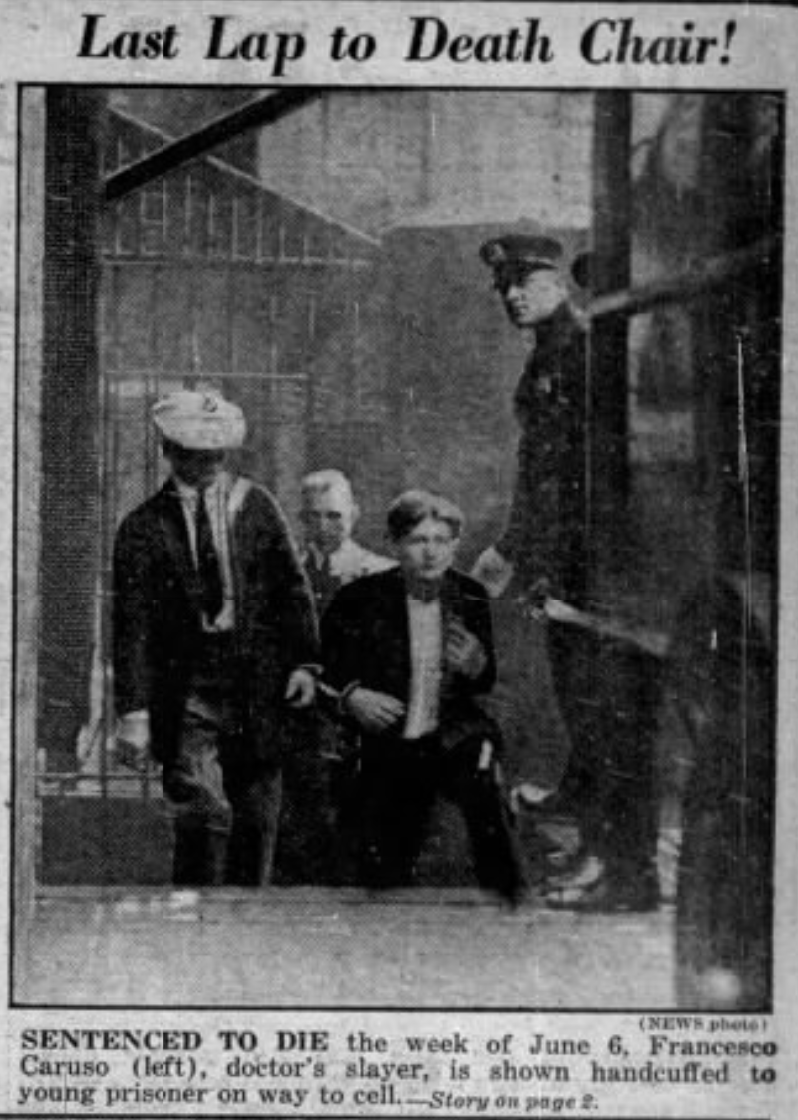
Caruso is taken to jail with another prisoner after hearing the verdict.
Maria Caruso did not understand the verdict until an interpreter later explained it to her. When she did comprehend it, she collapsed in tears. George Voss, Caruso’s attorney, said he would appeal the verdict and, if that failed, he would ask Gov. Smith for clemency.
When he came to his senses in his cell, Caruso was unable to sit still. He paced his cell for hours, crying and bemoaning his fate in Italian. “My poor children! They’ll have no father. No father!” Later his thoughts seemed fixed on what would become of him. “My wife, she no work because she got the kids,” he says frantically. “I go crazy again when I think what they will do when I get killed.”
Maria Caruso came to visit her husband in Raymond St. Jail every day, usually bringing a few of their children.
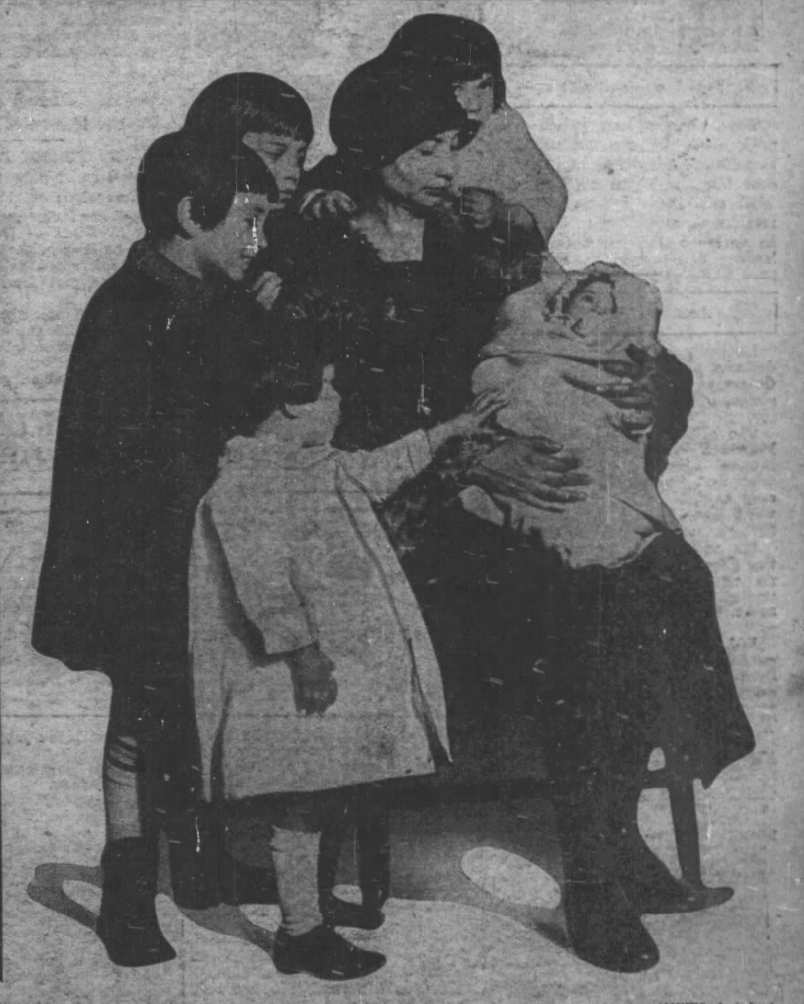
Maria and the children wait to visit Francsco in jail
Clergymen protested the verdict and argued that if Caruso’s sentence was commuted, justice would still be served. He had not committed the murder out of malice but from ignorance.
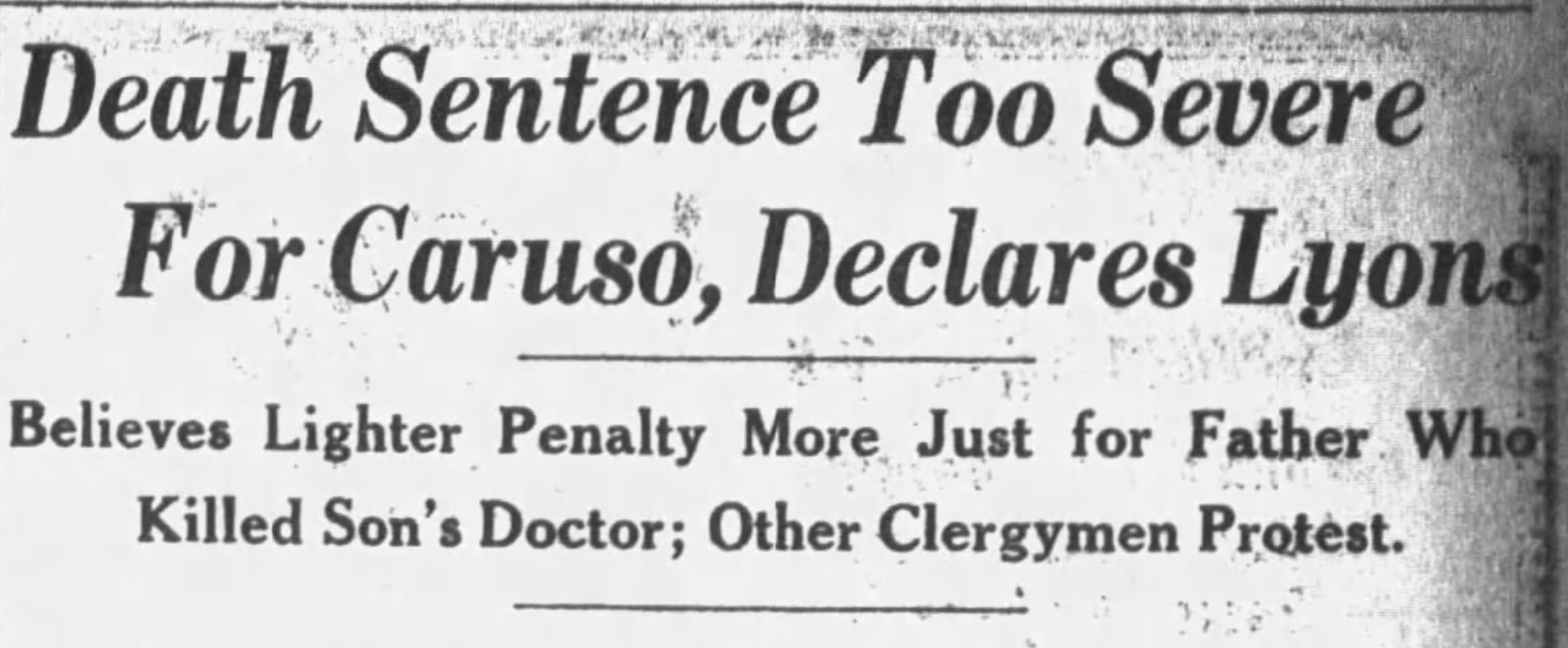
“I feel very deeply over this case. In general l’m opposed to capital punishment,” Rabbi Alexander Lyons said. “In this particular instance l am especially opposed. This ignorant, unfortunate individual only exemplified the profundity and intensity of his fatherly affection which got beside itself from the loss of his child. He should be punished to bring him to his senses, to impress upon him the great wrong he has done, and to serve notice to others. But some other penalty should be imposed.”
The Rev. Dr. John Keer of the Presbyterian Church agreed, adding, “I have not much doubt that the man was ungovernable in temper and prejudice but I wish the sentence might be commuted. I think that the interests of justice would be served by such a commutation.”
The newspapers were surprised by the vehemence of public opinion. The majority of New Yorkers deplored the verdict, believing it was much too harsh. Though always suspicious of temporary insanity defenses, the plea seemed justified in Caruso’s case, if it ever could be.
A letter to the editor of Brooklyn Daily Times was published April 11, 1927 is a good representation of the objections people offered.
Sir, I think the verdict of first-degree murder against Francesco Caruso who killed Dr. Casper Pendola while in a frenzy over the death of his 6-year-old son, is too severe. I hope Gov. Smith, under these circumstances, will review his case and commute his death sentence, imposed by Judge McLaughlin, to a life imprisonment.
Caruso, a laborer, father of six small children, killed the young physician because he was under the impression that the doctor killed his little son…Then he laughed at the little boy’s death, according to Caruso’s statement to the Court…A manslaughter verdict would have been sufficient and just punishment.
Francesco Caruso is a poor man and there were no specialists or eminent alienists (note: alienist is the old-fashioned word for psychiatrist) in court to examine him. If Caruso had happened to be rich, I am sure he would be a free man today…I believe Caruso was afflicted by dementia…he should have been declared insane at the time of his crime. He would have been a free man or have been placed in an institution to remain until cured. But Caruso is a poor man so he is to go to the electric chair. We have people in our community who have committed worst crimes than Caruso and some are on the streets today because they had money and political friends behind them. Caruso must die because he has no money or friends.
I know the Governor Is a father of several children and knows what is the pain for a father that lost a 6-year-old boy. I wonder if Judge McLaughlin, the District Attorney of Kings County and the members of the jury that convicted Caruso have any children.
Hoping you will publish this letter and I will send a petition to the Governor, asking him to commute Caruso’s sentence to life imprisonment. He committed the crime but there was no premeditation or deliberation.
Respectfully, JOHN ALFIERI.
Regardless of public and clerical sentiment, no alteration was made in the court’s plan to officially sentence Caruso on April 18. And the most intense part of the Carusos’ story was yet to come.
 old spirituals