On Sunday, January 8, a mysterious story unfolded in the Sun.
“The moral condition prevailing among the children of Public School 130, at 187 Broome street, opposite the University Settlement, has been a subject of much concern to the teachers and the Board of Education for some time,” the paper announced. “Miss Olive Jones, principal of the school, has sent complaints to Commissioner Bingham, the last one on December 23, and last night a woman, two men and a boy were arrested.”
The nature of the moral condition was is not spelled out enough to discern what was happening. Newspapers then were particularly addicted to euphemistic language, which makes it difficult for us to interpret today.
The police suspected a gang existed, that operated with the aid of schoolchildren. The upper echelons taught young boys how to steal and led them “into other forms of depravity.” Miss Jones, the principal, declared to the paper that a teacher, Mr. Genz, had caught a boy in an “outrageous act” and reproved him publicly. Later that day, Mr. Genz was beaten severely and left on the sidewalk unconscious.
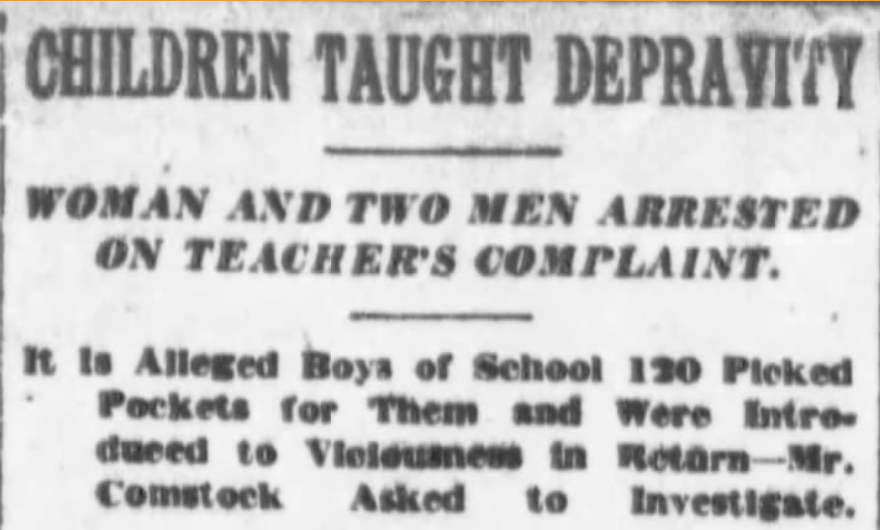
A Board of Health investigation revealed that many of the boys were in such an unhealthy condition, they had to be committed to institutions. Detectives arrested Harry Sobell, 18 years old, and charged him with violating a section of the Penal Code, which deals with the subject of improper guardianship. After interrogating Sobell, the police went to 175 Essex street, where they arrested Martin and Fannie Ecoff and Jacob Somers. The trio were charged with Fagin.
The term Fagin is based on a Charles Dickens character! In Oliver Twist, Fagin is a villainous elderly man who corrupts children by teaching them to commit crimes, and helping himself to the proceeds. In other words, the Ecoffs were accused of corrupting the morals of children.

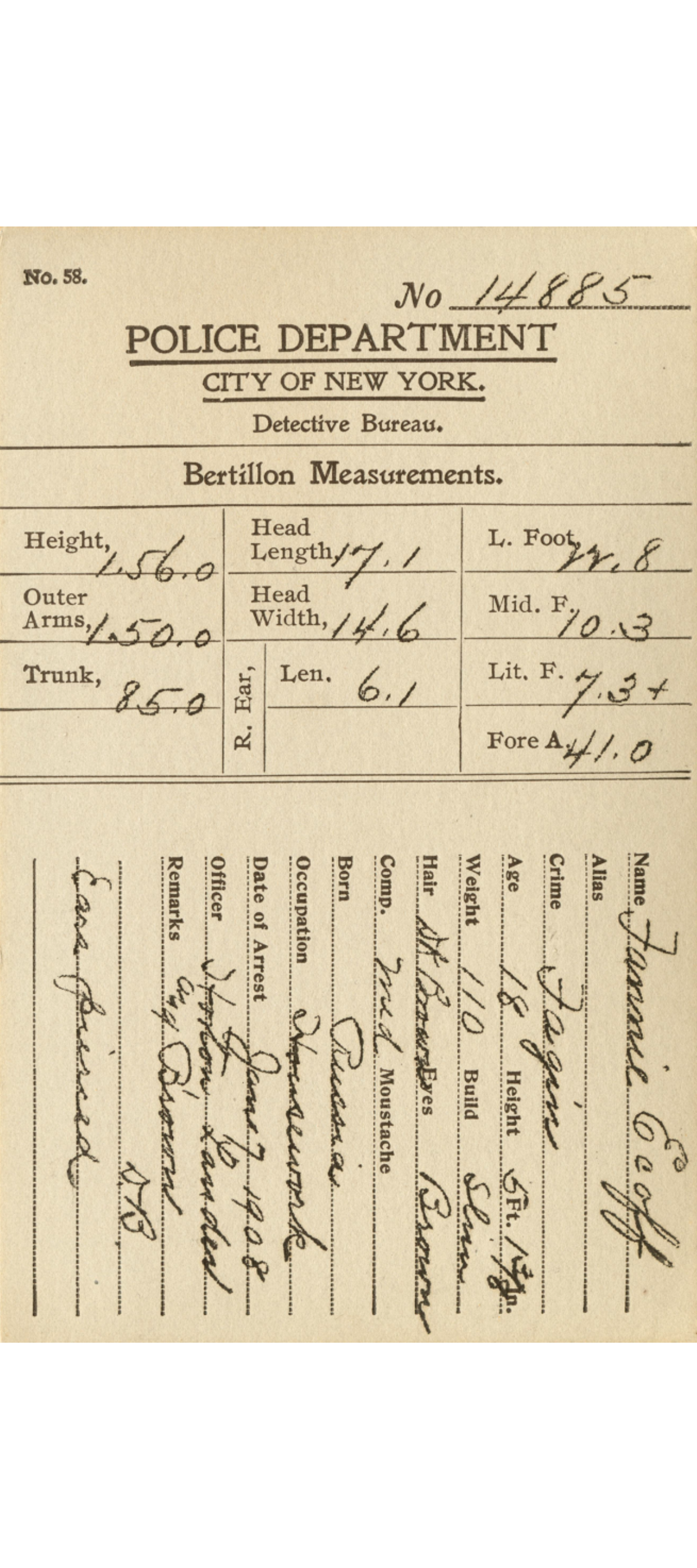
Fannie Ecoff’s 1908 mugshot. NYC Municipal Archives.
NYC Municipal Archives
The detectives theorized that Martin Ecoff became acquainted with the boys and introduced them to his 18-year-old wife Fanny. The boys were taught to pick pockets, according to the police. They were rewarded with trips to the penny arcades and “other forms of viciousness by the woman.”
This salacious story called for a higher authority, and it came in the form of Anthony Comstock, who was the secretary of the New York Society for the Suppression of Vice.
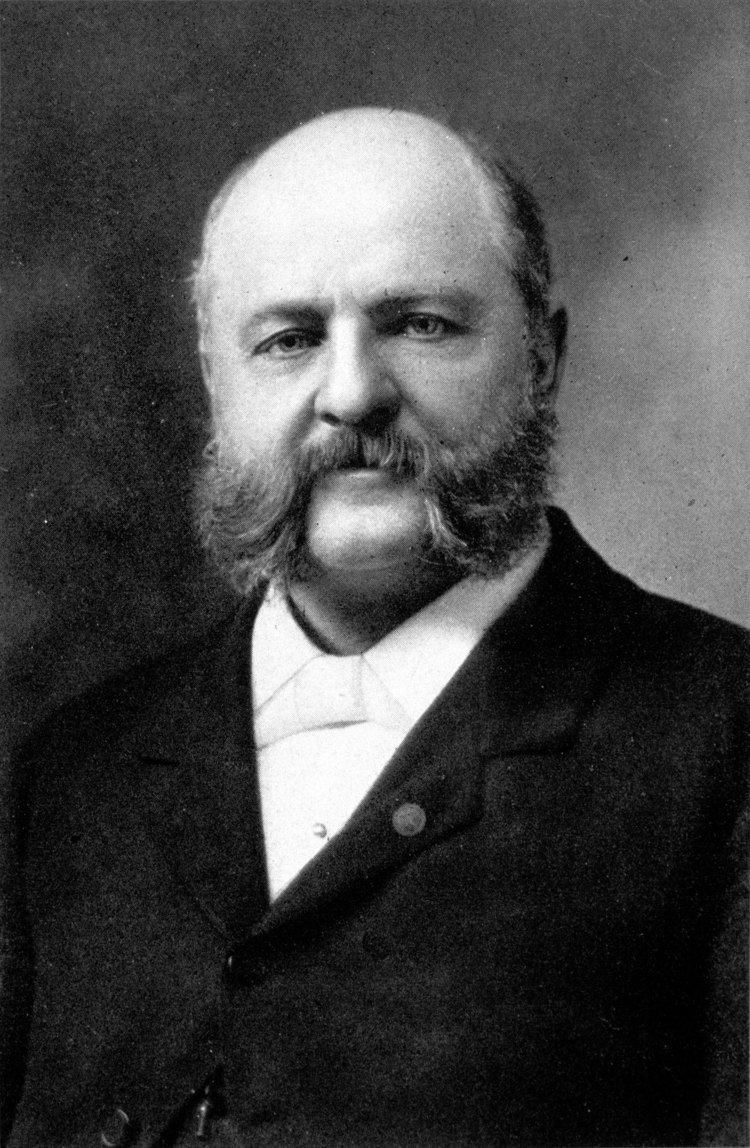
Anthony Comstock
Comstock said he had not been to the school. “I have been asked to look into two other schools where the conditions were very bad, one of which I visited. The mails have been filled with filthy literature from school boys and young children to a shocking degree.”
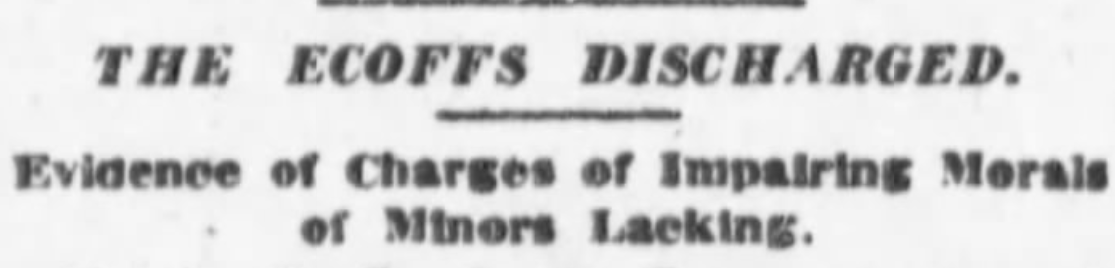
Three days later, the whole thing blew over. The Sun explained the police were unable to get any corroboration of what they had learned from Harry Sobell. The case was dismissed and the Ecoffs were set free. Fannie has such an innocent face, it’s difficult to imagine her doing anything really bad. A faint whiff of seediness attached to the couple anyway. Jacob Somers, who was arrested with them, remained in jail on a $1000 bail, as a detective saw him jostling pedestrians in Orchard street while a small boy tried to pick their pockets.
I found no more articles about the Ecoffs but Harry Sobell, the boy alleged to have been corrupted or was helping to corrupt others, made another appearance in the papers later that year (assuming it is the same person).
This time he had narrowly averted tragedy. A group of 30 young men had spent the day on the Hudson River on a 45-foot sloop, Alice. In the evening, the passengers were put into small boats to take them to shore. Harry Sobell was on the last boat with Dan Barry, Leo Ahrens, and John Crowley. Tragedy struck when their boat was overturned by the swell of a passing steamship. Only Crowley knew how to swim and he seized Sobell, and helped him to shore. The others were not reached in time.
Being involved with anything so scandalous it required the intervention of the police and Anthony Comstock was not a fortuitous beginning for any young man. But Harry Sobell was born under a lucky star after all.
 old spirituals