I recently came across this picture entitled Moqui Belles (1900) by photographer Oliver Lippincott.
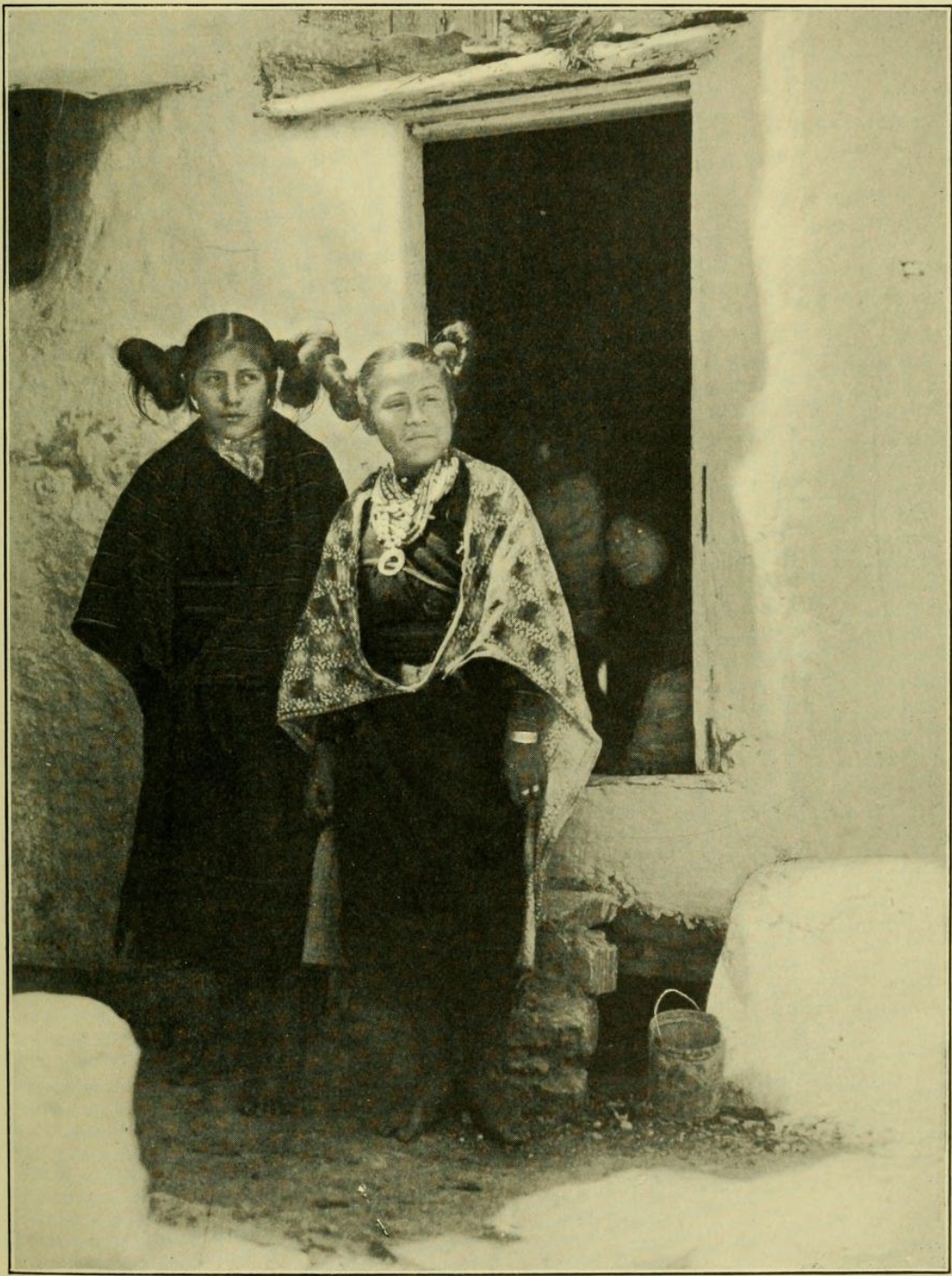
Camera Craft (1900) by Photographers’ Association of California
The picture is beautiful and it made me curious. I’ve never heard of the Moqui people. I couldn’t even find them when I googled. I did manage to beat a path through various writings on my quest to learn more.
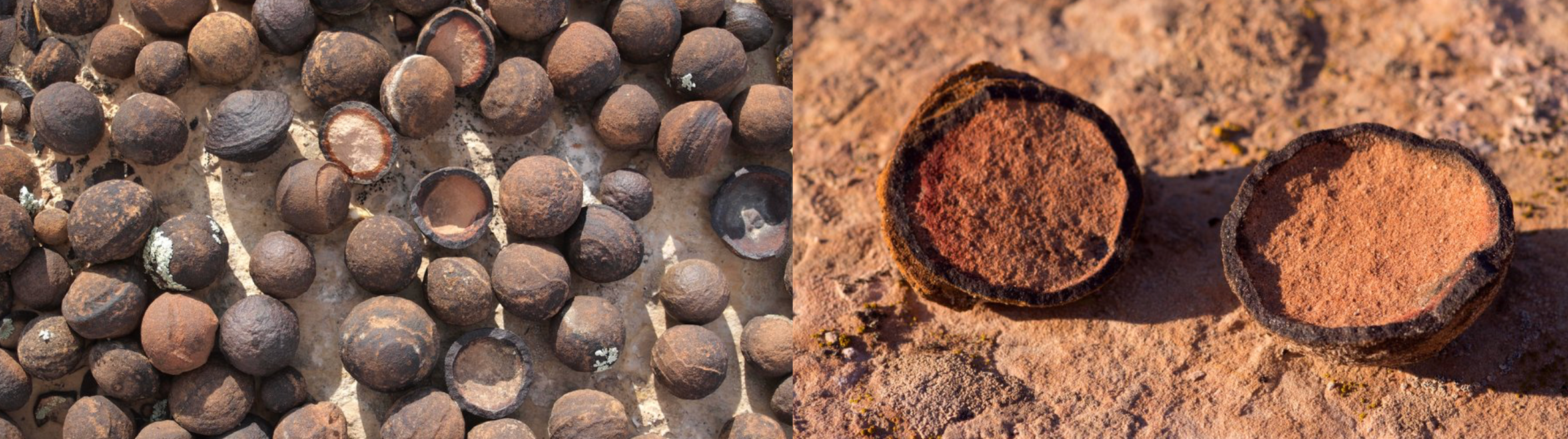
I found Moqui Marbles, which are hematite shells formed around a portion of sandstone. They’re native to Utah and Northern Arizona, and are often used for energy work. There’s a fascinating site called RockSeeker.com that has a great article about them.
A government scout named John Wesley mentioned the Moqui people in his Report on the Lands of the Arid Regions of the United States.
I found a second photograph of a Moqui Woman and Child by Adam Clark Vroman at the Amon Carter Museum of American Art in Fort Worth, Texas.
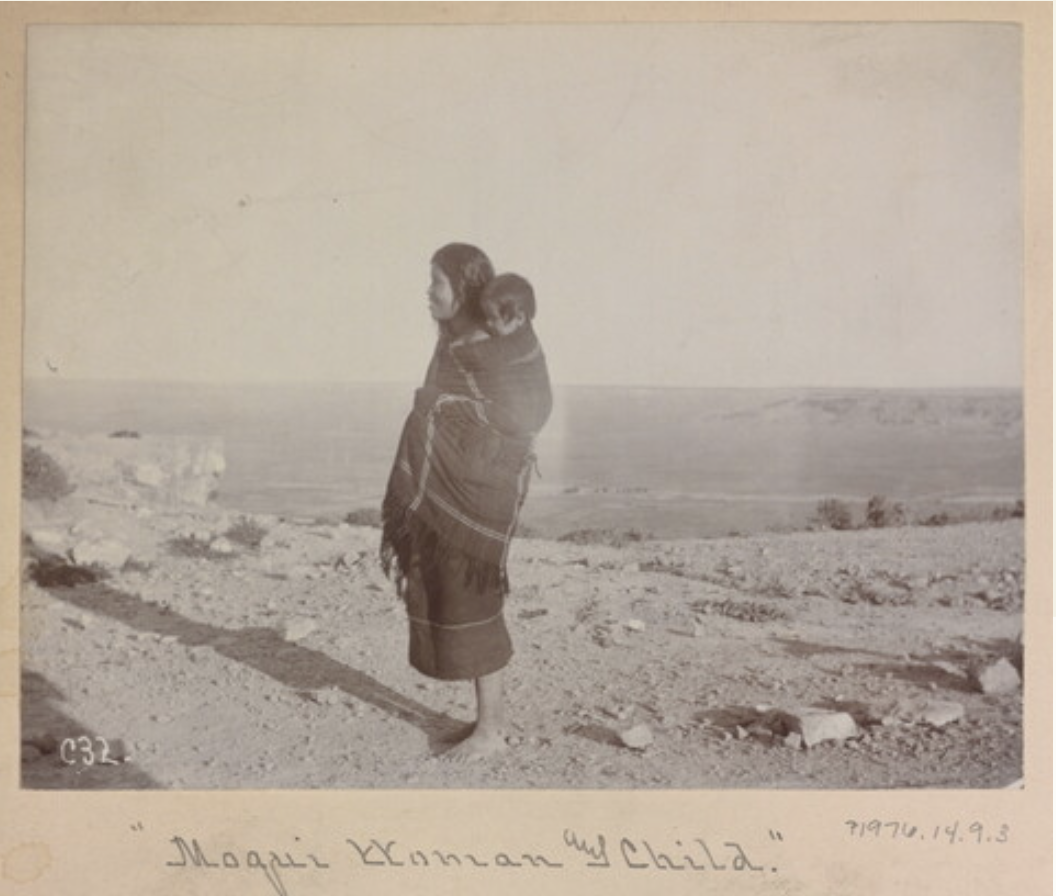
Moqui Woman and Child
Adam Clark Vroman (1856-1916)
The Moqui were at least alluded to in the book Overland (1871) by John William de Forest.
The scene had not only its charms, but its marvels. Besides the grand environment of plateaus and mountains in the distance, there were near at hand freaks of nature such as one might look for in the moon. Nowhere perhaps has the great water erosion of bygone aeons wrought more grotesquely and fantastically than in the Moqui basin. To the west rose a series of detached buttes, presenting forms of castles, towers, and minarets, which looked more like the handiwork of man than the pueblo itself. There were piles of variegated sandstone, some of them four hundred feet in height, crowned by a hundred feet of sombre trap. Internal fire had found vent here; its outflowings had crystallized into columnar trap; the trap had protected the underlying sandstone from cycles of water-flow; thus had been fashioned these sublime donjons and pinnacles.
They were not only sublime but beautiful. The sandstone, reduced by ages to a crumbling marl, was of all colors. There were layers of green, reddish-brown, drab, purple, red, yellow, pinkish, slate, light-brown, orange, white, and banded. Nature, not contented with building enchanted palaces, had frescoed them. At this distance, indeed, the separate tints of the strata could not be discerned, but their general effect of variegation was distinctly visible, and the result was a landscape of the Thousand and One Nights.
To the south were groups of crested mounds, some of them resembling the spreading stumps of trees, and others broad-mouthed bells, all of vast magnitude. These were of sandstone marl, the caps consisting of hard red and green shales, while the swelling boles, colored by gypsum, were as white as loaf-sugar. It was another specimen of the handiwork of deluges which no man can number.
Far away to the southwest, and yet faintly seen through the crystalline atmosphere, were the many-colored knolls and rolls and cliffs of the Painted Desert. Marls, shales, and sandstones, of all tints, were strewn and piled into a variegated vista of sterile splendor. Here surely enchantment and glamour had made undisputed abode.
Lastly, Harvard’s Peabody museum has a watercolor painting of a Moqui woman from 1891 by artist Julian Scott.

Study of a woman of 2d mesa (Moqui) Shi-mo-pa-vi”. Portrait of older woman, pueblo in background.
 old spirituals