If you haven’t read the earlier installments of this series, go to The Mad Love of Mrs. Mort, Part 1

Part 12: Dorothy’s Fate
After her trial, we have only a sketch of Dorothy’s life. She remained at Long Bay Gaol for nine years as various supporters, including her husband, tried to secure her release. Her life bore no resemblance to any other asylum inmate and certainly none to that of a prisoner. During her residence there, Dorothy did not live in a cell or endure any other prison or asylum conditions. Instead, she had a “screened-off corner of Long Bay prison hospital with a carpet and the general demeanor of a small bedroom.”
Harold worried lest his wife feel deprived of the luxuries she enjoyed. This is very forgiving of him, don’t you think? After all, his wife had an affair and she planned to leave him. She had murdered her lover only when he discarded her. The resulting trial was salacious and humiliating to him and it turned his life (and the lives of their children) upside down.
Nevertheless, Harold was determined his wife would not do without. He paid to ensure Dorothy had fresh flowers, a butcher on call, and a baker to send any treats she wanted. It sounds outlandish but many wealthy people have enjoyed luxuries in prison from Harry K. Thaw to Al Capone to Jeffrey Epstein. However, Mrs. Mort is the only prisoner I’ve ever heard of who had a servant. Harold employed a woman named Bella Carr to be Dorothy’s servant while she was incarcerated. It would be interesting to know what was expected of Bella.
It would probably surprise anyone who encountered Dorothy to learn that she was a prisoner. She was not required to wear a prison uniform. She generally dressed in the fashionable and expensive clothing Harold sent to her, often accompanied with beautiful diamond jewelry. She was also allowed to leave the prison for short holidays.
Dorothy’s lifestyle in prison would be considered to be a significant step up for many free people!
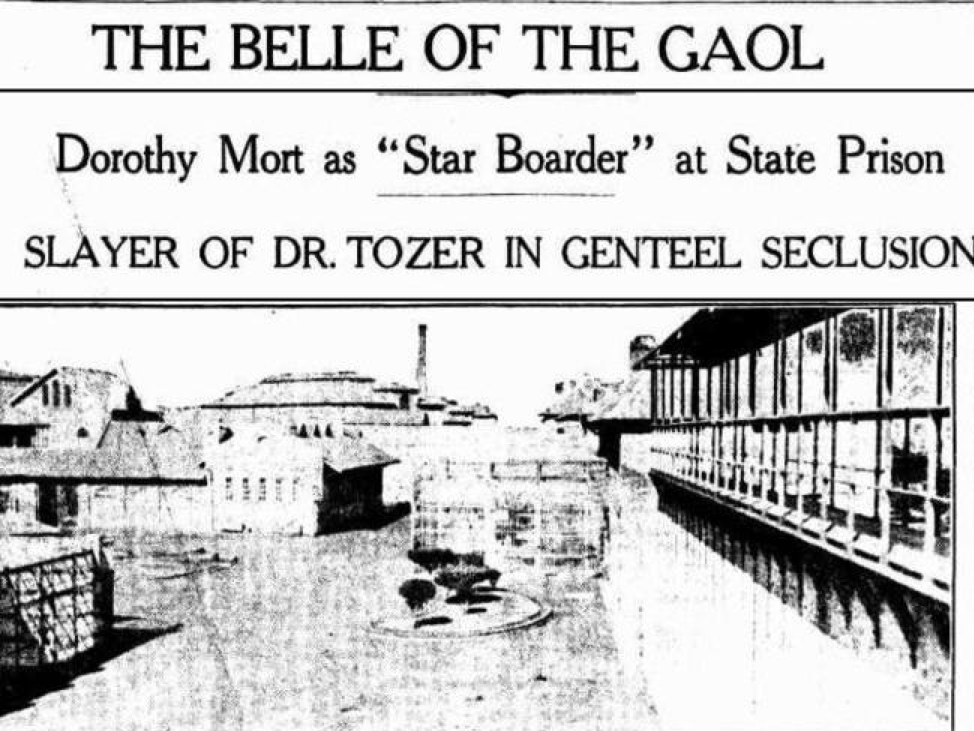
About halfway through her time at Long Bay, an article featured an update on the infamous Mrs. Mort, noting she spent her time in “genteel seclusion.” She enjoyed sewing and reading romantic novels.
“The ordinary prisoners who have killed nobody she shuns with aversion, even refusing to sit near them when she enters the hall dressed up for gaol concerts. She prefers the association of the inebriates, who are not classed as prisoners.” Mrs. Mort was aloof and preferred to maintain some distance between herself and the ordinary prisoners. She was spoken of as a very educated and delicate person.
On October 16, 1929, Dorothy Mort was released. She returned to Harold and their children. By then, Poppy was 17 and Maurice was 14.
Harold passed away in 1950, and Dorothy lived alone until her own death in 1966.
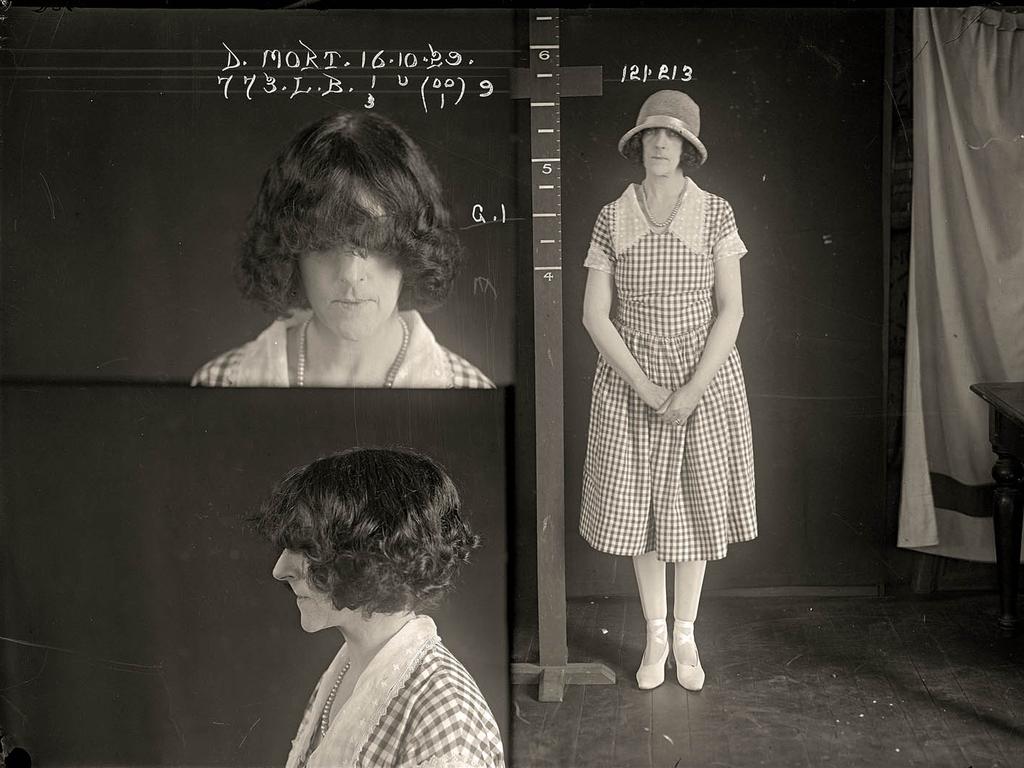
Dorothy’s mugshot before leaving prison
To return to her case, Dorothy Mort could be perceived as showing some repentance by permitting her letter to Mrs. Tozer to be publicized to clear Claude Tozer’s name. She suggested that, had she been well during her trial, she would never have permitted her counsel to say the things he did against the doctor. But is this disingenuous?
Mr. Mack’s defense of Dorothy was successful. If not for his skill, she would have been executed or spent the remainder of her life in prison. Mrs. Mort may have felt ashamed about the way her case was handled but she couldn’t have wished for a different outcome.
What do you all think of the story of Dorothy Mort and Dr. Claude Tozer and their doomed love affair? Dorothy murdered Claude and she was sent away for nine years to pay for her crime. Was that justice? I’m eager to hear your thoughts on this amazing tale!
As a post-script to this story, the etymology of the names Claude Tozer and Dorothy Mort are interesting.
Mort is a Latin word that means death. I was curious about the meaning of the rest of her name. Dorothy is a combination of the words dōron meaning gift and theos meaning God, from the Greek name Dōrothéa. A gift from God.
The name Claude is of Latin origin, from the Latin word claudus meaning crippled. The name Tozer is British and refers to textile workers who teased wool. Tozer comes from the word tōsen and means to tease.
If you liked this post, please subscribe to Old Spirituals, like and share the post on your social media, and leave a comment! It really helps other people find the site. And if you’re so inclined, check out my books on Amazon or click the button to Buy Me a Coffee!

 old spirituals