I thought it might be interesting to look at a little sub-set of crime today, which is the tiny group of people who felt so badly about their crimes, they inflicted terrible punishments on themselves.

The first is from February 1913, from the Leavenworth Times.
“Arrested for a series of small forgeries, A. J. Heinn, former president of a book company in Milwaukee, today gouged out both of his eyes in self-punishment.
“‘I don’t believe in suicide,'” he said, “‘but I shall never see daylight again or forge another check, and I am more at peace than I have been for some time.’ Heinn mutilated himself with a penknife.”
I feel like there must have been more to this story. Can you imagine? Blotting out your eyesight because you were caught forging small checks? In some ways, I suppose it would be much more interesting and respectable if you were caught committing a really big crime–like masterminding the Isabella Stewart Gardner art heist–than if you were picked up for compulsively writing bad checks for $100 or less.
But I’m wandering off-topic. Let’s look at the other case, which comes to us from The World in 1928.
“Self-inflicted punishment in the present age has become virtually as rare as the horse-drawn vehicle…A dispatch today from Seattle tells of a Japanese maid, who for some sin which was not named, cut off about an inch of her tongue. While her condition is not serious, physicians believe that she will never be able to speak again. While self-inflicted punishment to a degree is a laudable act, it is evident that punishment, as well as crime, can go to extremes. We wonder if this woman will be better for her act.”
This one is just shocking. I suppose with the check forger, there was some relationship between the blindness he inflicted on himself and his ability to write bad checks. But without knowing what the maid did, why on earth would she cut her tongue out? It’s interesting the article used the word “sin” instead of “crime” and it makes me suspect whatever she did wasn’t illegal, per se, though she could have done something wrong. For instance, maybe she lied about something and set in motion a chain of events that had catastrophic consequences.
There is an old saying about punishing your body to perfect your soul, but these cruel self-mutilations could never be undone and they were—at least in the first case—out of all proportion to the crime.
There are many people who punish themselves for real and perceived wrongdoing in invisible ways. On that note, the last thing I’ll share is the front page of the Mansfield News from May 1928.
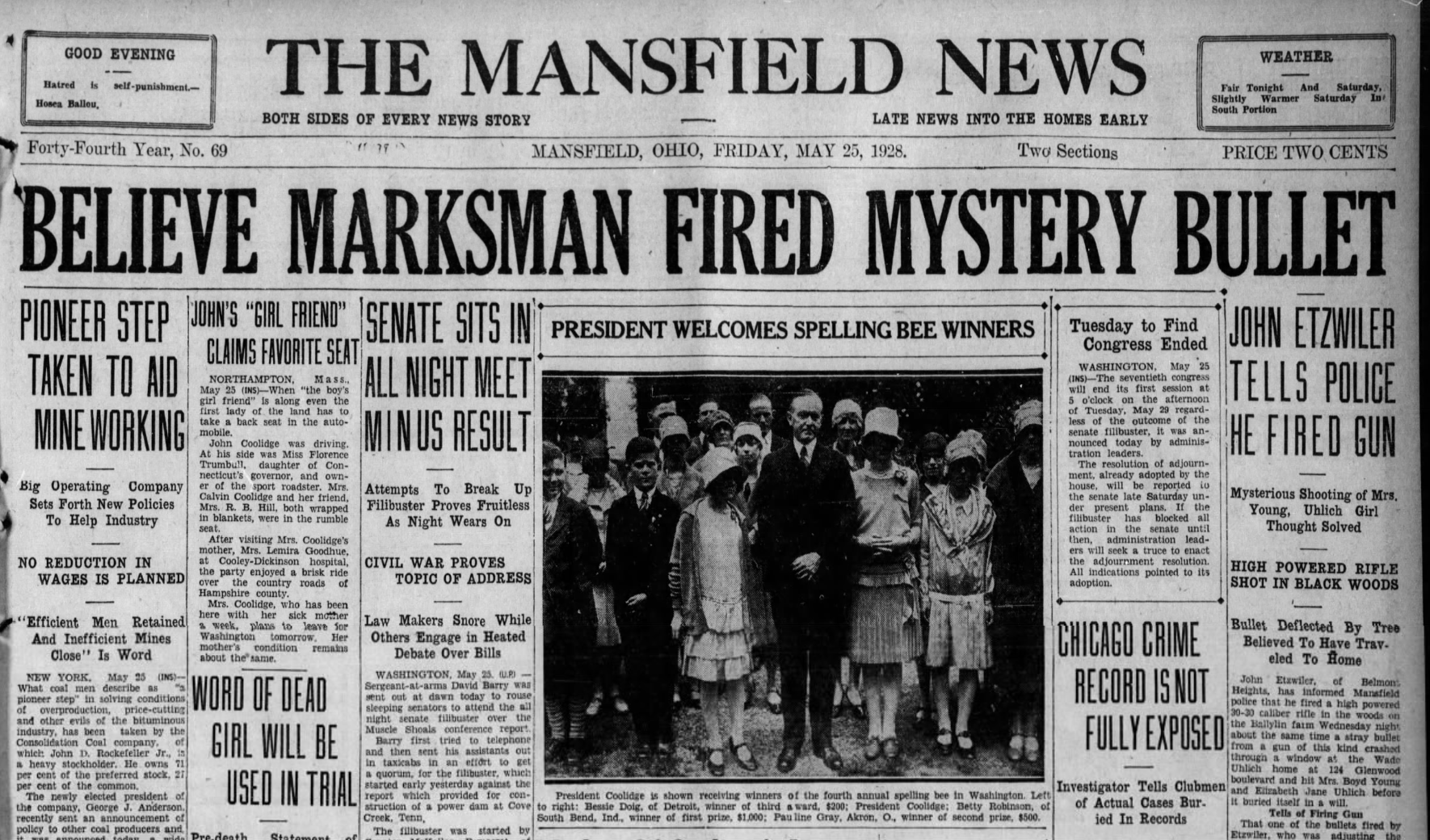
Wouldn’t it be lovely if the president hosting a spelling bee was front page news today?But what I want to point out is hidden in the upper left corner:
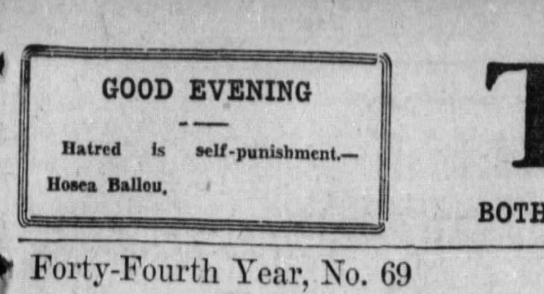
Even as we examine these people from the past, remember to be kind to yourselves and to those who are close to you.
 old spirituals