I recently reread To Kill a Mockingbird, Harper Lee’s masterpiece set in Maycomb, Alabama in the 1930s. In the first chapter, she describes her home like this:
Maycomb was an old town, but it was a tired old town when I first knew it. In rainy weather the streets turned to red slop; grass grew on the sidewalks, the courthouse sagged in the square. Somehow, it was hotter then: a black dog suffered on a summer’s day; bony mules hitched to Hoover carts flicked flies in the sweltering shade of the live oaks on the square. Men’s stiff collars wilted by nine in the morning. Ladies bathed before noon, after their three-o’clock naps, and by nightfall were like soft teacakes with frostings of sweat and sweet talcum.
People moved slowly then. They ambled across the square, shuffled in and out of the stores around it, took their time about everything. A day was twenty-four hours long but seemed longer. There was no hurry, for there was nowhere to go, nothing to buy and no money to buy it with, nothing to see outside the boundaries of Maycomb County. But it was a time of vague optimism for some of the people: Maycomb County had recently been told that it had nothing to fear but fear itself.
I haven’t spent any time in Alabama but I lived in North Carolina for a long time. I lived in the Piedmont region of the state, on the South Carolina border. Like Maycomb, the area has red clay soil. Coming from Ohio, it was one of the first differences I noticed. When it rained hard, the earth does turn to red slop, at least for a little while!

greensborodailyphoto.com
I was thinking of my own experiences in North Carolina and of Harper Lee’s book while looking at these pictures taken in rural North Carolina by Bayard Morgan Wooten, around the same time as To Kill a Mockingbird is set. You can may see Maycomb a little more clearly through them.
It’s Labor Day weekend, so what better time to celebrate them? These people were working hard to make a living. They wore mended clothes and many look like they could use a good dinner. But they were beautiful, just the same.
These fellows are looking for clams near the coast.

Bayard Morgan Wootten Photographic Collection, UNC Chapel Hill
This man’s job was to unload the fish and weigh them in Hatteras.

Bayard Morgan Wootten Photographic Collection, UNC Chapel Hill
I put these two strawberry-pickers in Chadbourn together, since I feel certain the girl on the left is the mother or big sister of the child on the right! She’s more fashionably dressed than the other people here. I love her high heels and beret!

Bayard Morgan Wootten Photographic Collection, UNC Chapel Hill
The last three pictures were taken on a tobacco farm around harvest time.
This fellow breaks my heart. He’s so thin, and his clothes are threadbare.
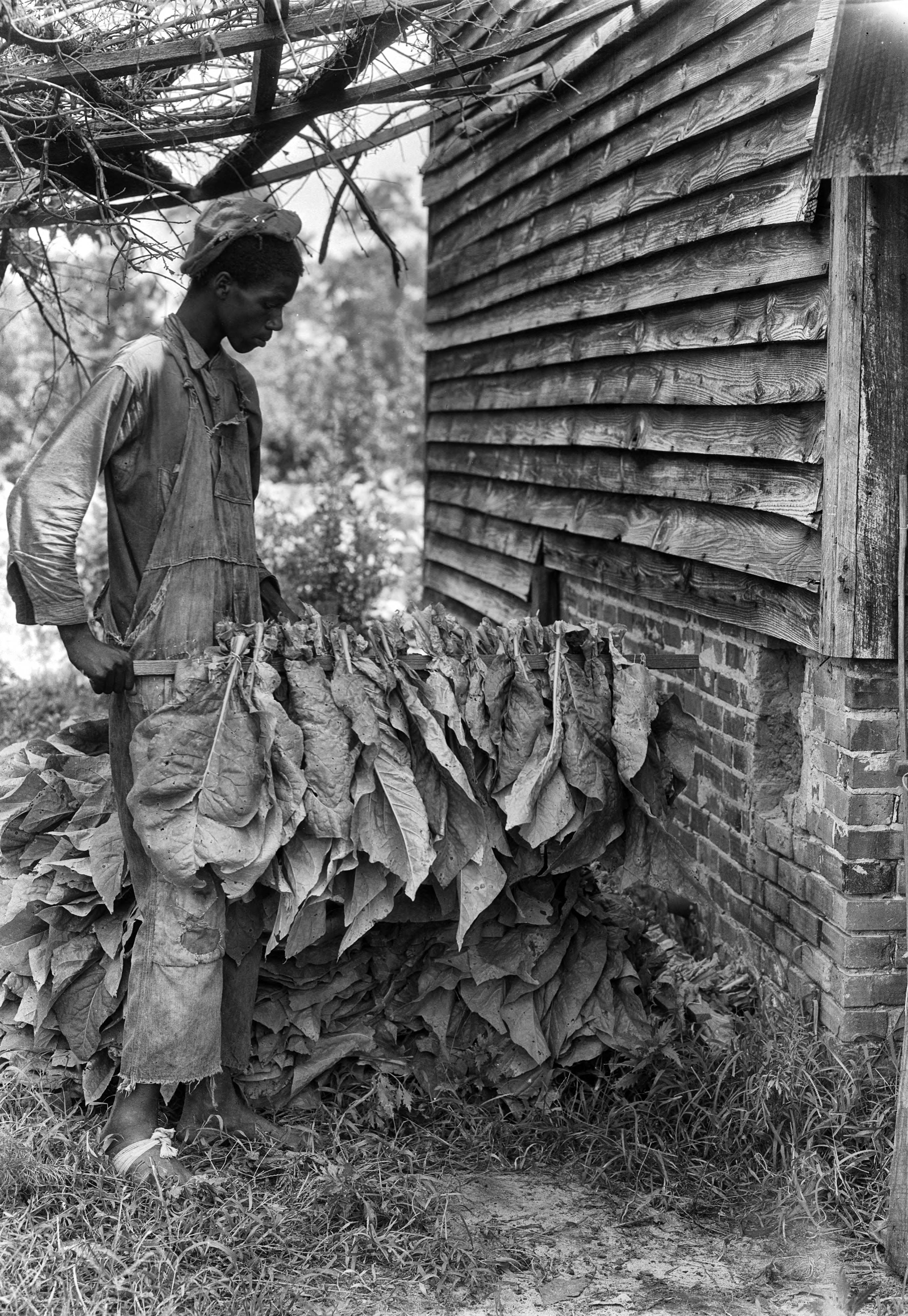
Bayard Morgan Wootten Photographic Collection, UNC Chapel Hill
A number of men and women are working in the tobacco fields. I’m very impressed by their knowledge of how to do things. I have no idea what’s involved with the process of growing, harvesting, and preparing tobacco to be sold. The woman on the left is wearing a bonnet that looks old-fashioned even in these pictures!

Bayard Morgan Wootten Photographic Collection, UNC Chapel Hill
In our last picture, a man is hauling tobacco to the barn, assisted by a little boy wearing a Coca-Cola hat. It’s a curious note in the picture. As in all the pictures, the child’s clothing is well-worn and if he was working in the fields at that age, there wasn’t any money left over for fun hats.

Bayard Morgan Wootten Photographic Collection, UNC Chapel Hill
Thank you to all those who do the hard work. Happy Labor Day!
 old spirituals