We become so used to our environments that we scarcely “see” them as we go about our day-to-day business. At least, that’s true for me. However, the beauty or ugliness of my surroundings has a deep impact on my thoughts and aspirations, whether I’m conscious of it or not.
We can improve our homes and workplaces by reorganizing, painting, and redecorating, but we can’t alter a building’s architectural style. And architecture, if the great thinkers of the past are to be believed, has an almost supernatural power over the minds of those who enter it.
Thomas Jefferson believed architecture, especially public buildings, should reflect its purpose and ideals. He believed architecture could inspire people to improve themselves and usher in social change. Jefferson favored the NeoClassical style associated with ideas like democracy, education, rationality, and civic responsibility. He designed the University of Virginia campus with these ideas in mind.

The University of Virginia
Southern courthouses built during the nineteenth century up through the 1940s inspired those who saw them or stepped inside with their Greek Revival symmetry and solidity. They were built to exude ideas like Justice and Integrity. Whether it is true or not, these buildings send the message: You will find Justice here.
I recently read an article about the architecture of modern courthouses. They are built to send a message of Transparency and Sustainability. These buildings often have glass fronts and feature corporate-style art. It isn’t immediately obvious to a passer-by what purpose these buildings serve. They’re easily mistaken for businesses or government bureaus.
The question is, does the architecture make a difference in what actually happens inside these courthouses or in how people feel about their experiences there?
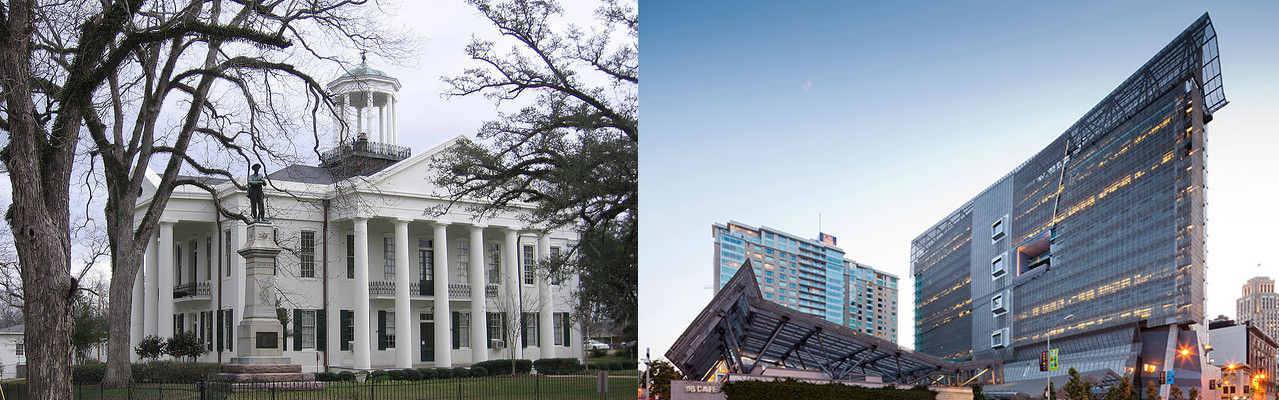
Left: Raymond, MS courthouse. Right: Federal building in San Francisco
If we are to raise our standards, we must pay attention to the architecture we create and replace ugly buildings with beautiful ones. We need to create environments where great ideas can take shape.
We should also devote a fair amount of energy to preserving the beautiful buildings we have. In architecture, it’s unusual but not unheard of to see new buildings created in classical styles. But most architectural styles have their day, then the world moves on—we never hear of a new home being built in a Queen Anne Style, for instance. (Whenever I make statements like that, I’m bound to get a message back: “What do you mean? We just built a new Queen Anne Style home and it’s lovely!”)
Typically though, structures that were created when a particular style was popular are all we have to remember and enjoy them. “Architecture is frozen music,” the famed German writer, Johann Wolfgang von Goethe, once wrote. It’s a tune we won’t hear played again.
That brings me to the building that inspired today’s post: The Peoples Federal Savings & Loan Association building in Sidney, Ohio. Isn’t it glorious? This Art Nouveau building was constructed in 1917 by architects Louis Sullivan, Freytag and Freytag.
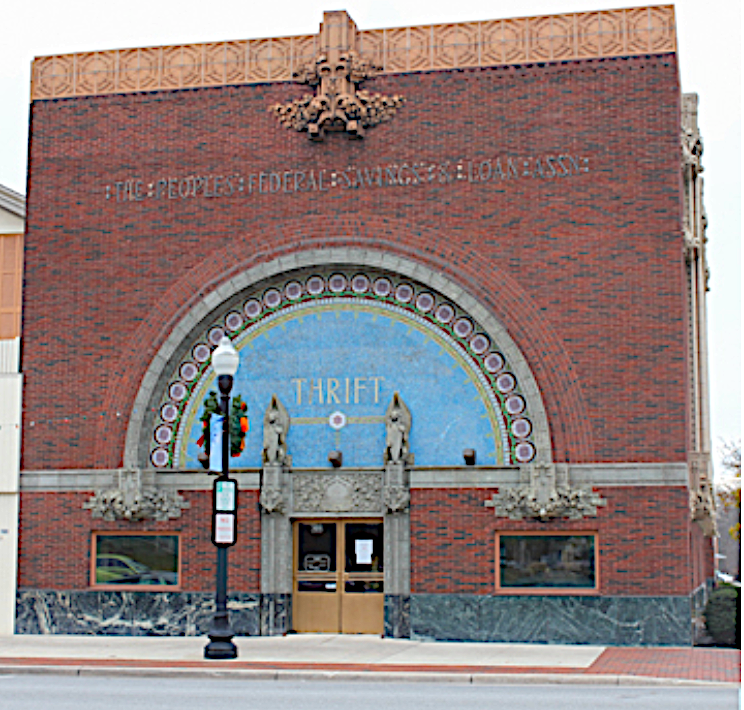
Credit: Photograph by Heather Rudge
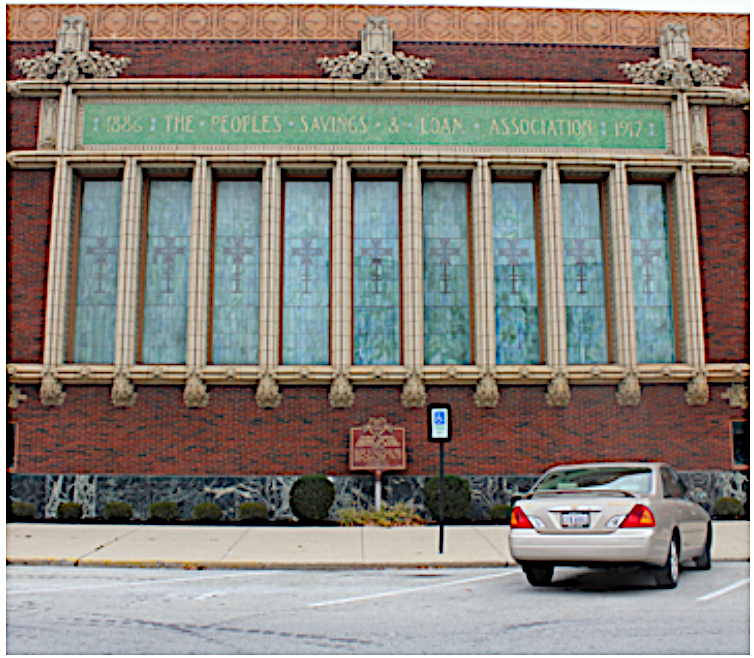
Credit: Photograph by Heather Rudge
Here’s a link to an in-depth article about this beautiful building on the Society of Architectural Historians’ website, if you’d like to know more.
I’m curious to hear your thoughts!
 old spirituals
One wonders what impact the FBI’s Brutalist architecture has had on their activities and ideals!
LikeLiked by 2 people