This nondescript building opened in 1912 as the Alberta Hospital for the Insane. I found this picture on Archive.org. It made me shiver.

Insane Asylum, Ponoka, Alberta, Canada. From Archive.org. Photo circa 1920
Situated in rural Ponoka, this insane asylum led the way in training nurses who specialized in psychiatric illness. My lack of knowledge around Canadian geography is profound, so I had to look up this location up on a map.
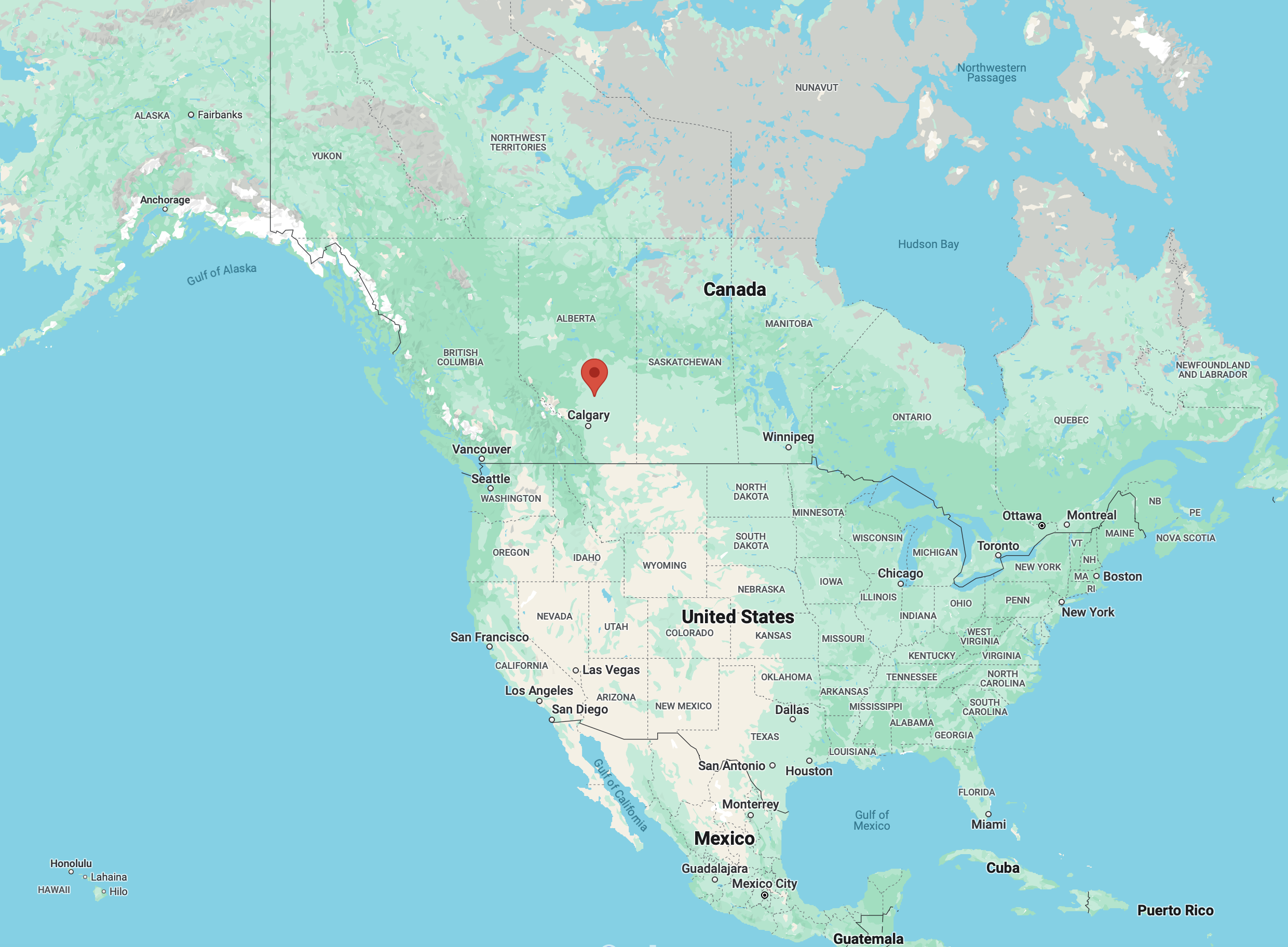
I’ve read terrible things about the horrors that happened in places like this. This institution was known for sterilizing its patients. According to asylumprojects.org, the patient composition was 50% from the U.S. and Canada, 23% from the UK, and 12% from Poland. They also note that Scottish people accounted for 8% of the sterilizations.
I found a couple of interior images on asylumprojects.org, probably from around the time the institution opened.
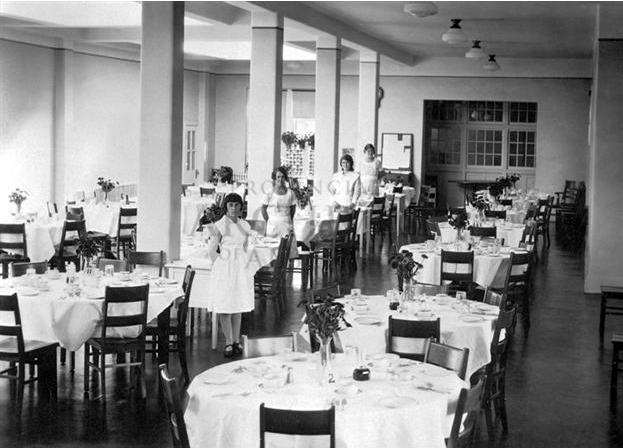

The building is still standing and operational. It’s now a renowned psychiatric and brain damage treatment center called the Centennial Centre for Mental Health & Brain Injury. I have mixed feelings about these institutions. People housed in these old asylums were often treated cruelly and kept in inhumane conditions. But closing these institutions and replacing them with nothing has proven to be a bad idea.
 old spirituals
That dining room is very nice. I can’t imagine insane people sitting around those perfectly set tables, so that had to be for the staff. The homeless problem seemed to multiply in the 1980’s when many of the institutions were closed. It was so sad to see people that were probably harmless, but just doing abnormal things roaming the streets.
LikeLiked by 1 person
You know, I bet you are right about the dining room being for the staff. That would make much more sense. The patients were probably given meals in their rooms. Judging by the number of beds in one space, they were probably very crowded.
LikeLike
I
LikeLike
Yikes! I think there is a commenting issue. Let me write to WordPress to get it fixed.
LikeLike
I had thought it was possibly for fundraising. I can’t even imagine staff getting anything that fancy. But for photo ops and fundraising I can totally see a dining room this well put together. I’m a wee bit older, and even I am aware that institutions have always been looked down on in some way or another. So of course they would want to make as much of it look as appealing as possible. Possibly even to family members of patients. Because most people would never stand for our family being treated as so many of these poor people were. Perhaps not all institutions were bad, but it’s more common than most like to believe. I’m from Alberta and I have heard horror stories of this place my whole life. I have no doubt that paranormal activity here is high as well from all of those that suffered.
LikeLiked by 1 person
Tracy I am so sorry I missed your comment! It went into spam and I just noticed it and pulled it out. You should be able to leave comments from now on without them being held for approval.
What you say interests me a lot. When I was writing Grievous Deeds, I researched the asylums quite a bit. I was curious why Dave Edwards was so adamant that he would rather hang than go to the asylum. The stories are dreadful. The people were treated so badly and they were helpless. Dave would have known that better than most people, with so many of his relatives spending time in those places.
I agree with you too that there’s a reason so many of these places have paranormal activity! I’d love to know what was said of this place.
LikeLike
Many “mental institutions” served a use and effective service. Not every patient was “mistreated.” I have anecdotal knowledge; my best friend’s mother was cared for several times by the State Mental Hospital.
Because of abuses the hospitals were closed down. Now, a person can only be held for a limited number of hours for mental health evaluation.
LikeLiked by 1 person
I agree with you and Jennie about this. It was a stretch to make it sound like a general problem that applied to all mental hospitals. I suppose I was thinking about some stories from a Kentucky institution that I read when I was writing Grievous Deeds. Dave Edwards certainly needed to be in a hospital like this but he was terrified of them. He always said he preferred hanging to being locked up in a place like that. I knew several members of his family had been permanently housed in them, so I was reading up on them to see what Dave might have heard that would be so frightening to him. Some of the stories I read about people at that particular place were just horrifying. But as you point out and as Jennie was saying, mistreatment wasn’t universal and medicine and treatment have come a long way. Living in the Bay Area, which is plagued with homelessness, and witnessing a lot of incidents involving homeless people, I can attest to the fact they need mandatory treatment. They always have the option of being treated but they don’t accept it. Yet they aren’t capable of living on their own and they need professional care. It’s not right to have them on the streets. There’s nothing merciful about it.
LikeLike
The asylum question, I think, is easily answered. Yes, they are necessary. I live in a low-income, addict-ridden, mental-health ridden area. It’s not pretty. People absolutely have the human right of shelter, food, and clothing. Most of the people out on the streets in my city have one of the above-mentioned problems and cannot manage their own emotions, drives, addictions, and lives, so renting a room and caring for themselves even in the most basic sense is beyond them. They are soon tossed out for trashing the place or not paying the rent. As a case in point, there is a junkie house a block away from me which is obviously derelict and has had numerous complaints lodged against it. A man, an addict, went missing from home and was known to frequent this area and that particular boarding house. His family went in search of him over a couple of weeks knocking at that particular door several times but was always told he wasn’t there and they hadn’t seen him. He was found long-since dead, barricaded in one of its rooms, with trash and furniture in front of the door. The nvestigation is in process.
Everyone of the people in that place needed to be in an institution for one reason or another. They need a safe place to dwell with numerous restrictions and accountability for their actions, with doctors, nurses, social workers, and counsellors to help them get over whatever is eating them alive. And then they need a step-down unit where they can practice being independent to see how much they can handle. And for those who just cannot handle life, then this place becomes home.
As for the “terrible treatment” received at those places in the past, that happened in some places but not in all places. Some were quite humane and tried to help with the limited knowledge they had. Our knowledge and medications for these conditions is so much better now. Imagine people literally out of their minds with no medications available at all and with no rest from the “demons” which haunted them. Yes! It would take a lot of manhandling to handle them which is why they had straight jackets and rubber rooms, mostly so these violent people could not hurt themselves or others.
As is usual with humanity, there will always be those drawn to take advantage and be cruel with people who are most vulnerable; that will never change and we have to be on our guard even today (our old age homes are a case in point), but closing these places and dumping the unmanageable onto the street leaving them to live like animals, worse than animals who at least can manage to make a den or nest for themselves and go about their business in peace, is beyond irresponsible of society and beyond cruel to those who are suffering. Addicts attract criminal elements into our streets as well as commit crimes themselves. Their suffering is dumped onto society rather than actually pulling them in and relieving them somewhat, as much as is possible, of the burdens they carry. I say bring back the asylums.
LikeLiked by 1 person
You make a compelling case. I have to agree with you, Jennie, 100%. I think a lot of people are beginning to reach the conclusion that these institutions are an inevitability.
LikeLike
I had traced a relative, who had emigrated from England in 1907 to the asylum . One of his daughters was accidentally shot dead in 1910 and by 1916 he was in an asylum . There is a death record in Ponoka for the right name so this isn’t be where he was. Having looked at the 1916 census, there are 10 whole pages of inmates, 50 to a page. So, 500 inmates in 1916 .
LikeLiked by 1 person
Wow! It was a hospital so I’m sure they were equipped to care for a lot of people but 500 seems like a lot!
LikeLike