Accompaniment: St. Louis Blues by W.C. Handy
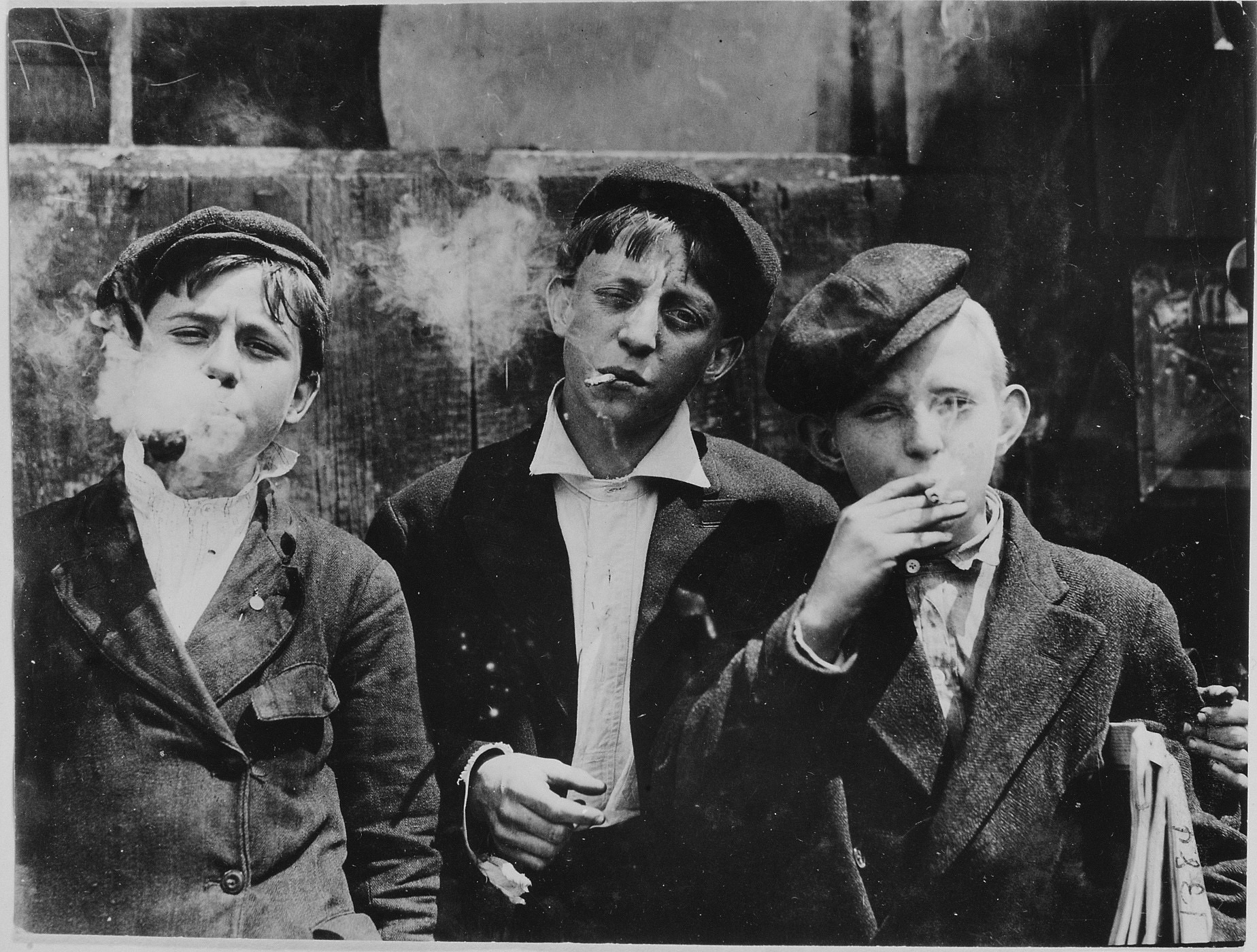
Look how tough these St. Louis boys were back in May of 1910! These boys were newsies, meaning they sold papers for the major papers in the area.
It reminds me of a story Ernest Hemingway told about growing up in an American city like St. Louis around this time. He said people would prey on kids so boys learned quickly they had to look tough and other people had to know they were tough just to survive and be left alone. I’d say these boys got the message!
None of them look over 13.
Archive.org
If you liked this post, please subscribe to Old Spirituals, like and share the post on your social media, and leave a comment! It really helps other people find the site. And if you’re so inclined, check out my books on Amazon or click the button to Buy Me a Coffee!

 old spirituals
Preying on kids…some things never change do they. And all of them smoking like chimneys! Life was hard on kids back then. No child labour laws, no protection other than what they could drum up themselves. I hope they ended up having fairly decent lives.
LikeLiked by 1 person
You bring up a lot of good points, Jennie but I see something else here too. If we put aside the smoking, these kids look so street smart and independent. Something about that seems enviable to me. A lot of kids today are either glued to a tablet or they get so much protection and hands on guidance from adults, they don’t ever learn to think for themselves or find ways to figure things out. They’re too apt to burst into tears and wait for someone else to tell them what to do.
LikeLike
Very true. It takes balance to raise kids. Keeping them safe from REAL threats while giving them age-appropriate freedoms; letting them make their own mistakes without letting them make devastating ones; letting them find their voice without allowing them to become rude or abusive; letting them explore their strengths while teaching them to respect their own weaknesses; teaching them to work hard and to relax in peace. I am surprised I raised my four without a PhD. LOLOL
LikeLiked by 1 person
I bet you did a great job! Happy Thanksgiving!
LikeLike
In the early 20th Century, young boys were employed to “hawk” newspapers on street corners in large cities. (Those in rural areas worked on the family farm.) They also worked as “Shoe Shine Boys” in business districts. Some opted to loiter in or around bars and pool halls, while others delivered food and groceries. (Pizza was delivered in the 1930s wrapped in a newspaper to keep it warm.) These types of jobs were not available to young boys during The Great Depression when adult men needed work.
Some of the money earned by young boys was given to their parent(s), but some was used for their own entertainment. Gambling, specifically playing craps in alleys and on the sidewalks, was a popular form of profitable entertainment. Many a gangster got his start as a young boy “hawking on the streets” and playing or “running” craps games. If one could travel back in time to a troop ship carrying young American men to war in Europe in 1918 or 1942, dozens of craps and poker games would be encountered. It was a great way to fill the idle time and divert the mind. Anecdotes passed down by family members tell of soldiers winning large sums playing craps on a troop ship going to and coming back from Europe.
LikeLiked by 1 person
Smoking was prolific until the population accepted it as the cause of major health problems. Even doctors and athletes smoked decades ago. Some even smoke a cigar or two today when having an alcoholic beverage to celebrate a special occasion. Cigar shops with a smoking den continue to exist in 2024.
The photo of young boys smoking in 1910 is not shocking. Those boys likely went to France to fight in WWI and when there smoked several packs of cigarettes per day.
Smoking was viewed as a right of passage to manhood for a long time. That is gone now, replaced by underage drinking of alcohol, vaping and the use of recreational marijuana. Also gone, sadly, are paper-boys, news stands and print media.
LikeLiked by 1 person
I vaguely remember reading a book when I was kid where smoking was seriously recommended to someone by a doctor as a way to “kill the germs.” If I’m outside, I like to walk by someone who’s smoking. Strangely enough, I have positive associations with it!
LikeLike
Pipe smoking was my vice for decades. Stopped years ago, but still miss it. My pipe smoking once relieved a tense moment during labor negotiations.
LikeLiked by 1 person
I suppose it provided an Atticus Finch-like air of reassurance! 🙂
LikeLike
Many of these kids probably didn’t have dads. My Dad’s father died when my Dad was three years old. I’m guessing they had to work to support the family. Street wise and street tough.
LikeLiked by 1 person
You’re very compassionate!
Your words make me look at them differently. I wonder how their lives turned out.
LikeLike