I’m so excited to share this post! This letter is so wonderful, I considered waiting to share it until Christmas. But waiting is all wrong when wonder is at stake.
Musical accompaniment by Joséphine Baker, Charles Trenet, and Fréhel.
In 1918, a letter arrived at the French front. It appears it was not addressed to a particular soldier–perhaps it was part of a wartime program where civilians write a letter to Any Soldier to thank them for their bravery and hopefully cheer them up a little. This initial letter was from a British, Canadian, or an American girl named Marian, and she had written in French.
That’s what we can deduce from the letter we do have, which is from a French airman named Pierre who responded to Marian. He does not know her but he’s very complimentary about her French letter and responds in perfect English. He writes to her like an old friend and gives a most interesting description of his daily activities. Even better, he painted delightful watercolor illustrations throughout the letter! The watercolors are beautifully done.
The Smithsonian’s National Air and Space Museum Archives doesn’t have the details of this letter. They only know that it was written by a French airman who was doing aerial observation in March of 1918. Pierre signed the letter, but his signature is a bit hard to read. The museum attributes it to “Pierre Savoy [spelling?]”
But– I think I’ve identified the real author of this remarkable letter!
Before I tell you, read the letter for yourself first. After the last image–where you can examine the signature for yourself–I’ll tell you who I think the author really is.
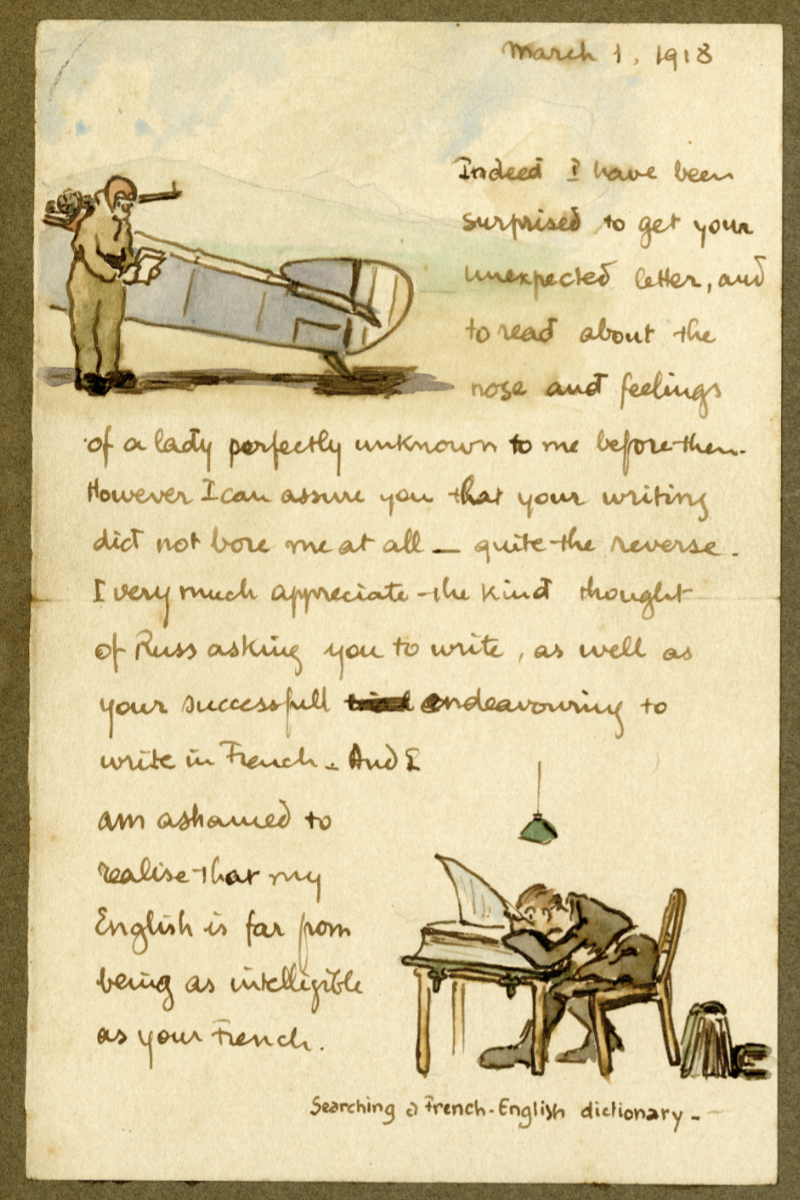
Source: National Air and Space Museum Archives | World War I Illustrated Letter
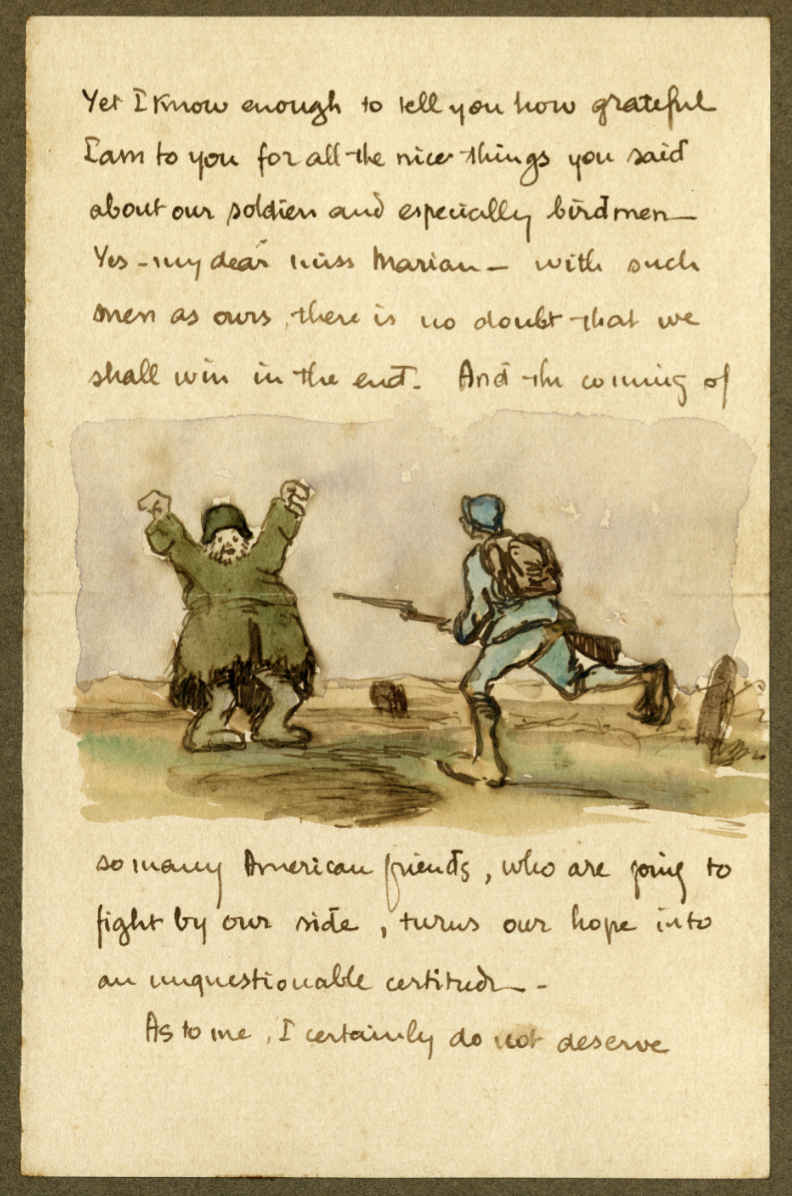
Source: National Air and Space Museum Archives | World War I Illustrated Letter

Source: National Air and Space Museum Archives | World War I Illustrated Letter
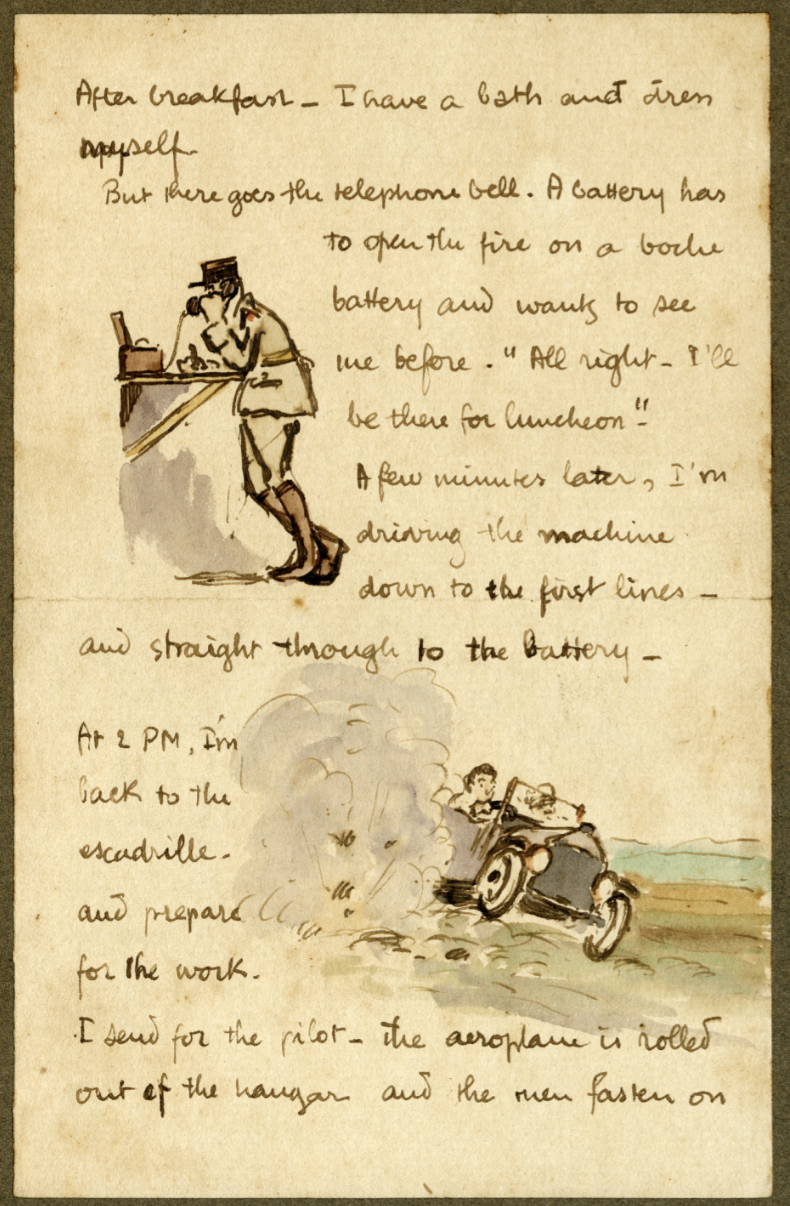
Source: National Air and Space Museum Archives | World War I Illustrated Letter

Source: National Air and Space Museum Archives | World War I Illustrated Letter
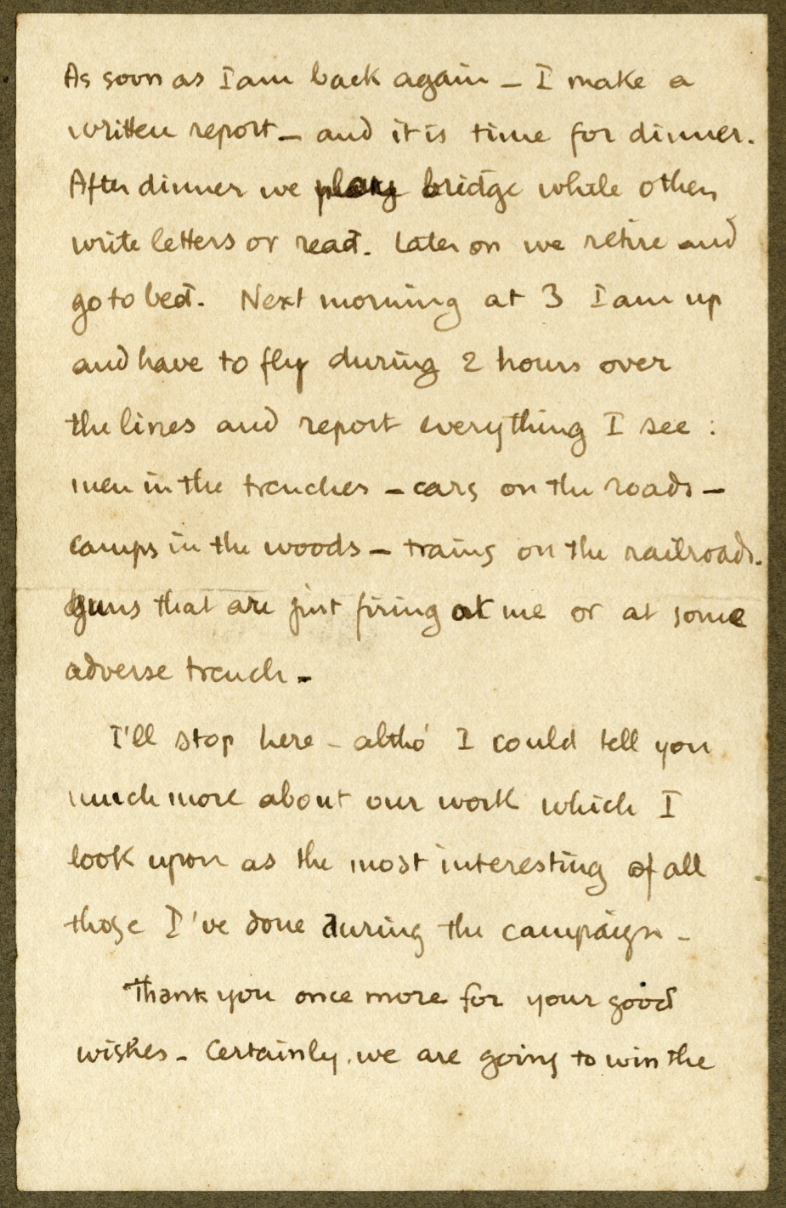
Source: National Air and Space Museum Archives | World War I Illustrated Letter

Source: National Air and Space Museum Archives | World War I Illustrated Letter
I couldn’t read the signature any better than the people at the National Air and Space Museum, but I doubted Pierre’s last name was Savoy. I found a list of World War I French flying aces but there was no obvious match. But when I looked more closely, I saw the name of the man I think wrote this letter: Pierre Le Roy de Boiseaumarié.
I’ll present my evidence and let you judge.
- During the war, Pierre Le Roy de Boiseaumarié was nicknamed Baron Le Roy.
- He was at the front from February 1917 until he was seriously wounded in June 1918. So the date of the letter fits.
- The first name is a match.
- The museum guessed his last name was Savoy, but there were no French flying aces whose last name was Savoy. Also the first two letters are a little distorted. Could they be L-E rather than S-A?

I couldn’t find another example of his signature, but let’s examine it. The first letter of his last name looks like an S but if you rotate it just a little, as I did on the right side of this image, it looks more like an L.
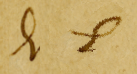
There are a couple of possibilities with the second letter (the center image). It’s probably a cramped version of an E. The way a person signs their name is often very different from the rest of their script. Fortunately Pierre had more Es in his signature for comparison. The left image is one of those Es. It could also be a distorted Greek E. I turned it upright in the image in the right image.

The last three letters are fairly clear: R-O-Y.

Le Roy would have been 28 when he wrote this beautiful letter. Here he is during the war and later in life.

Baron Le Roy, by the way, was a brave airman. During the war, he shot down two observation balloons and three enemy airplanes. He recovered and was awarded the Médaille militaire, Croix de Guerre, and Légion d’honneur.
In 1919, Pierre married Edmée Bernard Le Saint, heiress of the Château Fortia, a prestigious wine-producing estate. Pierre became quite a prominent figure in the world of French wine.
I’m eager to hear your thoughts on this wonderful letter and whether you think the author was the French flying ace and wine titan, Baron Le Roy!

If you liked this post, please subscribe to Old Spirituals, like and share the post on social media, and leave a comment! It really helps other people find the site. If you’re so inclined, check out my books on Amazon or click the button to Buy Me a Coffee!

 old spirituals

After my first read of “Pierre’s letter” several thoughts came to mind. Could Pierre have been an officer in the French air corps? That is who would normally be answering the phone and traveling to meet with other units. He may have been a trained pilot but he may have also been a gunner or observation airman. Two sketches depict a two-man plane, one shows the machine gun mounted at the second seat of the plane and the other man in the second seat without a gun. That may be why the name “Savoy” does not appear as a flying ace. Another possibility is that the writer used a fictitious name.
The cursive script of his first name is very clear, and very vertical. That likely means the first letter of his last name is also vertical. The question is, what is the letter? The preponderance of the evidence leads me to believe the name is “Savoy.”
LikeLiked by 1 person
That was so smart to look into the planes! Very good investigation skill!
LikeLike
What a neat post. Beautifully written (and illustrated!) letter! I think you may have discovered the true author’s name, too. Thanks for sharing!!
LikeLiked by 2 people
Thank you!
LikeLike
I am going to say that he is not who you think he is. He is not a flying ace at all because he has to “send for the pilot”. Also he said his life compared to an infantryman is like heaven as compared to hell. A flying ace would be more hellish with all those other flying aces shooting at him. I think he is merely a sighter or observer of what is going on down below. He describes his life as being much more relaxed which would be in keeping with an observer on reconnaissance.
As to his name, if you look above his name there are two capital G’s….”and God will be with us””….and also….Good bye”, this last G is very small but you can see the pattern. You see the part circle almost like a C with the straight arm down which was a very typical G of the time. As you said, signatures don’t follow all the norms and the letters can become more casual, but I believe the first letter is a sloppy G, and the second is definitely an “o” because you can see the loop at the top. I think his name might be Gouoy which is a surname variant of a village in the department of Seine-Maritime, Normandy called Guoy. That’s my best guess. I have transcribed old genealogical records for a couple of decades now, but it’s still only a guess.
LikeLiked by 2 people
Interesting article on observation. Apparently the French were the forerunners of this during WW1. They used cameras and had to have excellent cameramen onboard. Perhaps that explains our Pierre’s wonderful drawings. He was an artist and so an excellent observer rather than a common soldier.
https://en.wikipedia.org/wiki/Aerial_reconnaissance_in_World_War_I
LikeLiked by 2 people
🤯 another great deduction!
LikeLike
Another excellent article about our reconnaissance man, Pierre, including a photo of an airplane they used which is very similar to the one he drew.
LikeLiked by 1 person
Another excellent article about our reconnaissance man, Pierre, including a photo of an airplane they used which is very similar to the one he drew.
https://encyclopedia.1914-1918-online.net/article/reconnaissance-and-observation/
LikeLiked by 1 person
When I posted I neglected to note, as you did, the reference to calling for a pilot. However, during WWI, men who started as part of the ground crew, i.e. mechanics, etc., did eventually train and become pilots.
LikeLiked by 1 person
You and Jennie have done some great detective work and deductive thinking on this one!
LikeLike
Wow! I’m genuinely impressed by your deductions, Jennie! You would be a great detective!
LikeLike
how beautiful! and the French music is a perfect pairing! his drawings are wonderful! you might have identified the author but he wasn’t a flying ace. That required a pilot to shoot down five enemy planes
LikeLiked by 1 person
Thank you!
LikeLiked by 1 person