Hello Old Spirituals readers!
I’ve sure missed talking with you. I feel like I’ve been living in a submarine for years and am just now resurfacing. Nothing much to tell about being sick. I got the same upper respiratory infection that a lot of people have but I treated it with over-the-counter remedies. It wasn’t the smartest choice I ever made. Before I knew it, I was really sick. Eventually, I saw the doctor, ingested what was probably the entire inventory of the local pharmacy, and voilà! I’m back, with Lauren Bacall’s voice.
Our musical selection is Why Don’t You Do Right (Get Me Some Money Too) by Peggy Lee.
Today’s post originates with a present from my cousin Larry. It’s a cast iron skillet that was manufactured sometime between 1905 and 1930. How is that for a tremendous gift? Yesterday I tried it out and I really like it.
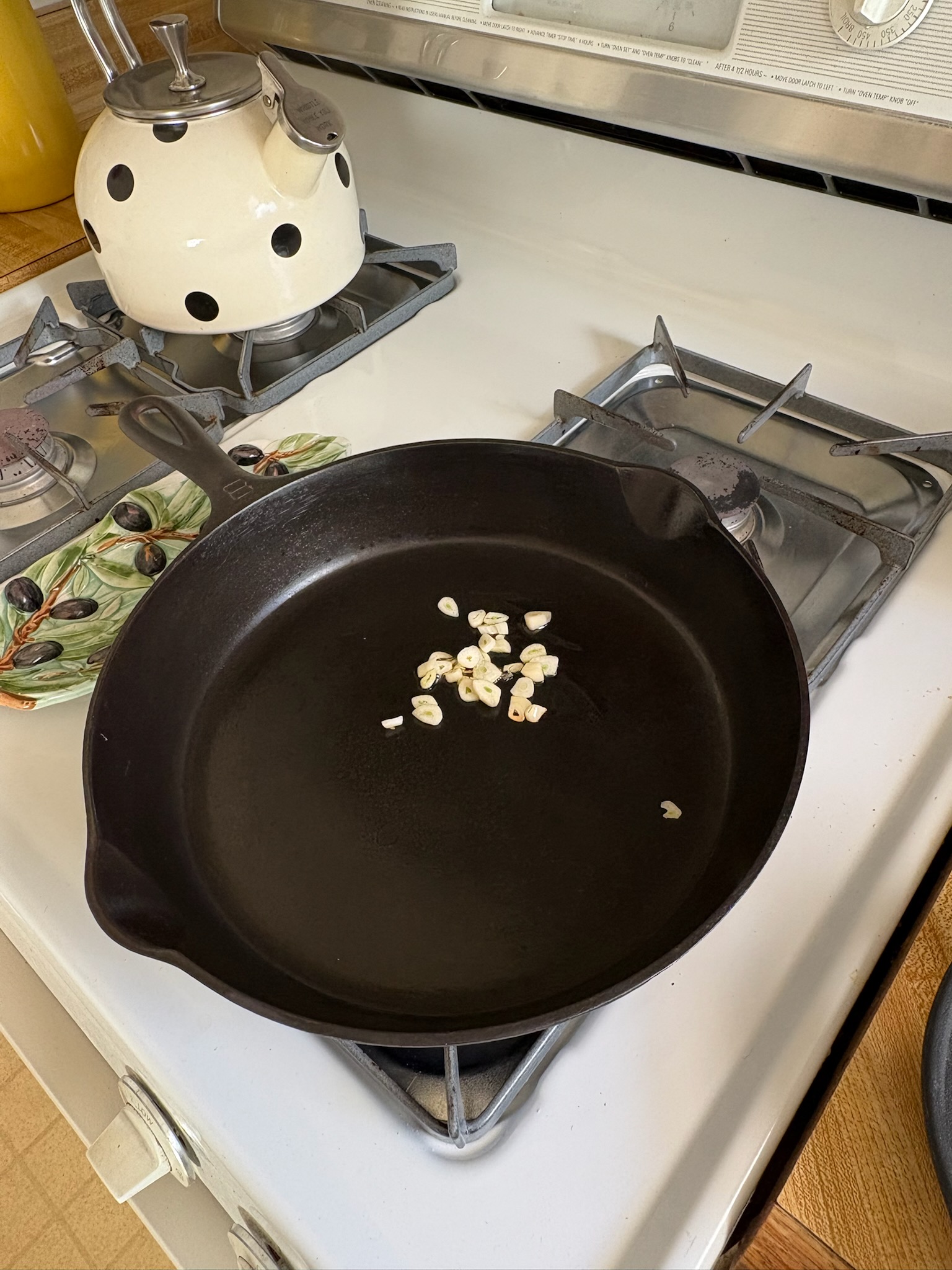
When I thanked Larry, he said he’d picked up the skillet somewhere between eastern Kentucky and central Georgia and restored it himself. He took up working with cast iron pieces as a hobby during the pandemic.
I like cast iron but it’s not something I’d ever given a lot of thought to. Listening to Larry talk made it really interesting though. He’s got an encyclopedic knowledge of the history of it. More impressively, he’s knows how to restore these old products. I’m going to paraphrase what he said but hopefully he’ll add more in the comments.
The skillet he gave me was manufactured by Griswold. They were in business from the mid-1880s through the mid-1950s. People like Griswold products because they’re lightweight, which is funny. The first thing I noticed about this skillet was how heavy it is compared to other skillets I’ve used. Relative to other cast iron, though, it’s lightweight.
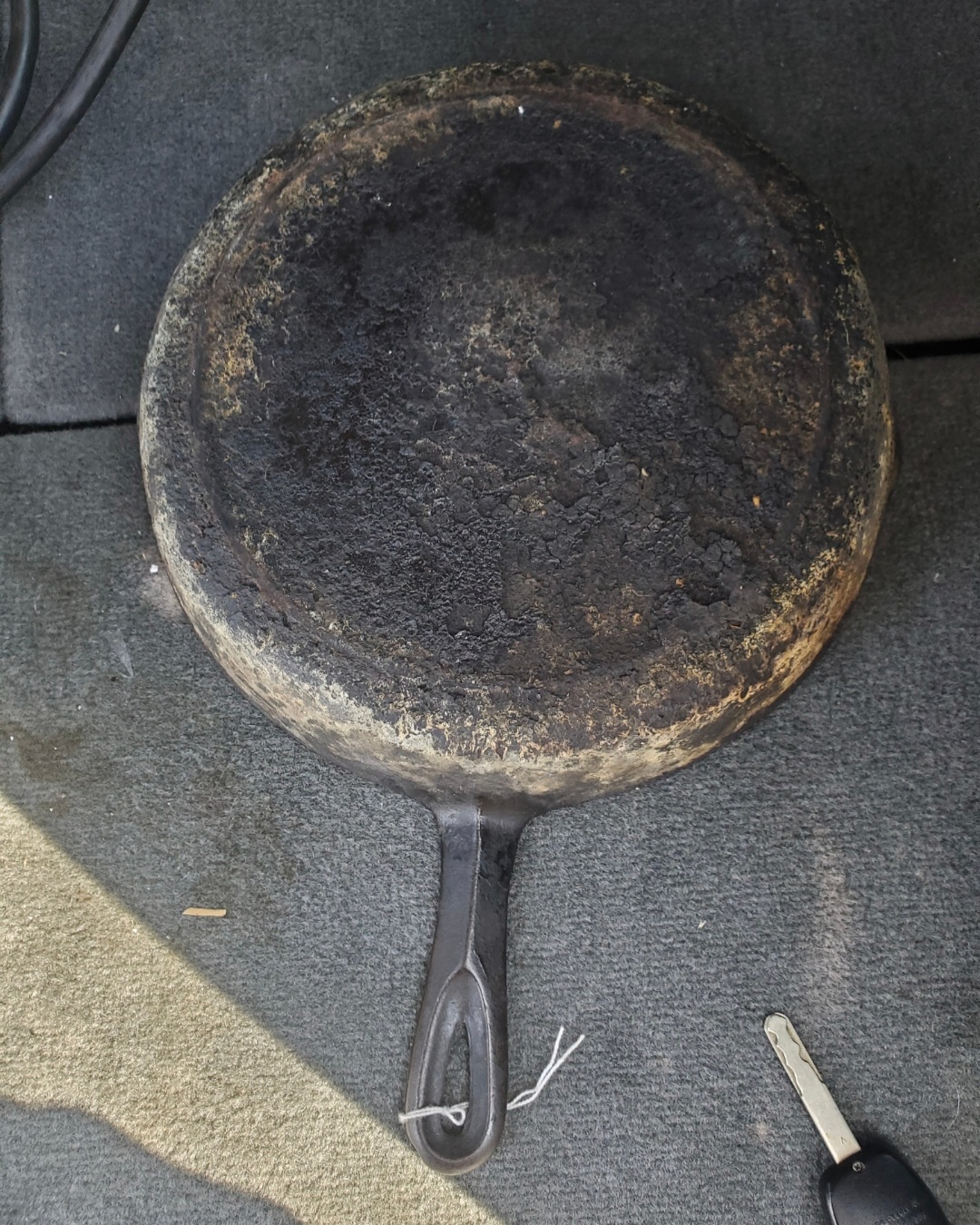
When Larry finds these cast iron products, they generally are in poor shape and haven’t been used for years. This is an example of the way they look when he finds them.
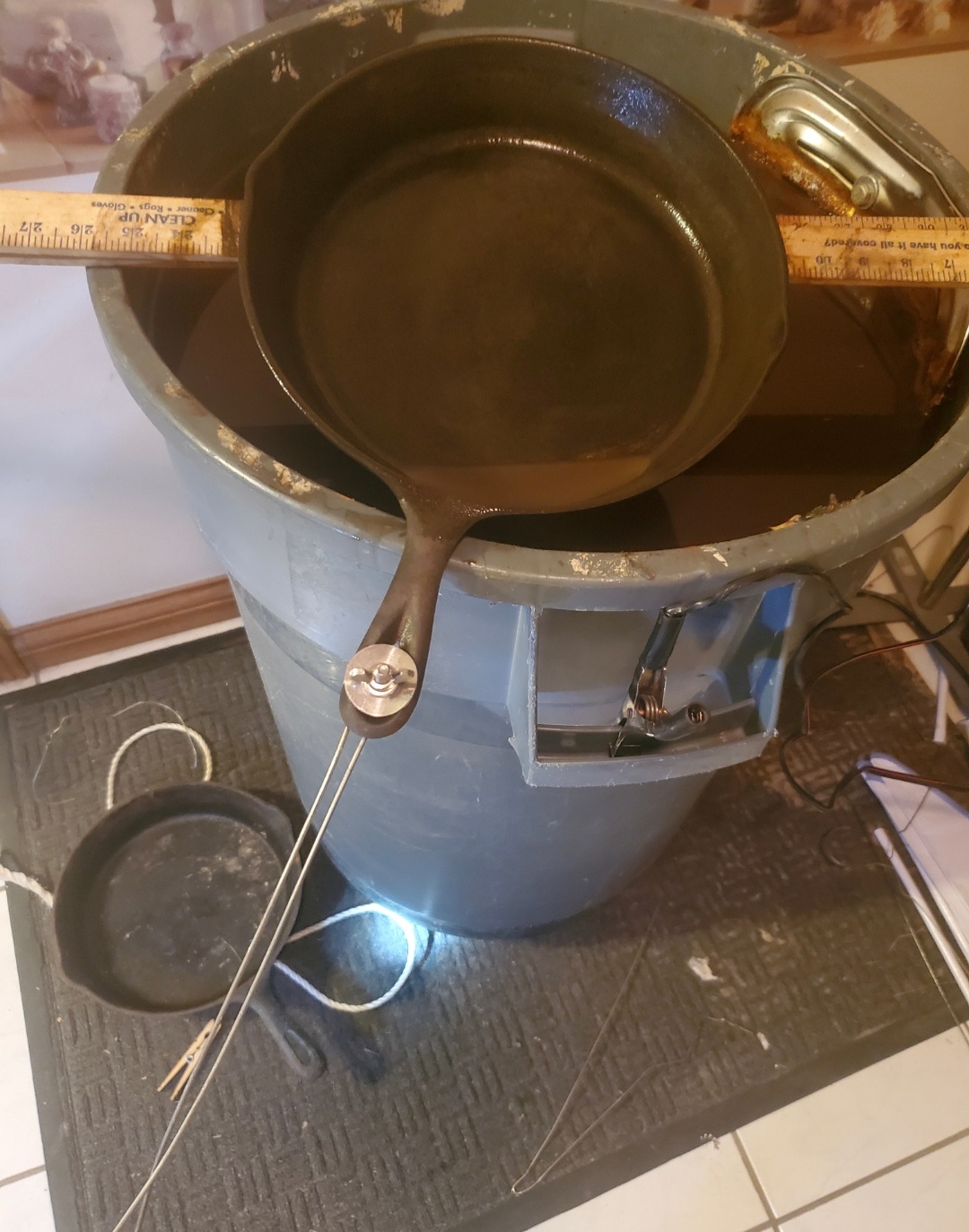
The process for restoring them sounds pretty complex. Larry has an electrolysis tank to clean them and then he refinishes them using grapeseed oil to make a hard but flexible non-stick surface. If you use a restored skillet normally, it’s easy to maintain and clean. Over time, it builds up layers of seasoning.
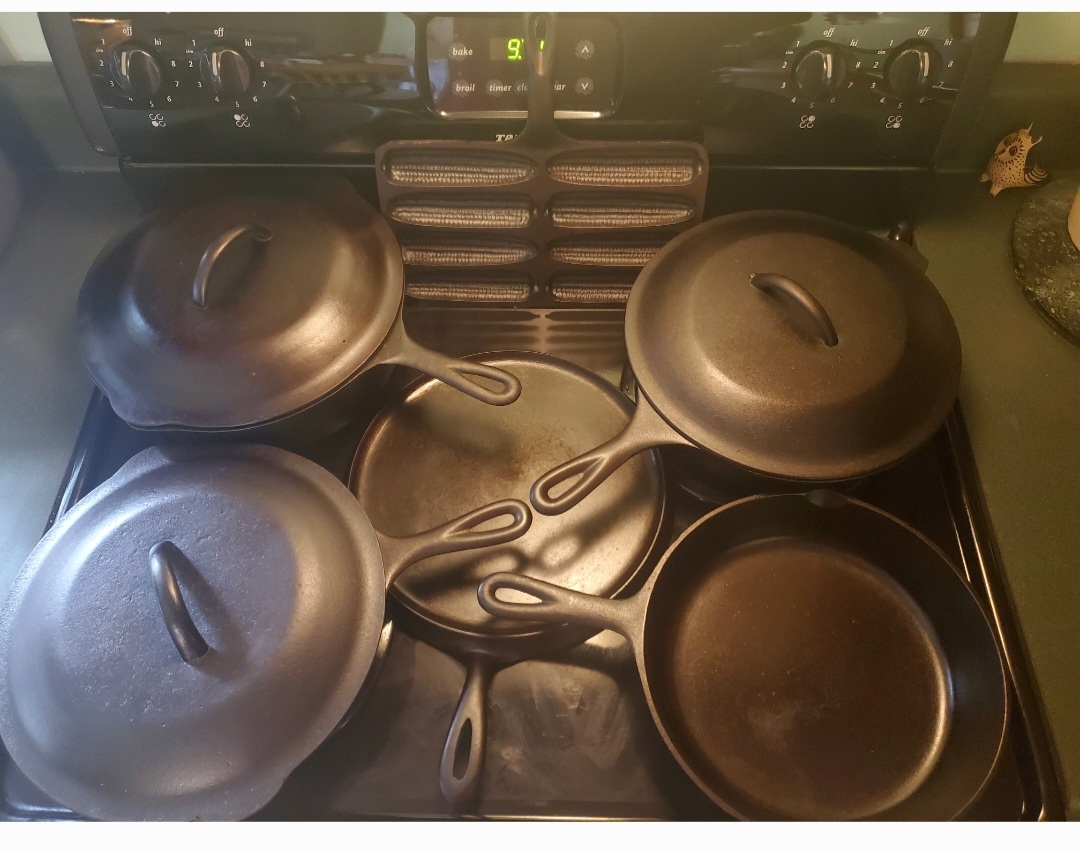
You all know I love a good prison connection. At the turn of the century, some prisons had forges where inmates made cast iron to sell. Larry has several skillets that were made in the Kentucky State Penitentiary in Eddyville.
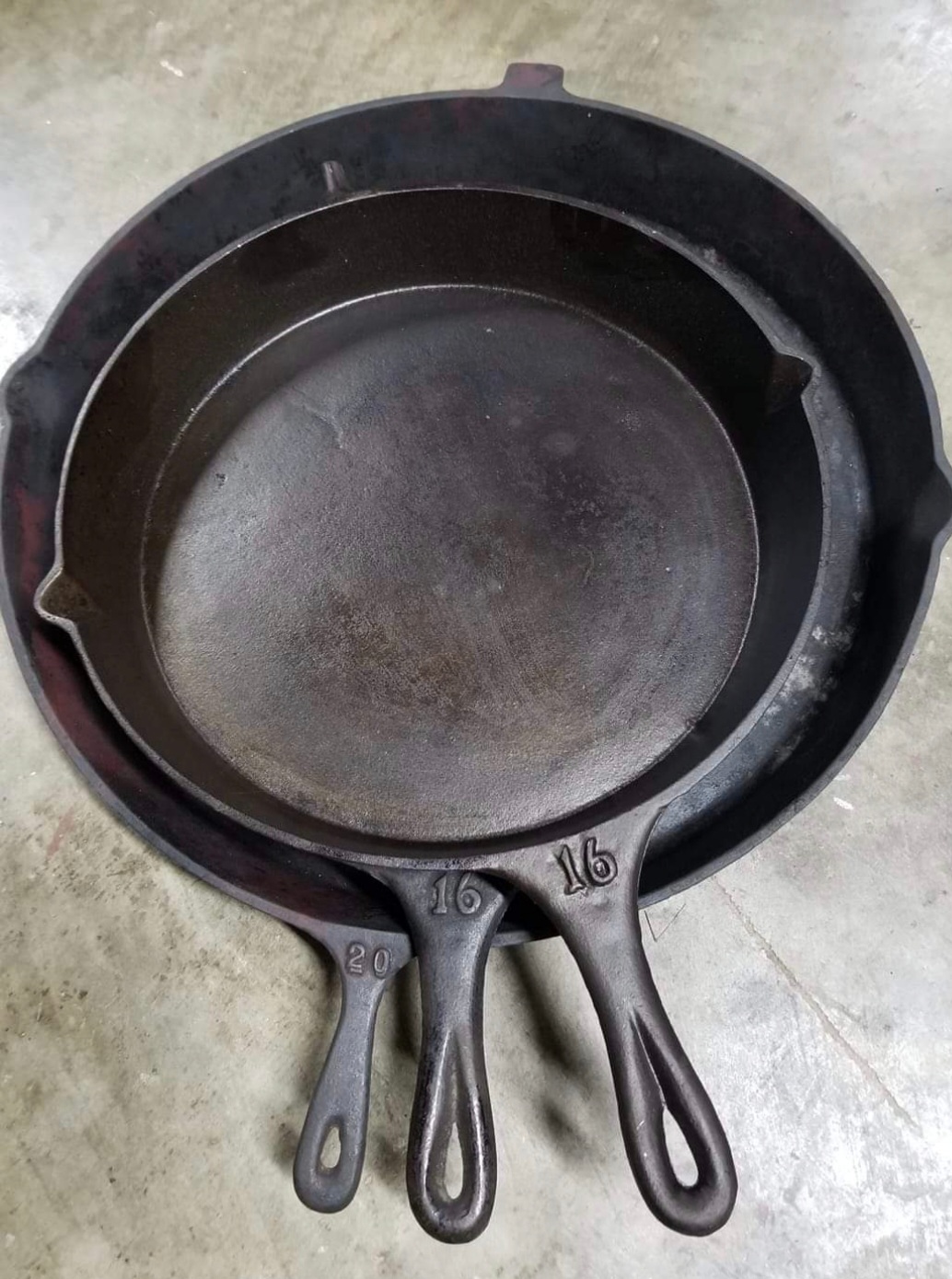
I asked about the numbers on these skillets and it refers to the diameter. Larry said originally the size referred to the eyes of the wood stove it fit, but later it referred to the cooking area. You can see those Eddyville skillets are big. He said they must be older models because they have more pointed pouring spouts.
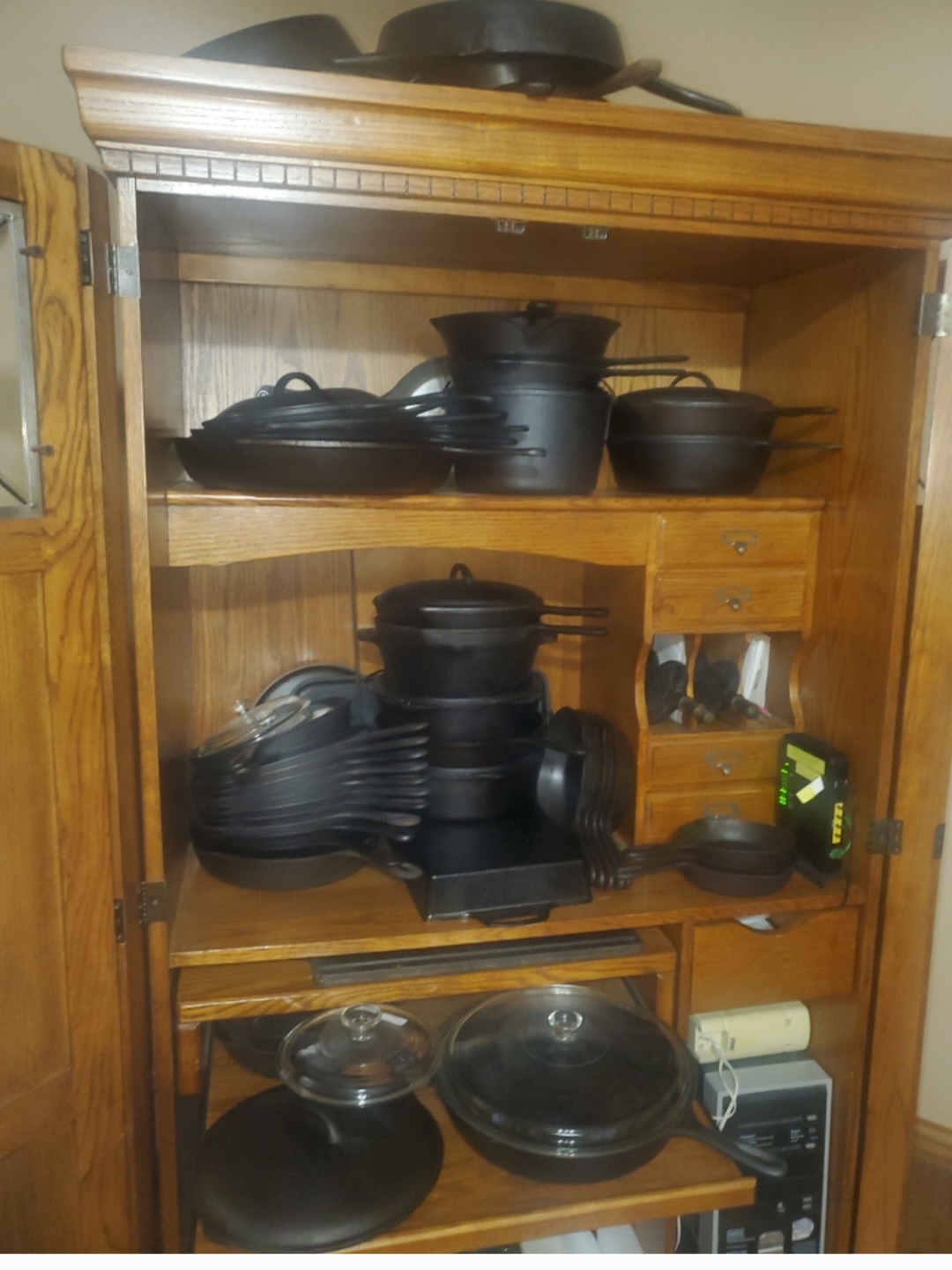
Larry occasionally sells his restored cast iron pieces at the vendors mall in Corbin, Kentucky but he’s much more interested in restoring the history than selling the finished product. I’m hopeful he’ll create an Etsy store where he can sell his pieces and a YouTube channel where he can teach people how to cook with them and maintain them. I bet a lot of people would like a restored cast iron skillet like the one he gave me! I’d buy another one myself.
By the way, if you’re interested in Griswold cast iron, this site has some tips to help you verify the authenticity of a particular piece.
And if you happen to be in South Pittsburg, Tennessee, you can visit the Lodge Cast Iron Museum.
 old spirituals
I have a deep appreciation for iron skillets. I spent the first 15 years of my career working in the steel industry. My career progression required working as a safety engineer in a fully-integrated steel plant assigned to the steel production division of the plant that employed over 5,000 employees. Safety was paramount. Working around molten iron and steel is an experience not “appreciated” by everyone, especially during the summer months. Molten iron and steel is over 2200 to 2500 degrees that requires wearing flame-retardant clothing and/or an asbestos suit. Nothing more needs to be said about the making of iron from ore except it is a fascinating process.
LikeLiked by 2 people
It seems almost like a lost art! I have an appreciation for it too 🙂 not any personal experience seeing it though
LikeLike
Hello cousin! I’m so glad you like your “new” skillet!
Doing a deep dive into the world of antique cast iron proved to be just the distraction I needed during the pandemic. I would be glad to offer any help you or the others may need, if you decide to find and restore cast iron. It can be done with limited investment. You could do it with something as simple as a can of yellow cap Easy Off and a plastic bag. Yellow cap Easy Off is simply lye (like our great grandparents used to make soap with), I use electrolysis and also have a few lye tanks that I use. Please never clean cast iron with a grinder or by throwing it in a fire!
I’m going to add the directions that I give to people who are learning how to cook with cast iron.
thanks, Larry
What your grandmother knew about cooking an egg on cast iron.
Put the skillet on LOW heat and let it heat while you get everything else out and get the coffee on.
When the handle is warm, add oil or butter. It’s important to only add oil once the skillet is hot.
Crack egg into skillet and then do nothing until the egg is ready to release. It may take some practice, but eggs or meat have a “release point” and you can slide a spatula right under and flip it as good as any Teflon pan.
When finished, you should be able to wash in warm dishwater, dry and be done. Some grandmothers never used soap and that’s okay, but modern Dawn Dish liquid will not hurt the seasoning. NEVER put cast iron in a dishwasher.
Your skillet has been professionally refinished using grapeseed oil. Normal use will build up more layers of seasoning but, if necessary, you can add layers of seasoning by adding a thin layer of Grapeseed oil or Crisco and then wipe it off like you changed your mind and placing it upside down in an oven at 500 degrees for one hour. You can use the oil of your choice, but you will need to get the temperature 50 degrees above it’s smoke point for an hour, to get good polymerization.
Yes, this takes longer but that can be a good thing. Take the opportunity to slow down, enjoy cooking and bonding with a loved one…. Communicate, make some memories, pray, thank God for things, people, and experiences or just enjoy the quiet time. Those things are never a waste of time.
God bless, Larry
LikeLiked by 2 people
Those instructions are helpful for me! Just curious, why is it important to add oil only after it’s hot?
LikeLike
That’s such a good question!
when you add oil to a cold skillet, the oil is drawn into the, for lack of a better word, pores of the cast iron. Picture microscopic texture, if you will. That’s exactly what you are going for, when you are searching a skillet, but, when you are cooking on a skillet, you want to add the oil after it has heated up so that the oil “floats” above the microscopic structure.
I know that sounds made up but try it lol! I have seen demonstrations of people cooking an egg on a flat rock, to provide the point that the roughness of the cooking surface if less of a factor in cast iron cooking as is heat control and adding oil after the skillet is properly heated.
I’m just now listening to your book Grievous Deeds and heard Trenton Georgia mentioned. It’s such a small world! I have stayed is the Days Inn in Trenton many times! Trenton is located in a strategic place for picking and I know that I have picked up many Griswold skillets in that area. Griswold cast iron is somewhat of a rare find in the south because of the distance from Erie PA and that the Birmingham Stove and Range cast iron cookware dominance of the south. I had never considered that the railways at the time, could have played a part in that. Your skillet may very well have once belonged to someone in your book!
That’s what I love about cast iron! If you were to hazard a guess, and just for fun, who might your skillet have once belonged to? It would have been the more expensive choice for a lady to purchase.
LikeLiked by 1 person
I just realized that I said that you wanted the oil to be drawn into the “pores” when searching when I intend to say seasoning
LikeLike
I love that there’s a Grievous Deeds connection to the skillet. You say it was expensive. If it wasn’t, I would love to think Dave’s poor mother Lucinda owned one… maybe the very same one. What a rough life Lucinda had. Since it was expensive, though…maybe the Trenton miner who let Dave stay at his house had one. Mining was a good job and steady work. If I remember right, the miner cooked Dave some breakfast before he went back on the run. (Of everyone I’ve ever researched and written about, I feel the most attachment to Dave.)
LikeLike
I have two cast iron skillets, one mid-sized and one large. And I also have a cast iron Dutch oven. When you think how long they last when properly cared for as opposed to the crummy, toxic, Teflon garbage people are throwing out every day, you see the true value of this cookware. Your cousin does a beautiful job of restoring them. Very talented man!
LikeLiked by 2 people
He is talented! I was stunned when he said he just took it up for something to do during the pandemic. I’m nowhere near that ambitious!
LikeLike
We painted the entire interior of our home during the pandemic. Many were productive during the pandemic.
LikeLiked by 1 person
I was a janitor at a college which still had students in its labs and in its culinary school. I worked all the way through Covid including cleaning an office building which housed EMS dispatch and PSWs, all full of Covid because of the work they did. I looked like I was cleaning in a HAZMAT suit.
LikeLiked by 1 person
You paint a wonderful verbal picture, Jennie! The contrast between the cleanliness of a culinary school and the crazy restrictions and hazmat-like pandemic gear is too funny! Wearing a mask indoors is uncomfortable enough, but wearing one while doing physical work must have been difficult.
LikeLike
How am I not surprised? 😂 If you hadn’t told us and I had to guess, I would have thought your pandemic project would be pretty ambitious in scale.
LikeLike
Nowhere near ambitious says the woman who has written several books….ahem, Kimberly.
LikeLiked by 1 person
💖 Thanks Jennie! I was looking around a little for a new story but nothing to report back yet.
LikeLike
What an interesting read. I have a couple cast iron skillets and need to start using them. Larry did a wonderful job restoring your skillet. He really could sell them online if he chose to do so.
Glad you are feeling better. I have the Lauren Bacall voice happening, too! 🙂
LikeLiked by 3 people
I think so too! Such a cool talent to know how to do that stuff, too!
I haven’t had much experience yet but I think cooking with cast iron might result in a slightly different outcome (the flavor).
LikeLiked by 1 person
is there really a difference in the taste?
LikeLiked by 1 person
I have to inject that cast iron has its benefits but months ago we started to replace most of our “gimmicky” cookware with the brand used by Gordon Ramsay. The product is by far the best cookware we have ever owned and produces results like cast iron. Even the hybrid pizza steel produces a cast iron result. And ALL the cookware wipes clean with just water and a dish rag.
LikeLiked by 2 people
That’s so interesting!
during my cast iron adventure I discovered “cowboy skillets” and they are made of steel so that they can be lightweight and durable on the journey west. Cowboy skillets can be cleaned the same way as cast iron but I learned from Gordon Ramsay and a few other chefs about how they season their cookware and it works great on cowboy skillets too! The method involves potatoes peels and salt.
LikeLiked by 1 person
Seems like a good episode for your future YouTube channel 😉
LikeLike
Hexclad says to season its pan, coat it with oil and place in a 350 degree oven for about 10 minutes.
LikeLike
I really don’t know…?
LikeLike
I agree with Jennie. Cast iron seems solid and durable in a way that today’s cookware doesn’t approach! I’ve met several people who swear by cooking with cast iron. I love today’s musical selection!
LikeLiked by 1 person
I have a Griswold made in Erie, PA. I also have a larger cast iron skillet and a dutch oven. Both have cast iron lids. The two skillets were given to me by my grandmother. They’re very healthy to cook in, adding iron into the dishes prepared in them. Never cook anything acidic, such as tomato based foods in cast iron as it will remove the seasoning. I love these skillets!
LikeLiked by 1 person
That is cool you get to cook with your grandmother’s skillets. Thank you for the tip about the tomatoes. I don’t know a lot about cooking so these little tips are very useful!
LikeLike
Glad you’re back, Kimberly! Larry, your pictures and information are wonderful!
LikeLiked by 1 person
Thank you! I’m so glad to be feeling better.
LikeLike
This was a very interesting read. I’ve never thought about the history of iron skillets. It’s fun to thinking about who may have owned an old skillet in the past and what they might have cooked on it. We have one and my husband has used it on top of a wood burning stove. He says it makes the best eggs and bacon. Thanks Larry, for the history behind iron skillets!
LikeLiked by 1 person
Thank you, Barbara! Come back and visit again soon!
LikeLike