It’s another tornado post! I don’t know why they fascinate me. I came across a photo of the aftermath of this storm that caught my attention and inspired this post.
Musical accompaniment is St. Louis Blues by Theresa Harris. If you’ve ever seen Baby Face, the 1933 pre-code Barbara Stanwyck movie, Harris played Chico and she was magnifique. If you scroll to the end, I found a little clip of the movie on YouTube.
In the afternoon of May 27, 1896, the bright skies over St. Louis grew dark and residents trembled. A strong storm had been predicted for days but St. Louis had had to adjust itself to such threats. Deadly tornadoes that hit the city in 1870 and 1890 had killed a number of people.
No matter what the people anticipated, it did not come close to what occurred that day. The 1896 tornado season was particularly severe and the tornado that hit St. Louis that day is the third-deadliest in U.S. history. The records are incomplete. We don’t know how long the tornado was on the ground nor how many people it killed. We do know that it killed more than 100 people in two separate cities.
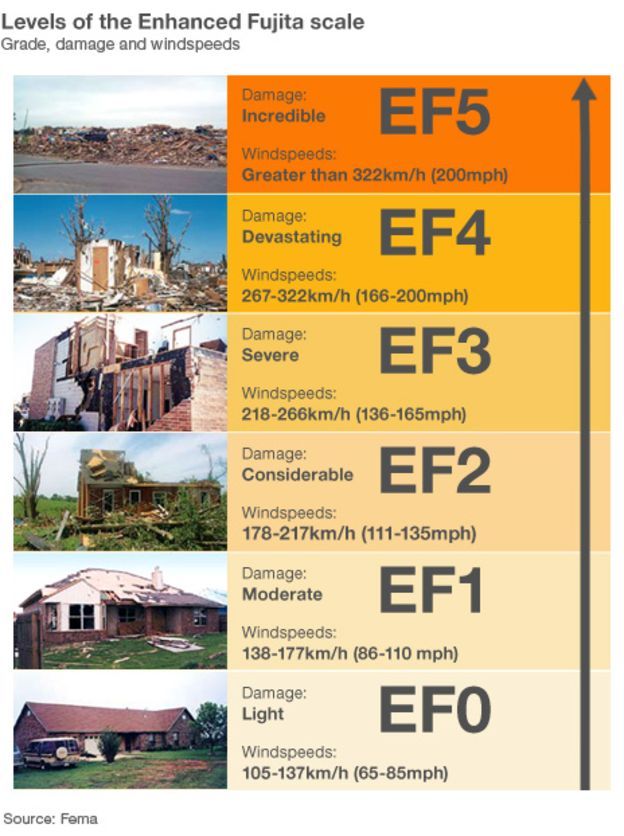
This tornado was an F4. The Fujita Scale ranks tornadoes by windspeed. FEMA created this chart to show the damage you could expect to see from each one.
Pictures of the aftermath of the storm give us a hint of how terrible it was.
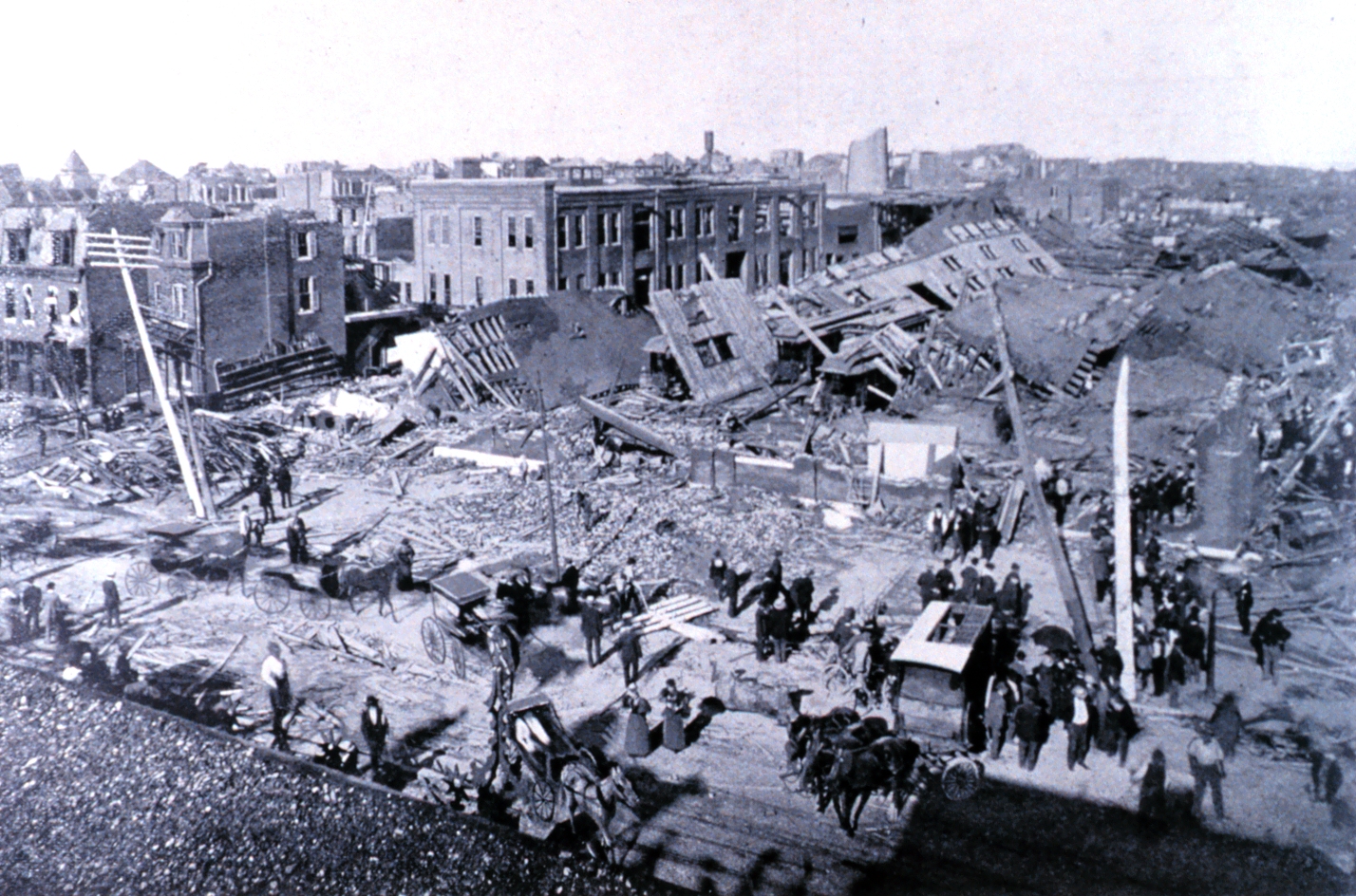
U.S. National Oceanic and Atmospheric Administration
A woman walks past a Park Avenue residence. A For Sale sign lies next to an almost completely demolished building.

This is the photograph that caught my imagination. It’s a stereoscope and it’s not particularly clear but it’s the subject that makes it interesting. It is a heavily damaged Insane Asylum. Visiting an institution like that in the old days before modern medicine and standards of care would have been awful. But can you imagine being in there during a catastrophic weather event? It’s nightmarish!
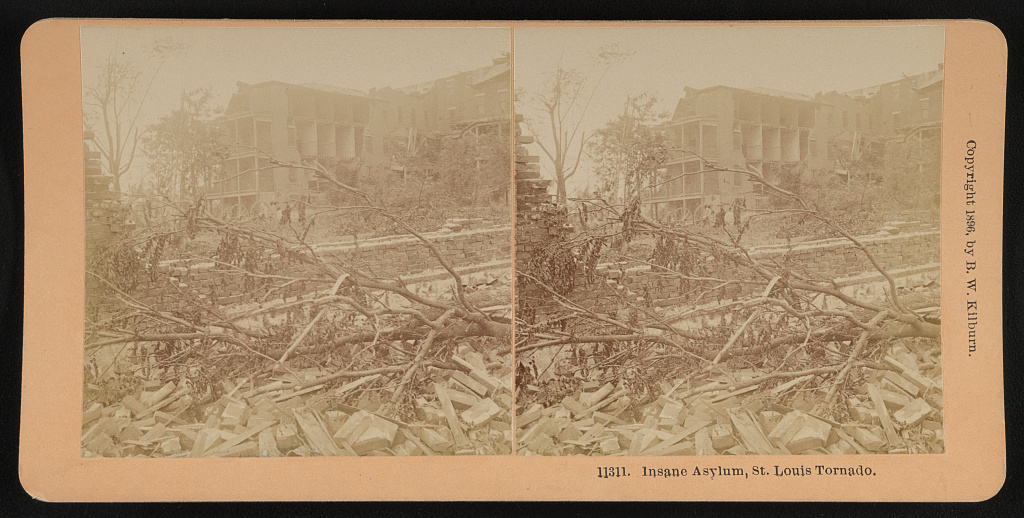
LOC
It’s hard to imagine the scale of the damage of a tornado when we look at photographs of destroyed building but that’s a feature of an F4 storm. They create so much debris, you don’t know what you’re looking at.
By comparison, an F5 sweeps away everything in its path. You could visit the scene and not even know a house or a store had ever been there. For reference, see this aerial image of where the town of Glazier, Texas stood until April 9, 1947 when an F5 tornado swept everything away. The only building left is the jail.

weather.com
Here’s the clip from Baby Face that features Theresa Harris singing a bit at the end. Didn’t she have a wonderful voice. I sure wish I could find the version of St. Louis Woman she sings here.
 old spirituals
That jail was made to last!
LikeLiked by 1 person
My small hometown had a “City Jail” for decades. I was not far from my childhood home. I have no idea when it was built; however, I do know the walls were very, very thick and the bars were very high off the ground. It was like something out of the “Wild, Wild, West.” Kids would stand under the barred window and shout to the prisoner inside, who were often intoxicated men thrown in for the night. Seeing that jail in the my mind’s eye now causes me to realize how crude and unrefined that facility really was for the time. Ironically, the jail was at the rear of a City park that had a Civil War monument with a Union soldier atop a monolith and a large cannon with cannon balls too large to fit into the cannon. I believe all of it is still there today.
LikeLiked by 2 people
That’s such a fun memory. It sounds like Mayberry! You’re very observant, noticing that the cannon balls were too big for the cannon.
LikeLike
Shows they were serious about it! 😉
LikeLiked by 1 person