This is Part 8 of a Moral Quandary and the end of our story. Click here to read Part 1.
Musical accompaniment: Baby, Did You Hear? performed by Dinah Washington
After his second trial and guilty plea, the papers no longer mentioned Francesco Caruso. Apart from a passing reference to him due to a similar case years later, I couldn’t find a thing.
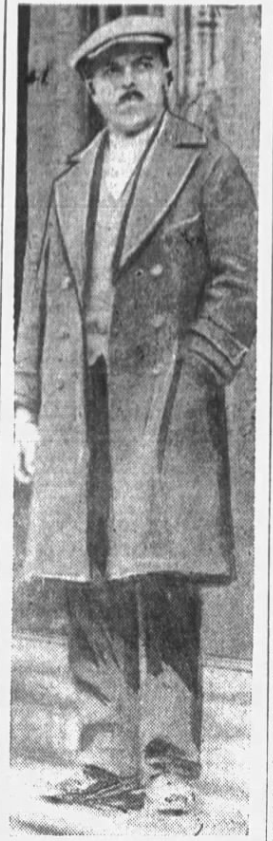
I was curious how much time Francesco actually served and what his life was like when he came out of prison.
I found something that stunned me! Caruso was sentenced to 10-20 years on February 14, 1928.
Yet a search of vital records shows Caruso was living with his wife, four children, and father-in-law on April 8, 1930 when the census was taken.

1930 census
He must have been pardoned but I couldn’t find anything to support it, apart from the fact the census proved he was clearly living at home with the family again. Had he been in Sing Sing, he would be on the prison’s census record. Do you notice anything else in the census record?
New York has a record of executive clemency actions but I could find nothing pertaining to Caruso there. I looked in the archives but found no record of a pardon or a commutation of his sentence. There were no stories in the paper.

No record of clemency
How Francesco Caruso came to rejoin his family, I have no idea. Like so many things about this story, it seems impossible that it could have happened.
After the 1930 census, I couldn’t definitively trace the family any further. They vanished from the public record.
What of Helen Pendola?

The doctor’s widow lived until December 1975 and never remarried. She walked through the long years of life alone. Let’s hope her daughter was a comfort to her and she managed to find some joy in living. Catherine lived until 1997.
Maria Caruso lost two children and she lost her husband for years. She was left without a penny to her name while her husband battled for his life. But one day her husband did return. Helen lost her husband forever. Though Francesco Caruso murdered Dr. Pendola when he was overcome with grief and rage, the impact on Helen was the same as though he’d done it in cold blood.
I don’t know what to make of the doctor. I’m slow to condemn him for laughing after he was told the child had died because we don’t know if he really did that. There’s no reason to doubt Caruso’s word except that it’s such a monstrous and unnatural reaction. Some people laugh in the first moments of shock before their brains can process what is happening. Caruso’s memory may have gotten jumbled. Or maybe the doctor did laugh. We can’t know because he didn’t live to tell his side of the story. Maybe he was only there to help from the goodness of his heart. Certainly that’s what his wife believed.
The case of Francesco Caruso is a curious one. It’s one of the few cases in which insanity has been advanced as a defense that seems completely legitimate to me. He was a father who loved his child dearly. After frantically watching the little boy get more and more ill, he summoned a doctor for the first time in his life. He saw the doctor inject little Joey and, within hours, the child died. He believed the doctor had deliberately killed the son he loved so much. That’s enough to drive anyone out of their mind.
I’m eager to hear your thoughts on this case!

If you liked this post, please subscribe to Old Spirituals, like and share the post on your social media, and leave a comment! It really helps other people find the site. And if you’re so inclined, check out my books on Amazon or click the button to Buy Me a Coffee.

 old spirituals
Pingback: A Moral Quandary, Part 7 | old spirituals
I’m glad the Carusos were back together. But it’s a terrible thing for Mrs Pendola. It condemned her to a lonely life.
LikeLiked by 1 person
Yes… I feel torn by that too, Ruby. There was no greed or hate in anyone’s heart. There’s an interesting duality with the wives and the tragedy in their lives. Did you ever read the fable about the oak and the reed? Helen Pendola was like a mighty oak. She could stand strong forever in the normal ups and downs of life but a catastrophic storm like she went through caused her to break. Maria Caruso was like a reed who could bend in the wind and survive,
LikeLiked by 1 person
The part of this murder that bothers me is the knife in the bedroom. You have several small children and you keep a huge knife in your bedroom? Caruso led the doctor into the bedroom and then uncovered his son’s body in an act of a surprise and shock for the doctor (who was probably rendering medical help for nothing). I can understand taking someone by the throat when your child has died, but the knife shows pre-meditation. I would have found him guilty had I been on the jury. It’s a horrible story and I feel for both families. According to the census, it does look as if he got away with cold blooded murder. Looks as if he had another son, age five. Maybe he was in with the Mafia and didn’t serve any time after the guilty plea. Living in Las Vegas, I do remember those people.
LikeLiked by 1 person
The jury had the same feeling as you about the knife. They said the fact Caruso walked 12 feet to get it and come back to the doctor gave him enough time to snap out of it, and get a grip on himself. That’s true—but my guess is he only planned to confront the doctor. I could’ve found him guilty on a manslaughter charge.
I’m very curious how he got released without a pardon from the governor, and why the papers didn’t cover it when his case was such a big story.
LikeLike
I would have said guilty too
LikeLike
Jus Talionis is a latin term meaning “the law of retaliation.” It is also called lex talionis, meaning “the law of retribution.” The concept originates from Mosaic Law in the Israelites’ justice system. In layman’s terms it means the punishment must fit the crime.
God had already established a judicial system to hear cases and determine penalties in Exodus 18. Also, in the Old Testament the phrase is used in the context of a case being judged by a civiil authority such as a judge. Francesco Caruso decided not to defer judgment of Doctor Casper Pendola’s actions to a civil authority, which in this case should have been a judge, but rather be the judge himself and impost a punishment of jus talionis.
Caruso’s retaliation was twice judged by the civil authorities, finalized by his “guilty plea” that was accepted by the court. His guilt, therefore, made the civil disposition of his case straightforward and indisputable. The question then becomes whether the civil disposition of Caruso’s guilty plea was appropriate punishment for his crime.
The appropriateness of a punishment handled down by a judge or jury is a matter of perspective. Certainly, Mrs. Casper Pendola believed the punishment meted to Caruso was not severe enough, while Caruso, his spouse, et al, believe it to be too severe. In the final analysis, Caruso was punished for his actions, whether it was severe enough is a matter of perspective.
LikeLiked by 1 person
I’ve heard of lex talionis in the context of whether retribution keeps order in society. For instance, if Group A targets Group B, but Group B never retaliates, Group A is likely to become more aggressive while Group B gets demoralized. If Group B does retaliate, Group A is less likely to attack again. Caruso’s case was a more personal retaliation, of course. Are you surprised he did relatively little time?
LikeLike
Yes, I am disappointed he was in prison for such a short time. However, I am more thankful the authorities didn’t punish an innocent man.
By pure coincidence I watched a 2018 movie last night titled “Trial By Fire,” staring Laura Dern. It is based on the tragic and controversial story of Cameron “Todd” Willingham, who was wrongly convicted and sentenced to death in Texas for killing his three children even after scientific evidence and expert testimony bolstered his claims of innocence. He was age 36 at the time of execution.
That type of case is much more disturbing to me than the punishment of a guilty person being too lenient. Without destroying the suspense of the entire movie, suffice it to say there are two tragedies revealed in the movie. I recommend watching “Trial By Fire,” the film plays with the viewer’s feelings and emotions. I found myself changing from hatred of Cameron “Todd” Willingham to sincere empathy and sympathy for him.
LikeLiked by 1 person
I haven’t seen it but only a good movie can challenge people to move from one strong point of view to an opposing view
LikeLike