At some point I plan to redesign Old Spirituals to make it more beautiful and easier to navigate. If you have any suggestions about the layout, please add them in the comments! I have some ideas for the design but I haven’t put them together yet. When I have something, I’ll definitely be asking for your opinions. All this to say, I was looking at copper designs and how copper that’s exposed to the elements oxidizes and develops a green patina–like the Statue of Liberty.
Even today, most Americans know the Statue of Liberty is a beautiful gift from the French people. She arrived in New York Harbor on June 17, 1885. She’s made of copper 3/32 inches thick, which is the equivalent of holding two pennies together. No one alive today has ever seen our statue in any color but her distinctive green.
It seems like it should be a Prismacolor name like Muted Turquoise or Dahlia Purple. Lady Liberty Green.
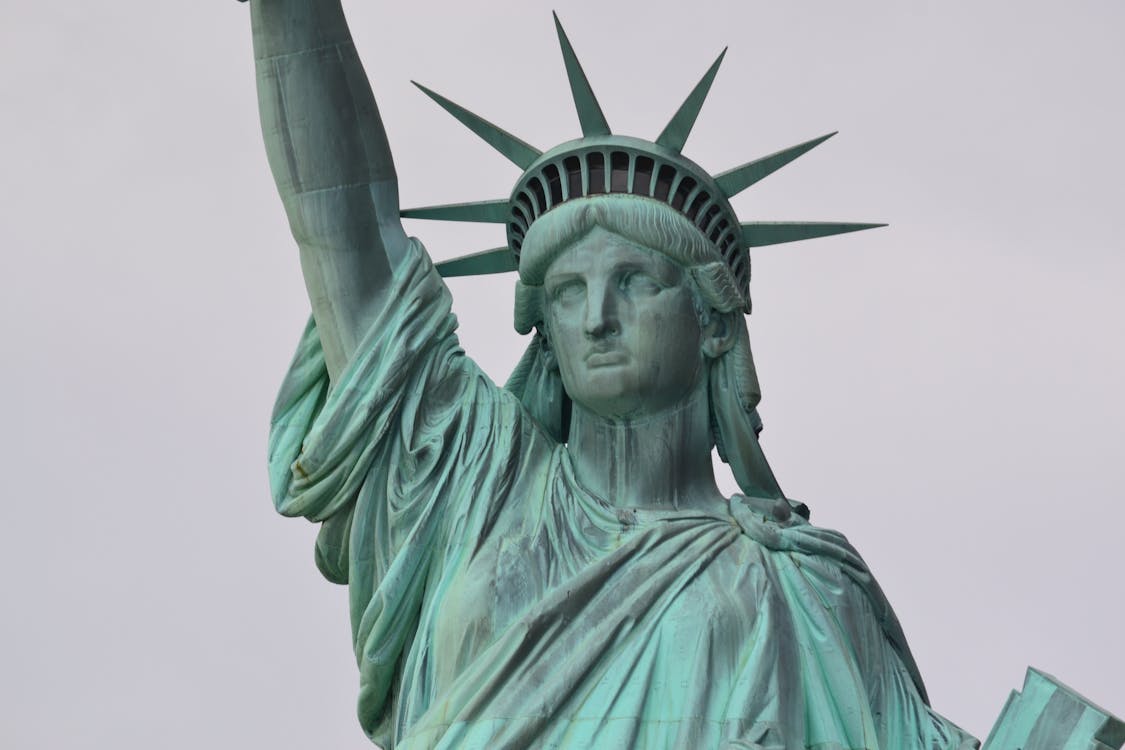
Photo by Nataraj Munoli, via Pexels
Our beautiful statue on her pedestal is 305 feet tall. She was designed by sculptor Frédéric-Auguste Bartholdi, and her metal framework was built by none other than Gustave Eiffel. I wrote a post about her construction in 2020 that has some neat pictures.
The Statue of Liberty is pretty sturdy. The statue itself is 250,000 lbs of steel and 62,000 lbs of copper. She was brought to New York from France in pieces that took four months to assemble and mount on her pedestal. The pedestal weighs 27,000 tons.
Because of her height and material, the statue is struck by lightning approximately 600 times a year. That’s even more than the luckless Lillian Hawkins, for those of you who read her story.
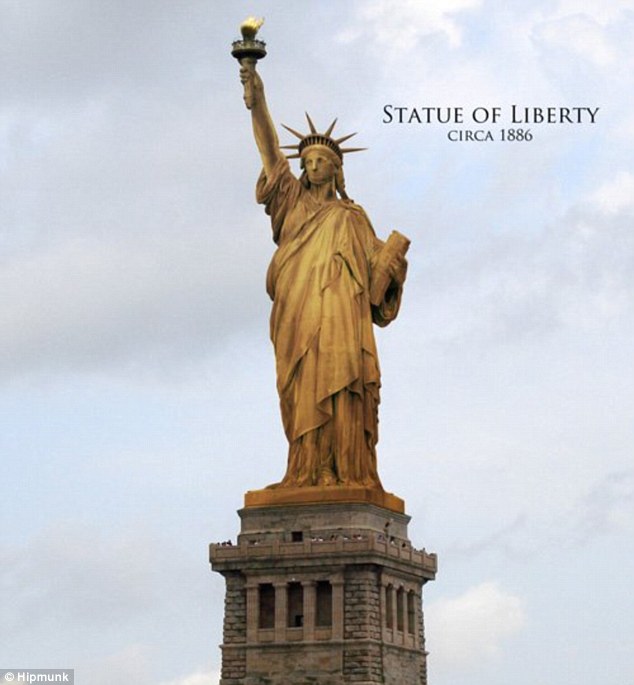
Here is what the statue looked like when she first arrived on American shores.

Indiatvnews.com
The Daily Mail
Do you like the statue’s original reddish-brown color or her iconic green? According to reports, neither Bartholdi nor Eiffel anticipated her color would change! This image floats on the Internet so I’m not confident that it’s right, but it is true that within 30 years of living in the New York Harbor, the statue had assumed her current shade of green.

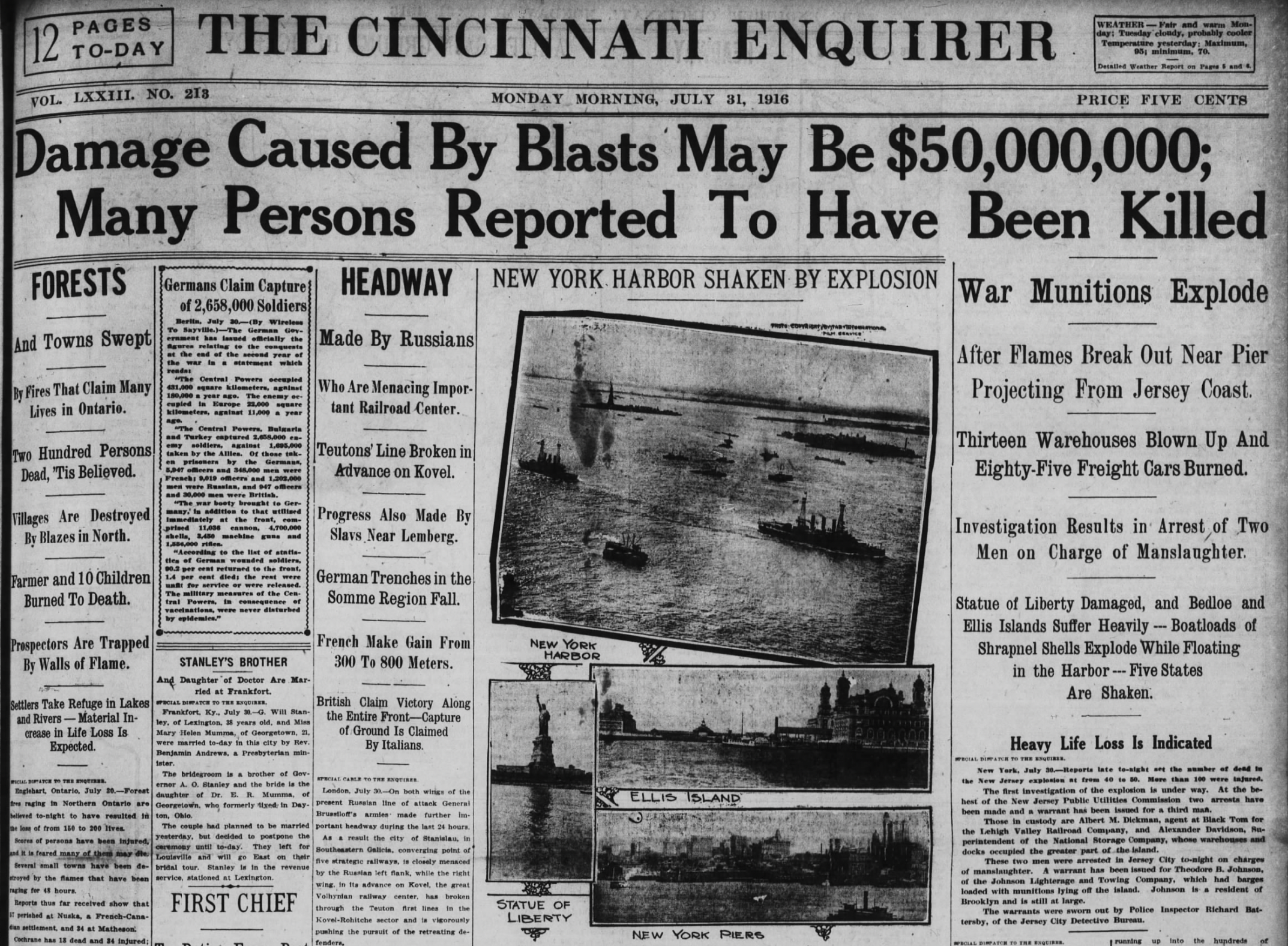
The Statue, including the torch, was accessible until July 30, 1916, when an explosion on Black Tom Pier caused flying debris to damage the Statue’s arm and torch. Visitors can climb the steps to view the Harbor from the statue’s crown, but only employees can go into the torch now.
Nevertheless, you can check out the view anytime from the torch. or see the view from the crown without climbing the 27 flights of stairs. The statue’s live cams are accessible anytime on Earthcam.
I had never heard of the explosion that damaged the statue but it was connected to the Great War, and seemed to have been an act of sabotage. It caused heavy damage on Ellis Island.
There are many beautiful images of lightning touching the statue, but this one, by photographer Dan Martland, stands on its own. He captured this image in 2024:

petapixel.com
 old spirituals
I think the turquoise green patina of the Statue of Liberty gives it more definition. I’ve been there and have never heard of the 1916 sabotage explosion that killed and injured so many people! The photos are beautiful, especially the lightening striking the torch.
LikeLiked by 2 people
It’s a pretty interesting story from what I read. It was clear it was a deliberate act. I saw a few pieces that indicated the explosion was an act of sabotage by Germany. I don’t know if it was though since the U.S. didn’t enter the war for another year.
LikeLike
That’s why sympathizers of evil regimes can be so dangerous. Scary times! Hitchcock made an early film, called “Saboteur,” if I remember correctly. Quite a good movie.
LikeLiked by 1 person
I love that movie— if it’s the same one I’m thinking of. The woman and her husband owned a little movie theatre in London , and her little brother lived with them? Terrific movie!
LikeLike
Yes, that’s the movie. Very good, of course, it’s Hitchcock!
LikeLiked by 1 person
I definitely like her best in green!
LikeLiked by 1 person
I am working on a story that touches on the 1916 Explosion on “Black Tom Island” that damaged the Statue of Liberty. The island is named after a “dark skinned” fisherman that inhabited the man-made island. The island was artificial, made from landfill.
Copper is a beautiful metal. How it transforms over time, if not cleaned, is metamorphic. A steel product was developed by U.S. Steel decades ago developed to intentionally rust when exposed to the elements of weather, forms a crust and then stops rusting. It makes the steel an interesting shade of reddish brown. The colloquial name for it is Weathering Steel, but the registered trademark COR-TEN, as a reference to its corrosion resistance and tensile strength. U.S. Steel’s Corporate Headquarters building has exterior beams made of COR-TEN steel.
One has to wonder if the Statue of Liberty was created today would it be made of copper or COR-TEN steel?
LikeLiked by 2 people
That’s a great question because I bet it would be made with COR TEN and she would be different. It reminds me of the Golden Gate Bridge. The orange color was supposed to be temporary but people love it in that color. Serendipitous! I’m interested to read your new story!
LikeLike