Musical accompaniment: The Lord Knows I’m Drinking by Cal Smith
We’ve been talking recently (at least in the comments) about how fun it is to make things by hand. A little fun fact: The word manufacture is derived from the Latin words manu and factus, which means “made by hand.”
Here are a few more pictures from the lantern slide collection by North Carolina photographer Bayard Morgan Wootten.

Bayard Morgan Wootten Photographic Collection, UNC Chapel Hill

Bayard Morgan Wootten Photographic Collection, UNC Chapel Hill

Bayard Morgan Wootten Photographic Collection. UNC at Chapel Hill Library.
One of the few subjects who was named in these photographs. The fiddler is Doc Hoppas of Penland, North Carolina.

Bayard Morgan Wootten Photographic Collection, UNC Chapel Hill

Bayard Morgan Wootten Photographic Collection, UNC Chapel Hill

Bayard Morgan Wootten Photographic Collection. UNC at Chapel Hill Library.
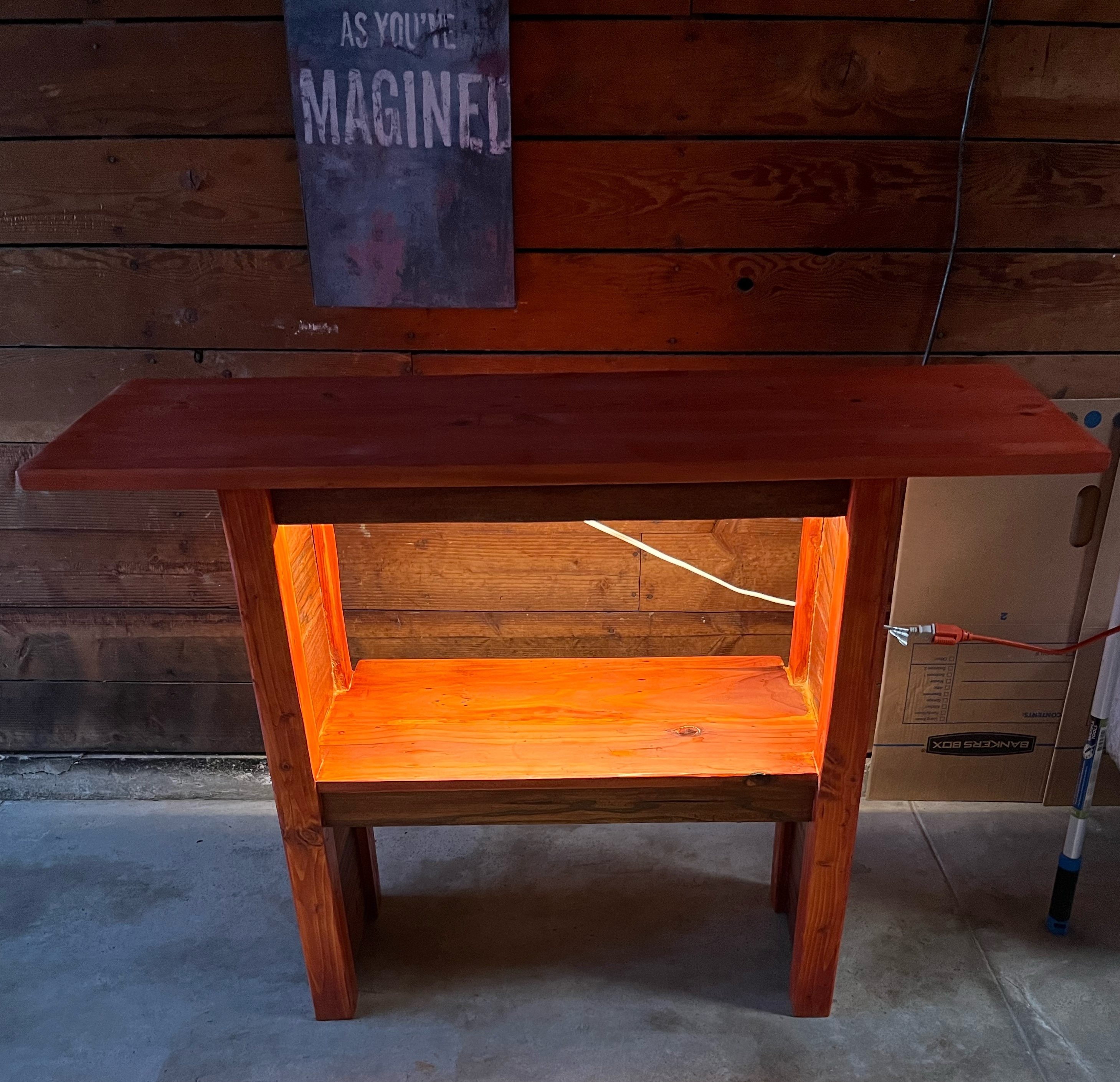
Also, here are a couple of pictures of the potting bench I salvaged and stained. I learned how to use a sander and stain wood. It was really fun. I’m ridiculously proud of it!
Here’s a before and after:
 And one with the light on:
 old spirituals
Great job on the potting bench! Those pictures are wonderful. I especially like the ones where the craft is being taught to others. We can’t let these works of art be lost. We’re coming up on 2026 and our American 250th birthday. I’m planning on making a red, White and blue quilt to celebrate.
LikeLiked by 3 people
do you have a website with pictures of your quilts? I’d like to see them
LikeLiked by 1 person
No, Ruby, I don’t have a website.
LikeLiked by 1 person
I’d love to see them too!
LikeLike
Thank you! Many of these skills are endangered. It would be great if they were taught locally at community meetings and rec centers! People are interested but they don’t know how/where to learn. It would be a smart idea to use local taxes to invest in equipment and materials and hire local people to teach small groups how to do things like this!
LikeLiked by 1 person
As America’s industrial might moved to other countries with cheap labor, so did the need and the means to train craftsmen in the various industrial trades. The steel industry had 4 year apprenticeships in multiple electrical specialties, electronics, mechanical trades, rigging, welding, etc. The curriculum included classroom work and on-the-job training. The programs produce scores of well trained craftsmen needed in the American economy. To add to the depletion of talent, public schools stopped industrial arts classes because everyone is suppose to go college. America is starting to wake up to the fact it has no talent in the craftsmen labor pool.
LikeLiked by 1 person
And hopefully work on solving that problem!
LikeLike
My career progression took me through the position of Safety Engineer in a heavy manufacturing facility of 7,000 employees. The facility was self-contained for most everything it needed to operate; it even had its own apprenticeship school.
There were 6 Safety Engineers and a manager at the plant’s Safety Department. One of the Safety Engineers had been an industrial arts teacher in the public school until educators decided that type of education was antiquated and eliminated all the classes. Things like wood shop, auto repair, electrical training, foundry and casting production were suddenly judged to be unnecessary. Even “Home Economics,” the teaching of cookings, sewing, etc. was eliminated.
Here we sit decades later wondering why we don’t have the skilled craftsmen and craftswomen needed in our modern economy.
(A personal anecdote on this topic: I just paid $28 to my local seamstress, “Lilly,” to have the sleeves of a new sport coat shortened. Lilly is an American citizen who immigrated from Lebanon many years ago. She is a one person shop with a high demand for her skills.)
LikeLike
The rehabilitation of the unpainted potting bench made of pressure treated lumber is greatly improved by your handiwork.
LikeLiked by 3 people
yes nice job!
LikeLiked by 1 person
Thank you, Nicola! 😊
LikeLike
there’s something very touching about these pictures. is that a loom in the first 2? I’m not a country fan but will make an exception for today’s song
LikeLiked by 1 person
I think that’s a loom but there must be someone who would know for sure?
LikeLike