We are in an era filled with transformation, some might even say a recasting of who we are as Americans. Much of the social and political upheaval causes consternation for many. Some of the change is good and some not so good. It can ferment chaos that requires us to rise above the mêlée and think about who we are as Americans.
The best way to answer the question, “Who are we?,” is to study and know OUR HISTORY. One hopes that our educational system teaches OUR HISTORY and ignites a fire to consume more and more of it. That, unfortunately, is not always the case.
There are other sources from which to learn History — supplemental sources, so to speak. The supplemental sources are not intended to supplant formal education, nor should they. They are more a form of continuing education. I view Old Spirituals as a form of continuing education.
Being a regular reader of History — taking the time to consume and consider it lessons — is not a bad thing. The continual reading of History is beneficial — it can also be enthrallingly entertaining.
“Why History?”
Learning about people and events of the past is more than being nostalgic. History provides echoing voices from those of our past, those who experienced challenging situations and overcame the trials and tribulations that confronted them. History reveals the actions and responses of our ancestors, it provides guidance, guardrails so to speak, that can keep us on the correct road.
One great American historian was David McCullough (1933-2022) who won the Pulitzer Prize and the National Book Award. He wrote books like Harry S. Truman, John Adams, Theodore Roosevelt, the Brooklyn Bridge, the Wright Brothers, and others. He also narrated documentary series such as The Civil War as well as the 2003 version of the film Seabiscuit. Who better to advise us on the importance of History?
McCullough was awarded the Medal of Distinguished Contribution to American Letters by the National Book Foundation in 1995. In his acceptance speech, McCullough asked: “Why History?” It is worthwhile to “hear” the answer McCullough provided to his own question.

The Answer
“History shows us how to behave,” McCullough announced. He declared that History passes on to new generations what we believe in, what we stand for and what we should be willing to stand up for now.” In a sense, McCullough believed, History is a compass that provides a means of navigation, a sense of direction.
However, McCullough was distressed. He felt that, “We, in our time, are raising a new generation of Americans who, to an alarming degree, are historically illiterate.” He went on to say, “The situation is serious and sad,” because he believed History is not just the documentation of facts, it has a moral quality. Through example, McCullough mused, History teaches us what to believe.
Reading History, McCullough pointed out, imparts what our ancestors went through and how that developed the character of America and the image of being an American. One learns that those who paved the way to modern America were strong physically and mentally, noting, “There’s no one who hasn’t an ancestor who went through some form of hell.” Thus, History “is – or should be – the bedrock of patriotism, not the chest-pounding kind of patriotism but the relating, love of country.”
The lack of historical knowledge is “quite real” and “has been coming on [for] a long time,” according to McCullough, “like a creeping disease, eating away at the national memory”. “While the clamorous popular culture races on, the American past is slipping away, out of site and out of mind. We are losing our story, forgetting who we are and what it’s taken to come this far.”
Keep in mind McCullough delivered his acceptance speech 30 years ago this November. Nonetheless, he noted the findings of a new survey by the Education Department that one would expect to be findings today: “The decided majority, some 60 percent, of the nation’s high school seniors haven’t even the most basic understanding of American history.”
Anecdotally, McCullough told of a young woman, a student at a large university, who attended one of his lectures. The young woman told him it wasn’t until listening to him speak did she realized all the original thirteen colonies were on the eastern seaboard. Another of his experiences involved a group of History majors at an Ivy League university, none of whom knew who George Marshall was. Those anecdotes remind me of video of “on the street interviews” I saw recently. Several high school and college age students were asked, “Who did America fight in the Revolutionary War?” The responses ranged from “France” to “Russia” to “Canada.” Those responses are both embarrassing and scary. As McCullough noted, “We are losing our story.”
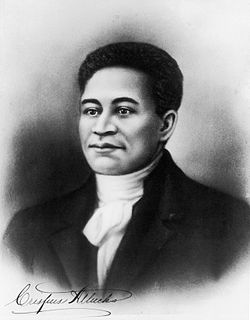
McCullough pointed to the need for teachers to make history interesting. I can attest to the validity of that point since my interest in History first percolated in college when a Professor of U. S. History, also a thespian, lectured as though he was acting in a stage performance. I still remember his dramatic delivery in telling the class details of the Boston Massacre and the name of the first Black Colonist killed at that historic event early in the Revolutionary War. The colonist’s name was Crispus Attucks. It is a name I have never forgotten.
“History shows us how to behave,” proclaimed McCullough, a belief I subscribe to as well. (And I would add, “how not to behave.” ) He declared, “It inspires courage and tolerance. It encourages a sense of humor.” His concern was such attributes are no longer being developed.
Conclusion
I hope this post is not found to be anything but what it is intended to be: encouragement to read and learn history. McCullough left us with much to think about. For example, one of his theses is: “Indifference to history isn’t just ignorant, it’s rude. It’s a form of ingratitude.” He opined, “I’m convinced that history encourages, as nothing else does, a sense of proportion about life, gives a sense of relative scale of our own brief time on earth and how valuable that is.”
If you are interested in reading all of David McCullough’s speech the link to it on the National Book Foundation website is:
 old spirituals
I appreciate the”Liked” confirmation from “freely” and Anthony.
LikeLike
I wish I could like your post a thousand times 🙂 We love history and your topic is a common discussion in our household. David McCullough’s books are gems.
LikeLiked by 1 person
Your feedback is very kind and appreciated.
LikeLike
Thank you, Judy, for your positive feedback.
LikeLike
great post! You know I agree with you about the importance of knowing our history!
LikeLiked by 1 person
Pleased you liked the Post, Ruby.
LikeLike