Today we revisit early 1900s New York City with Horace D. Ashton, daredevil photographer who we first met on Halloween.
Horace D. Ashton, you’ll see, is a fan of breathtaking perspectives.
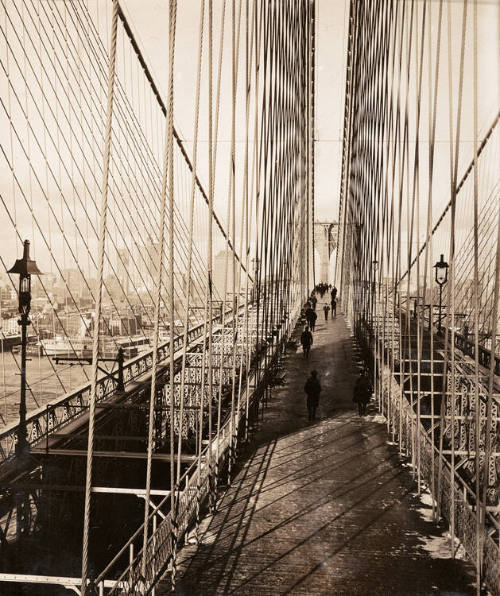
This 1906 picture depicts the walking span of the Brooklyn Bridge.
Nelson Atkins Museum of Art
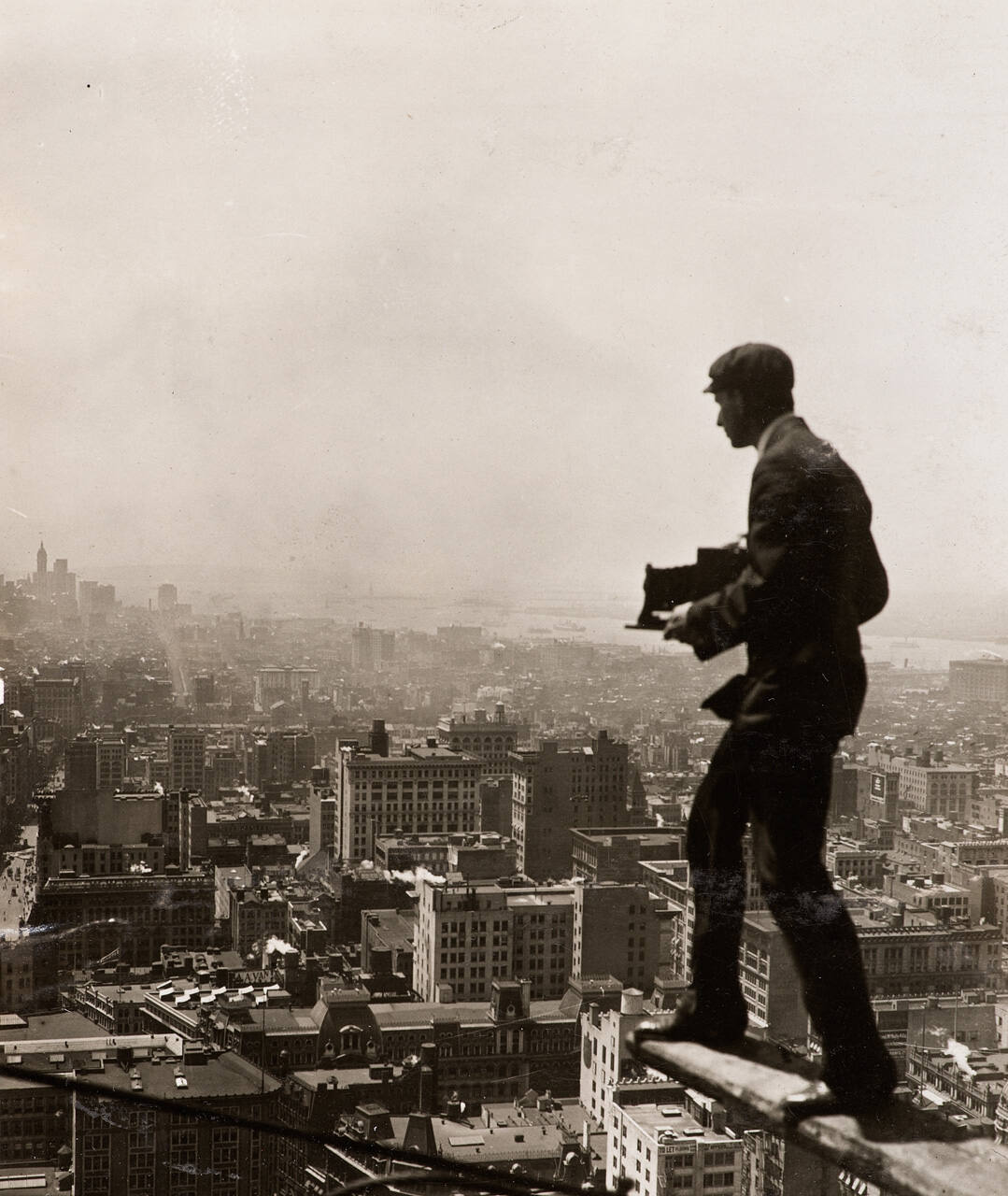
In 1911, Ashton photgraphed an Underwood & Underwood photographer taking pictures from the Metropolitan Tower.
Nelson Atkins Museum of Art
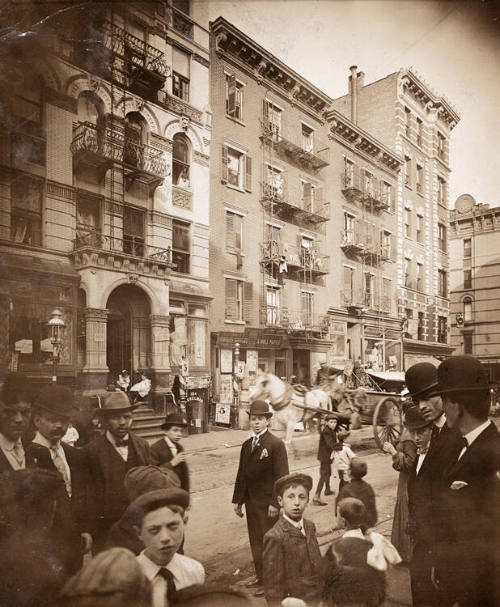
The last picture is from 1905. It’s a different kind of image. Ashton described it as “Low Class Apartments or Tenements.” This is nothing like the low-income neighborhoods of today. Can you imagine if this is where the poorest New Yorkers lived and how they presented themselves today? They wouldn’t be the poorest New Yorkers very long.
Nelson Atkins Museum of Art
 old spirituals
I guess i’m dim. why would the poorest new yorkers not be poor today? it’s much harder to make it in new york and anywhere else today than back then
LikeLiked by 1 person
Amen, Ruby. “Start spreading the news . . .,” as “Old Blue Eyes” sang.
LikeLiked by 2 people
one of my all time sinatra faves!
LikeLiked by 1 person
They would still be poor (probably immigrants that came through Ellis Island) but they wouldn’t be living in New York City now. As I look at those apartments, I wonder how many people worked very hard and were able to have an education and better themselves and leave poverty behind. Actually, people struggled and worked hard all over America to rise above poverty in the early 20th Century.
LikeLiked by 3 people
I agree with both of you. It’s harder to make it everywhere, not just NYC. When I wrote that, I was looking at it differently. Partly like a career coach. You’d be surprised how far it goes for people to dress nicely and not act like a fool in public. The ability to have a face-to-face conversation has diminished significantly but many people in the picture are easily interacting with one another. I also believe that most people long to return to a pre-internet world, so the fact no one is gazing at their cell phone may also be a selling point!
LikeLiked by 2 people
“Affordability” is the new mantra, but that is a relative term. What is affordable to one person is not to another. “Affordability” is also determine by a person’s interest, personal preference and needs. One person may pay $150 for a concert ticket to experience their favorite singer; someone else may say that is a waste of money. So priorities enter into defining “affordability.” I can go on but discretion tells me to stop here. I do want to close with a factual anecdote on “Affordability” . . .
In 1980, the night of the first Atlanta Braves baseball game in the new, remodeled Olympic Stadium, Ted Turner, the founder of CNN and a multimillionaire, was in attendance. The stadium was name for him, Turner Stadium. Turner purchased a Coke soft drink that night and the next day, it was reported in the newspaper, he complained that the drink price was too high. He couldn’t believe a Coke cost over a $1.00. Certainly the problem was not “Affordability” for Ted Turner. Perhaps Turner is a multimillionaire because he is just very frugal.
LikeLiked by 2 people
LOL! of course he would complain about the price of coke! 😝🤣😀
LikeLiked by 1 person
I wonder if he’s a coupon-clipper?
LikeLike
Great point! I’m sure a lot of things that are “necessities” to me would make a lot of people roll their eyes!
LikeLike
I see now but not sure if people want to return to days before the web. i love my door dash and keeping up with old friends. some things I have nostalgia for
LikeLiked by 1 person
I know what it is like to sacrifice to save enough to buy a home. Mortgage interest rates were around 8% +/- at the time.
Recently learned that in French, the term for mortgage is “hypothèque.” The word “mortgage” itself comes from the French words “mort,” meaning death, and “gage,” meaning pledge, which together literally translate to “death pledge.”
LikeLiked by 1 person
That is fascinating!! I love the etymology! I’m curious about hypothèque too. Sounds like hypothetical, meaning in theory. “Hypothetically I’ll pay the bank note on my house every month. But who knows what other priorities will come up!”
LikeLike
Yes that might be projection on my part! It’s been a while since I’ve seen it but in the movie Midnight in Paris the protagonist is obsessed with going back to the 1920s. He falls in love with a 1920s girl but she’s obsessed with going back to the 1900s!
LikeLike
true Judy!
LikeLiked by 1 person
The headwear of today for men is a baseball cap. In the early 1900s, the popular man’s headwear was the bowler hat. Haberdashers thrived!
LikeLiked by 1 person
Baseball hats are functional but they lack the style of the bowlers, Stetsons, Fedoras, and newsboy hats!
LikeLike
In lieu of a baseball cap, I recommend a substitute style hat to my friends. It has a current style yet a retro sentiment.
https://www.bostonscally.com/
LikeLiked by 1 person
I’ve never seen these before… interesting look!
LikeLike