Roosevelt is a Dutch name that means “field of roses.” Maybe it’s appropriate that in 1904, President Theodore Roosevelt was focused on making coinage more beautiful. He understood the importance of beauty in our public spaces and cultural artifacts.
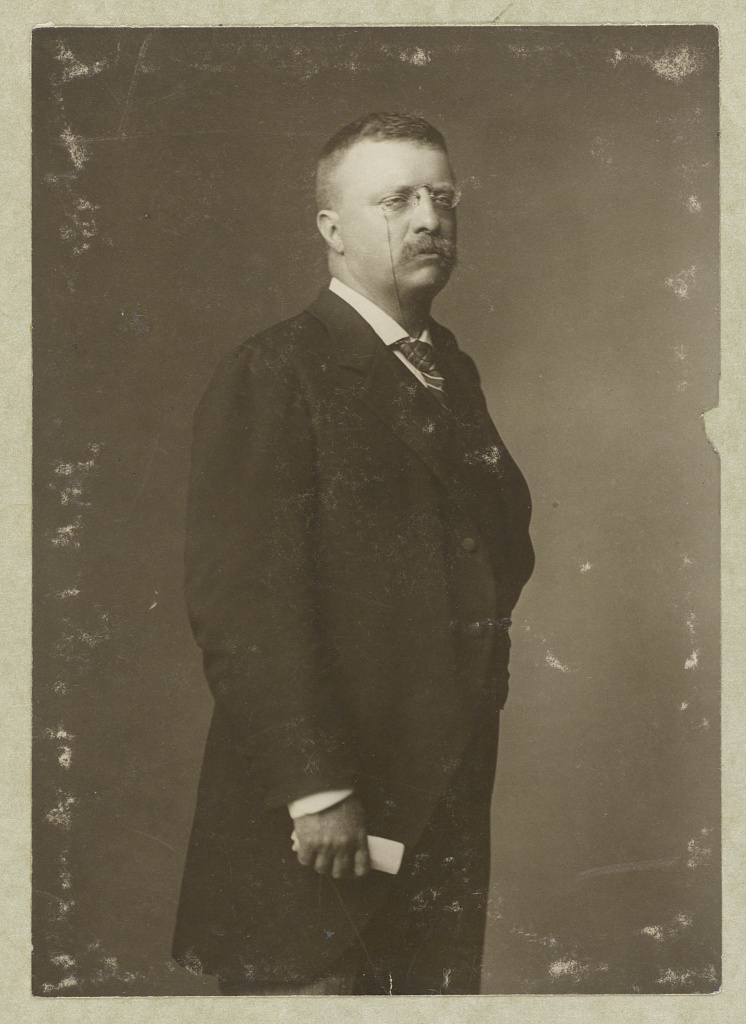
The president sensed Congress would be a roadblock to any redesign of the coins. In 1904, he wrote to the Secretary of the Treasury: “I think the state of our coinage is artistically of atrocious hideousness. Would it be possible, without asking permission of Congress, to employ a man like Saint-Gaudens to give us a coinage which would have some beauty?”
When Roosevelt learned he could change the design of the cent and four gold coins, he asked the Mint Director to hire Augustus Saint-Gaudens, the Dublin-born sculptor of Irish and French extraction, who was a personal friend of Roosevelt. Saint-Gaudens was, at that time, living in New Hampshire. He was in poor health and had misgivings about working with Charles E. Barber, the chief engraver at the Mint.
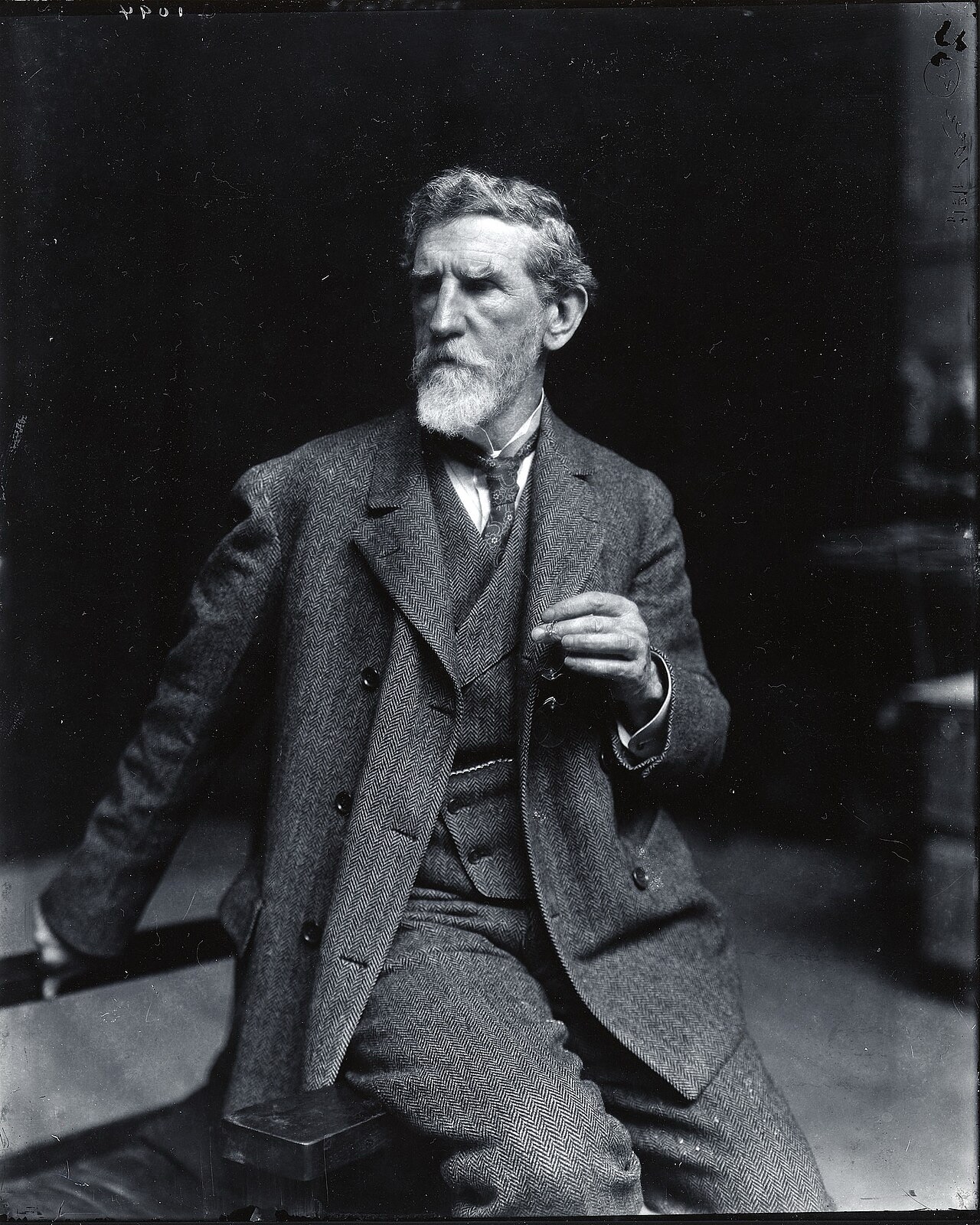
This is Augustus Saint-Gaudens in 1905. He looks like a sculpture himself, doesn’t he?
Wikimedia
Nevertheless, Saint-Gaudens accepted the president’s offer. This was a more significant decision than you might guess. Changing any coin is always important, and at the time, no coin in the United States had ever been designed by anyone other than a Mint employee.
Saint-Gaudens agreed with Roosevelt’s opinion of the current coinage and reassured the president that whatever he produced “cannot be worse than the inanities now displayed on our coins.” Roosevelt responded with some ideas for the new coins, and mentioned he loved the old Greek coins’ high relief.
LOC
President Roosevelt was a force of nature and he had selected his designer . When a man like that has an idea in his head, most of the world will bow to the inevitable.
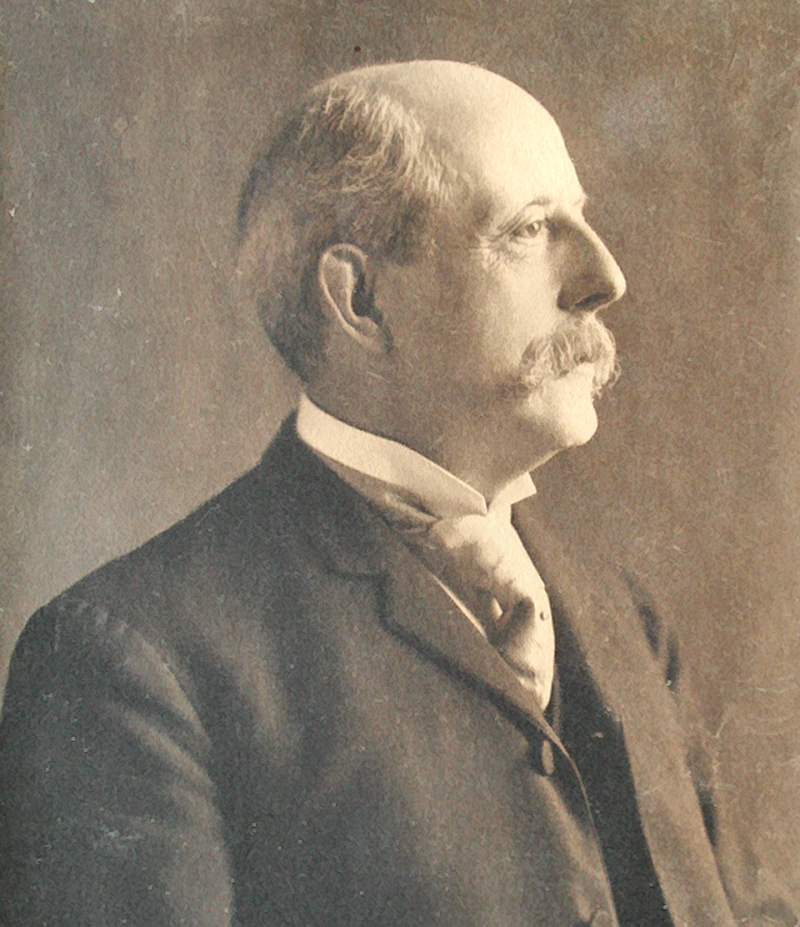
Charles E. Barber was not most of the world. As chief engraver, Barber designed many of the coins that were currently in use–the same coins Roosevelt found to be ugly. He and Barber had butted heads several times, though descendants of Barber insist a warm relationship existed between them. Saint-Gaudens’ interactions with Barber were decidedly sour and he once said, “Barber has been in that institution since the foundation of the government, and will be found standing in its ruins.”
barbercoins.org
In May 1906, Saint-Gaudens sent an assistant to Washington to obtain the technical details of the redesign. He wrote to Roosevelt that “if you succeed in getting the best of the polite Mr. Barber or the others in charge, you will have done a greater work than putting through the Panama Canal. Nevertheless, I will stick at it, even unto death.”
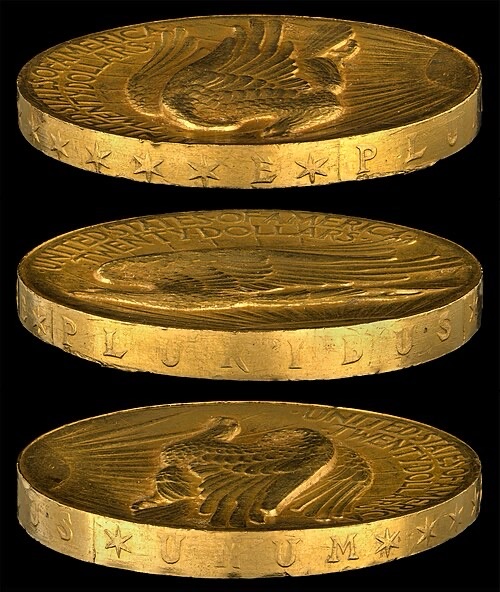
And he did. When Saint-Gaudens passed away in 1907, his design for the double-eagle coin was complete. The design was not yet finalized for production though and Barber, who had fought the new design all along, continued his campaign. Despite Roosevelt’s desire for a high-relief coin, which required 3-5 blows to create, Barber wanted a more practical design that could be struck in a single blow.
wikimedia
In the end, Roosevelt and Barber struck a compromise and Barber significantly lowered the relief of Saint-Gaudens’ design. Between 1907-1933, more than 70 million of Saint-Gaudens’ double-eagle design, modified by Barber, were struck. It is one of the most beautiful U.S. coin ever made. The 1933 double eagle is one of the most valuable U.S. coins for collectors. The only one in private possession today was last sold in 2021 for nearly $19 million dollars.
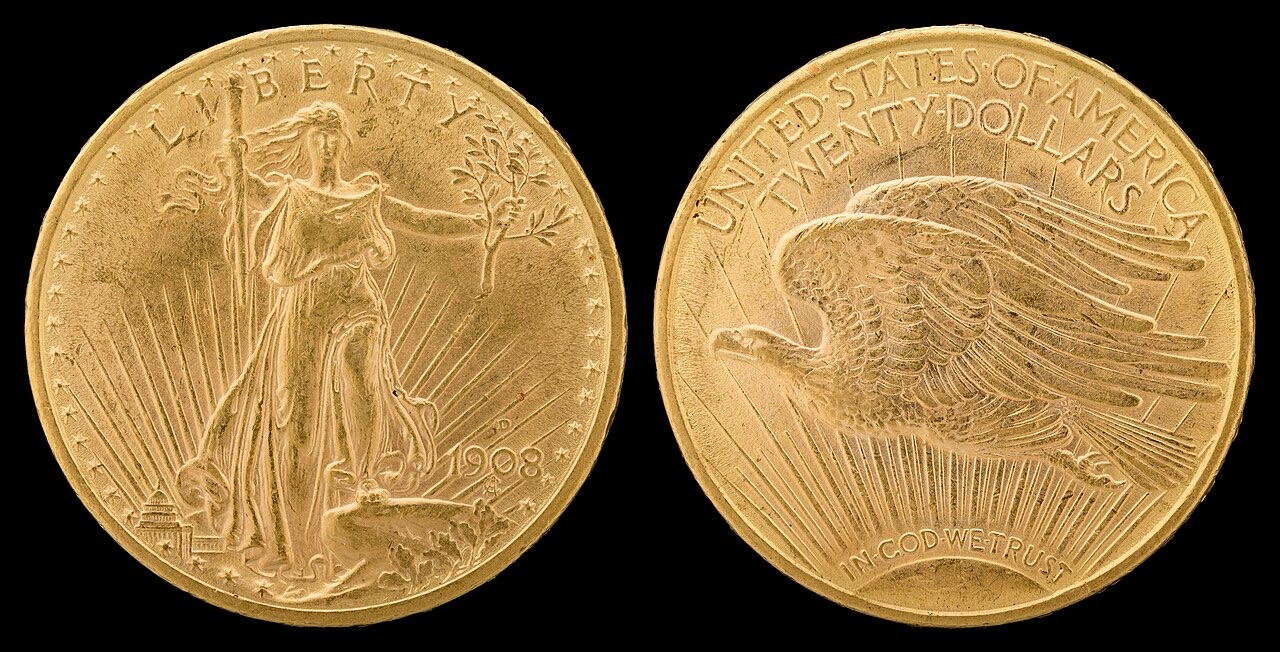
The Saint-Gaudens double eagle is a twenty-dollar gold coin, or double eagle
I was curious about this historical curmudgeon, Charles E. Barber. I couldn’t learn much about him other than that he was a difficult man who quarreled with everyone and was excessively controlling about anything connected to coins.
Barber was married to Martha Jones for 24 years and they had two daughters together, one of whom died in infancy in 1876. Martha died in 1899 and in 1902, Barber married Caroline Gaston. They remained together until his death in 1917. Possibly the strangest thing I learned about Barber was that, three days after his death, he was buried with his first wife and their infant daughter.
Perhaps there is some etiquette around remarriages and death. If he had tried, Barber may have found some common ground with TR. When the President’s first wife, Alice Hathaway Lee, died, Roosevelt vowed never to remarry. When he did remarry Edith Kermit Carow a few years later, he believed it was an act of treachery toward Alice Lee. He is said to have told friends and family he dreaded ever being confronted with both of them in the hereafter, saying, “If there is a heaven, I hope I shall not go there.”
From all we know of Edith, she would never have allowed TR to be buried beside his first wife! The second Mrs. Roosevelt outlived her husband by nearly three decades but when she died, she was buried beside him.
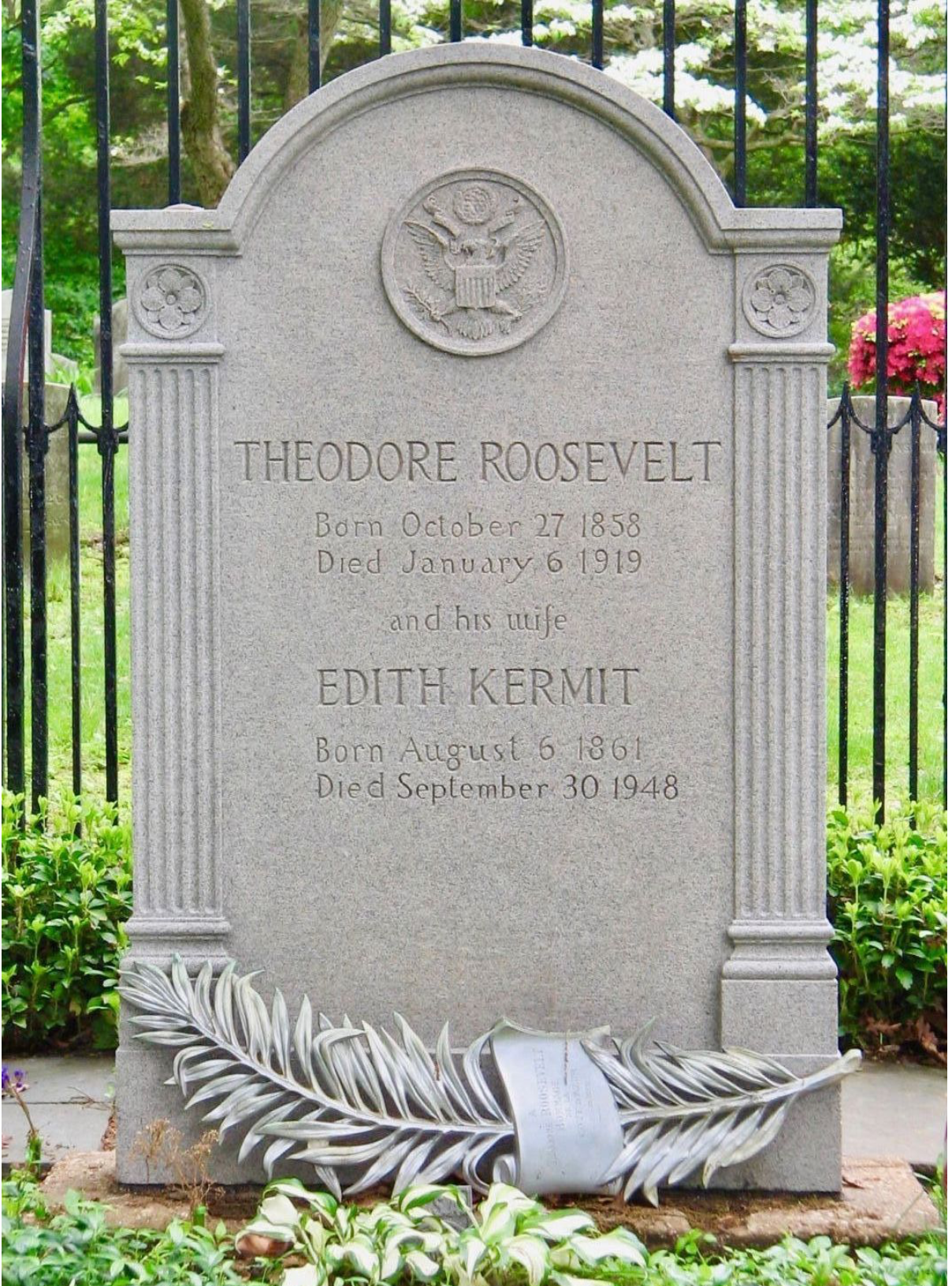
FindaGrave
 old spirituals
the story about roosevelt not wanting to go to heaven…! wow!
LikeLiked by 1 person
I can understand what he meant there
LikeLiked by 1 person
Teddy was very astute. He knew he would never win an argument with either his first or second wife.
LikeLiked by 2 people
ha! I thought you were going to say he couldn’t win an argument with Barber. You’re correct and more astute than me!
LikeLiked by 1 person
Teddy’s history indicates he could win an argument with anyone, including Barber. Teddy didn’t backdown from anyone.
LikeLiked by 1 person
In an open fight, he would win. But Barber was an ardent bureaucrat who was devoted to preserving the status quo. This is a subversive type. If their objections are overruled, they pretend to go along with decisions but devote all their time and energy to throwing sand in the gears to delay and derail. Barber knew TR had more important things to do and would eventually move on; he simply outlived Saint-Gaudens.
LikeLike
During my career I learned how influential and power lifelong bureaucrats are in influencing our Federal Government. They often write the laws passed by Congress.
LikeLiked by 1 person
I am not a metallurgist, but I think gold is a soft metal. It would be much easier to achieve more pronounced relief on a gold coin than other metals. Perhaps Barber was thinking of the future when gold would not be the material used to produce coinage.
Regarding burial next to a first spouse versus a second spouse can’t be appreciated nor understood without knowing the relationships. A couple married at age 18 likely have been best friends for decades, even raised a child or children together. They grew-up together and have life experiences that can’t be replicated in a second marriage. It is not an irreverent decision to be laid-to-rest next to the first spouse and best friend.
LikeLiked by 2 people
I’m glad you had some answers! Barber sounds like a difficult man.
LikeLike
My answer is just supposition.
LikeLike
Maybe Barber’s second wife didn’t want to lie next to him in death, or children made the decision. I went on Find A Grave to check out my paternal grandmother’s grave. My dad, her youngest child and only son gave the headstone information and of course paid all expenses. I was surprised to see a comment by some relative I’d never heard of disputing the first and middle name on the headstone. All my life my grandma had used these names. I got a good laugh out of it and just exited the website without commenting.
I found it so interesting how many wars and the 1918 flu that Edith Roosevelt lived through. I think I read that Teddy only married her to help with the children.
LikeLiked by 2 people
That’s wonderful you can laugh off little things like that!
But Theodore and Edith’s story was quite different. They were childhood sweethearts, through when they were teenagers. They quarreled about something, and then he met and married Alice Lee. Alice was the opposite of Edith in every way. They were only married a couple of years. She died just after little Alice was born—on the same day in the same house where TR’s beloved mother died. He ran away to the Dakotas and left his infant daughter with his sister. When he came back to visit the family and see his daughter, it hurt so much to think of Alice, her mother, he couldn’t say little Alice’s name. He called her “Baby Lee.” And one day when he was visiting Edith came to see his sister… and the rest was history! They had five children together. But Edith resented his first marriage for the rest of her life.
LikeLiked by 1 person
That’s a lot of the story I’ve never heard! I really do need to read the TR biography I have on my Kindle!
LikeLiked by 1 person
i didn’t know all of this about teddy!
LikeLiked by 1 person