How many times have you heard the colloquialism “tickling the ivories?” That expression is uniquely American, used first in January 1906 by The “Fort Wayne News in a story about Colonel John “Jack” Abernathy that was titled, “He can choke a wolf or play a piano.” The story was about the exploits of Colonel Abernathy.
“Col. Abernathy can pull a gun as quickly as any man in the territory. He is a man of action, such as the president admires. He has long sinewy fingers over which he has admirable control. He can ‘tickle the Ivories’ with the best of them – an accomplishment seldom achieved by an ex-cow puncher and bronco buster, and on occasions those same long fingers can wring the last howl from a prairie wolf’s throat.”
Sidebar: If you not aware of Colonel John Abernathy read the earlier post Historical Trivia – “Catch’em Alive” Jack Abernathy (Teddy Roosevelt’s Friend): https://oldspirituals.com/2026/04/11/historical-trivia-catchem-alive-jack-abernathy-teddy-roosevelts-friend/#respond
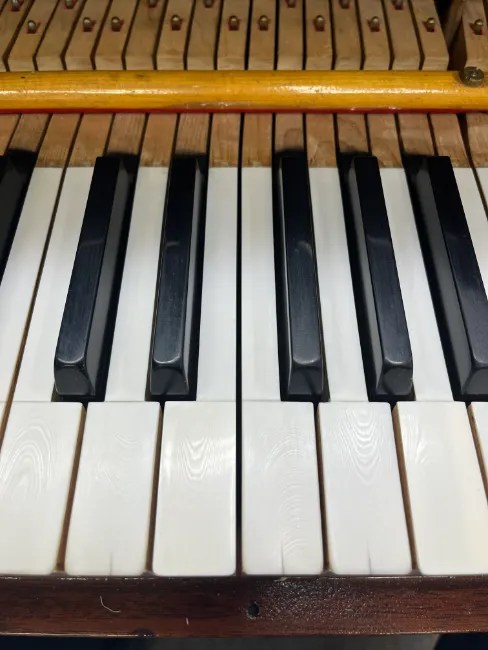
“Tickling the ivories” derives from the material used to manufacture white keys of a piano’s keyboards. For a long time, the white keys were veneered with ivory because of ivory’s “right amount of elasticity, which provided a good speed of attack and release.” Ivory also made the key more durable as compared to other materials available at the time.
Sidebar: As early as 1589, Thomas Nashe used the word “tickle” in reference to an instrument when he wrote The Anatomy of Absurdities: “To tickle a Cittern, or have sweet stroke on the Lute.”
DEMAND FOR IVORY
After the American Civil War the ownership of a home piano, commonly referred to as a polar piano, grew in popularity due to the Country’s economic growth and improvements made in the design of a piano’s soundboard. Average Americans were suddenly able to produce their own musical entertainment at home, a privilege previously limited to the very rich. Along with the increase in demand for polar pianos came an increase in the demand for ivory needed to make white piano keys.
(Sidebar: The increase in polar pianos created an dramatic demand for new songs and corresponding sheet music. To meet that demand a concentration of lyricists, song writers and composers opened store fronts in New York City that came to known as Tin Pan Alley.)
The Nexus to Deep River
So what is all this piano key history have to do with a bank robber? Well, that requires a trip down the memory lane of America’s history.
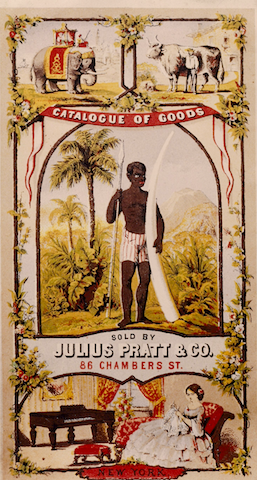
From 1840 to 1940, America was the world’s largest consumer of authentic ivory. The demand was the outgrowth of its use for making piano keys, hair combs, billiard balls, corsets busks, jewelry, sculptures, false teeth, buttons and ornamental boxes. The majority of ivory shipped to the United States went to Deep River and Ivoryton, Connecticut, located in the Lower Connecticut River Valley. It was the home of the ivory industry, making imported ivory an important part of America’s Industrial Revolution and the New England economy. Up to 90 percent of the ivory imported into the United States arrived in Connecticut to be processed into a commodity. That growth was due to the inventiveness of one man – Phineas Pratt.
Phineas Pratt was a silversmith and Congregational church deacon who, in 1798, invented a machine to cut teeth into ivory to produce hair combs. The new technology increased production of all ivory products at lowered costs, causing an increase in demand for combs, an essential article of human hygiene at the time. From that simple invention an industry was born, all centered in and around Deep River, Connecticut.
Sidebar: A piano with ivory keys is readily identified by the seam, usually at the terminus of the black keys, and the lip or overhang at the end of the white key.
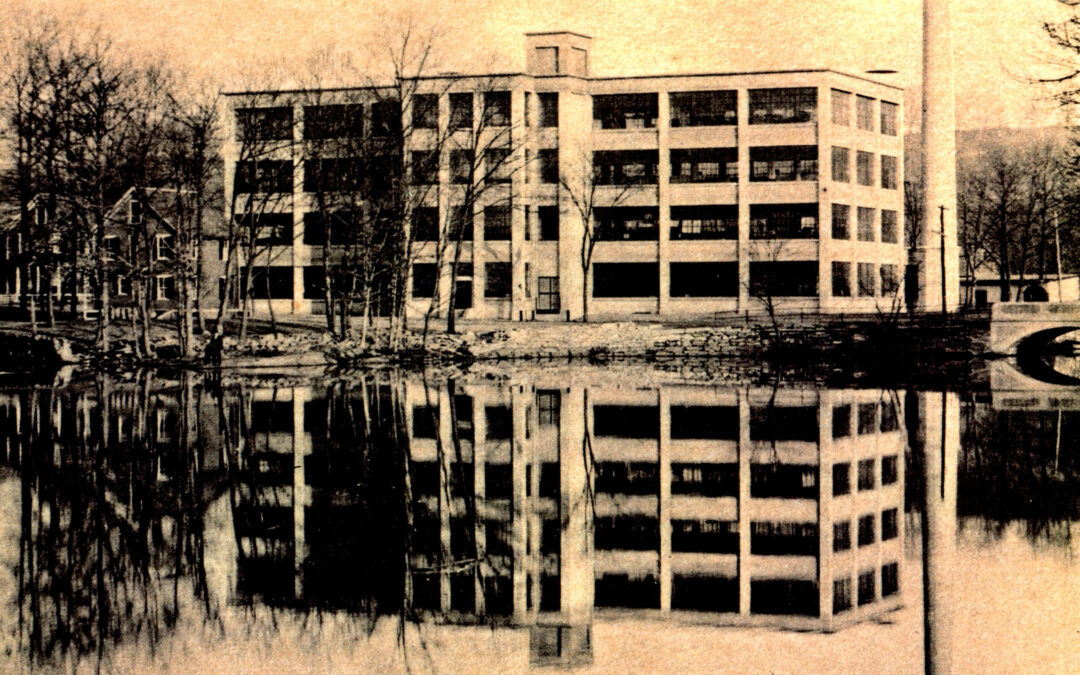
Sidebar: It is somewhat a convoluted history, so suffice it to say that Saybrook Colony, at the mouth of the Connecticut River, was one of the first settlements in that area of Connecticut. Several towns evolved from that colony and over time; one cluster being the “Tri-town Area” comprised of Deep River, Chester and Essex. Today, Deep River is designed by the U.S. Census Bureau as a census-designated place (CDP), and according to the 2020 census has a population of 4,415.
The Deep River Savings Bank
It was well known that the Deep River Savings Bank, because of the number of ivory producing companies in the area, was cash laden, estimated to be $1 million dollars at the time. A few days before December 13, 1899, bank management learned that one or more individuals planned to rob the bank of its cash. The bank’s trustees hired a watchman to guard the bank in the evenings in case a robber or robbers attempted to purloin its cash. The night security guard employed was 33 year old Harry D. Tyler. Tyler spent nights in the bank armed with a shotgun for a year or more (according to The Waterbury Democrat, December 13, 1899 story) anticipating a possible robbery.
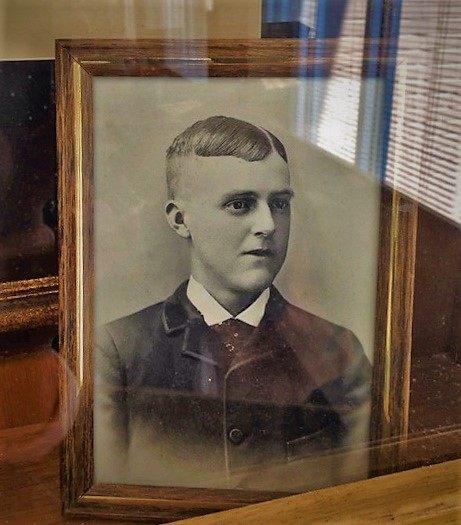
The Waterbury Democrat described Tyler’s action on the night of December 13, 1899 in from an interview with him: “The story of the affair is dramatically told by Watchman Tyler.”
It was just about 1 o’clock this morning when, for some reason which he says he is unable to explain, he went to a front window of the bank and looked up and down the Main street of the town. As he stood there he saw coming down the street from the north a man. The lateness of the hour caused him to become interested and he drew back a little and watched. A few moments later he discovered that instead of one man, there were four.
The four men reached a point almost in front of the bank, conversed and dispersed one on each side of the bank. Tyler said he recached for his firearm, a “repeating shot gun, the shells of which were loaded with No. 9 buckshot, and [took] a position of advantage.
All was quiet for several minutes, the silence broken by the sound of a “grating sound at a window on the north side of the bank.” Tyler said the bank has blinds, which were closed, so he could not see out of the window but he distinctly heard someone at work, “apparently with a chisel.” Suddenly, “he heard a window crack and then it was open.” Tyler stated he took deliberate aim, “he discharged the gun full toward the window.”
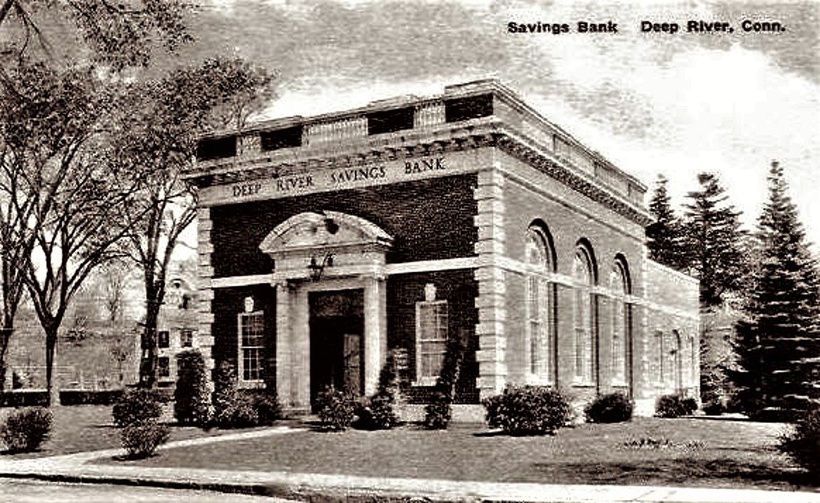
Tyler reported that he waited a few minutes, but none of the other 3 robbers tried to make entry into the bank. Assuming they were frightened away, he used a bank phone to call a nearby liveryman who went for help. “An investigation was begun” and “under the window where the robbers had been at work, was the body of one of the robbers. The discharge from Tyler’s gun had struck him in the forehead, blowing the derby hat which he wore into pieces and removing the top of his head frightfully.”
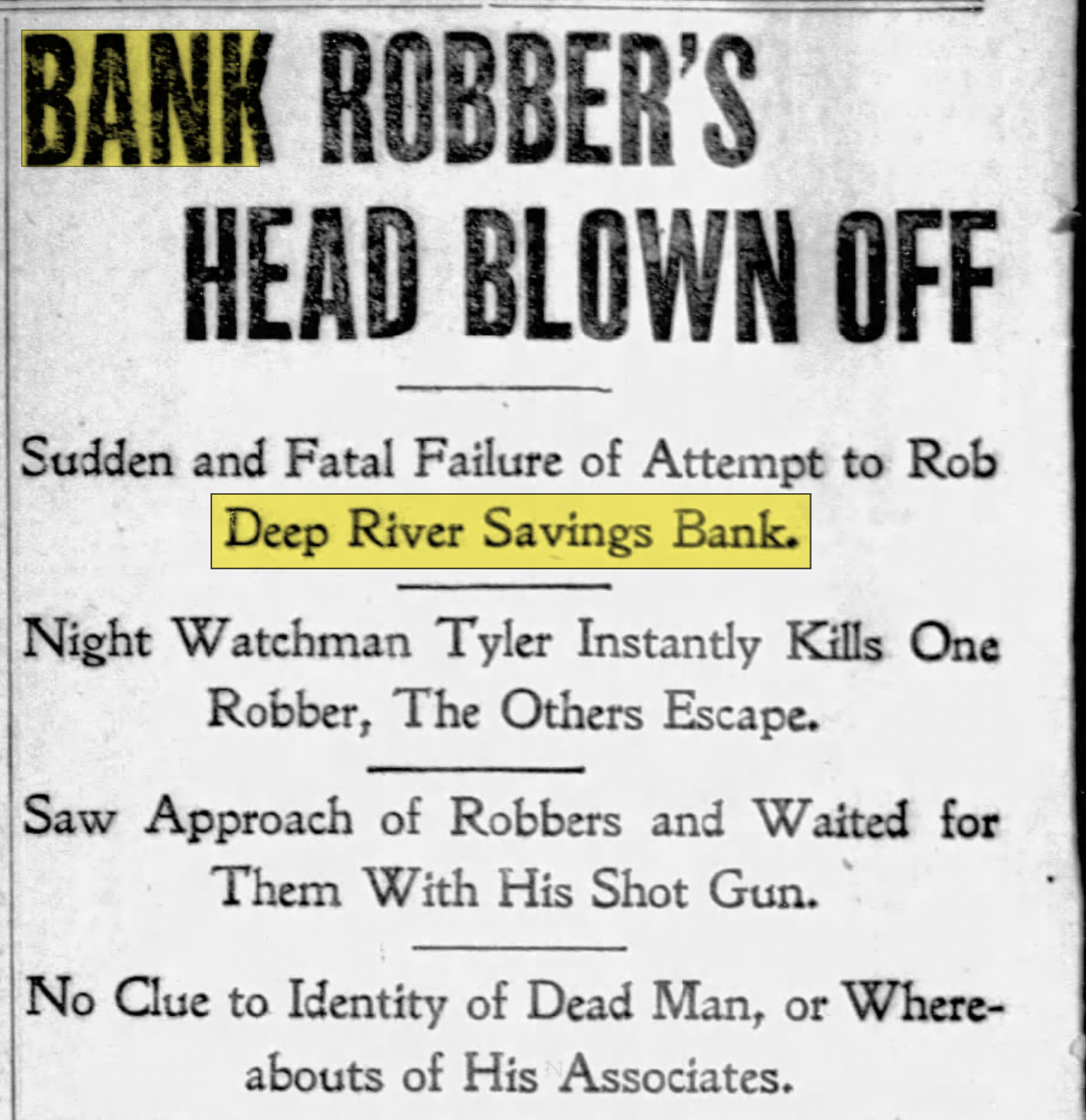
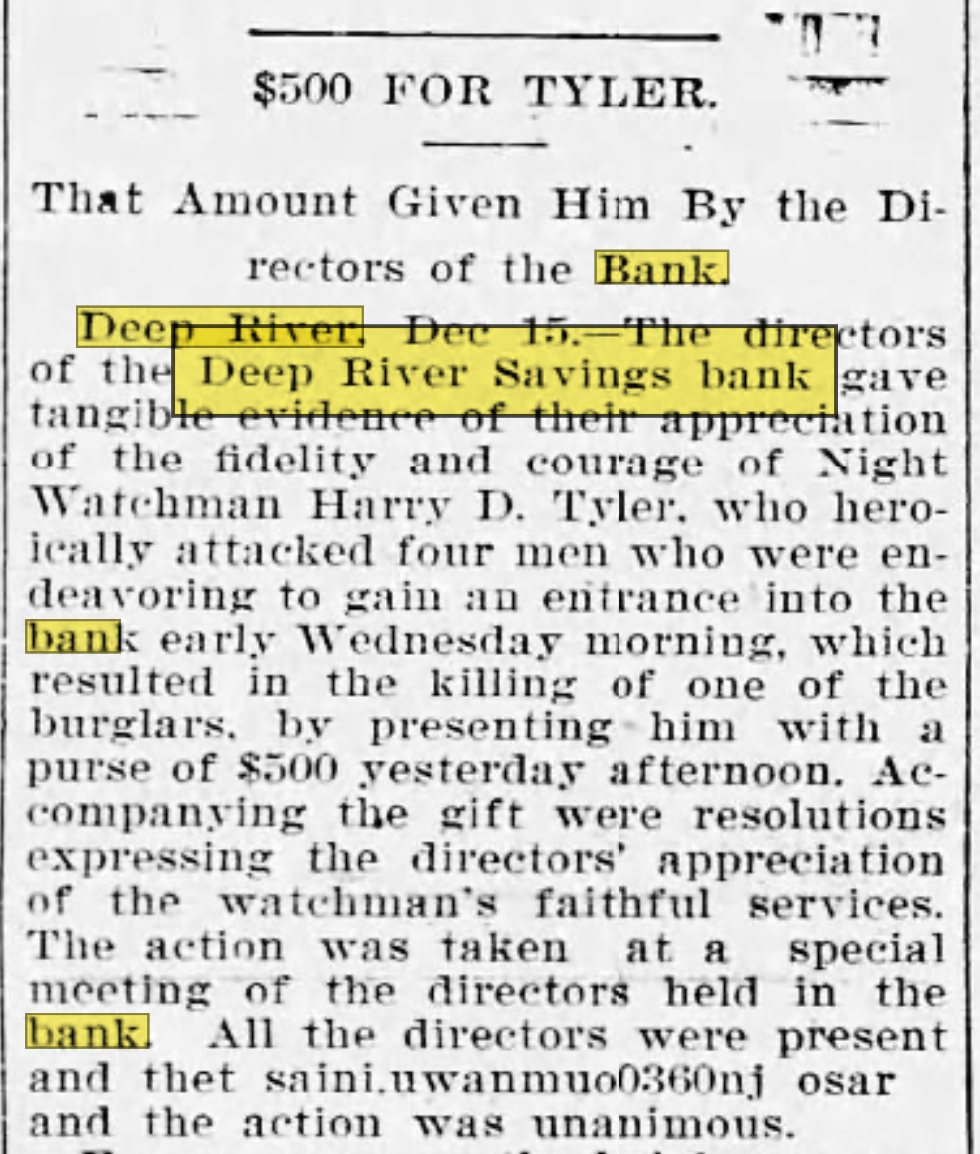
Harry D. Tyler was awarded $500 by the Deep River Savings Bank Trustees and after an inquest was found to have acted in self-defense; thus, he was not criminally charged for the death of the unknown robber. Tyler, according to some news reports, did suffer from PTSD following the shooting, referred to in the papers at the time as “brooding” over the life he had taken. He took one year off guarding the bank and spent that time building a boat that he later sold. Despite his own traumatic experience, Tyler was view as a hero by the Trustees, the customers of the bank, and the entire those living in the immediate area.
The Lore and Legend
A short time after the attempted robbery of the Deep Water Savings Bank, Harry D. Tyler received an anonymous letter requesting he have a marker placed at the grave of the man he shot in the bank robbery, marking it simply as “XYZ.” The body of the unclaimed and, officially, unidentified robber was interred by the City of Deep River in the back corner of the Fountain Hill Cemetery, near the railroad tracks adjacent to the animal cemetery. At first the grave marker was made of wood with “XYZ” carved into it. Later, the wood marker was replaced by a small size stone with “XYZ” etched into it.
From this real life event several legends evolved that eventually became widespread. “According to some accounts, after the botched heist, the grave XYZ was visited each year by a beautiful woman in black until the late 1940s. She spoke to no one, just departed the train at Deep River, waked to the graveyard and left, depending on the account, a wreath of flowers or a single rose.”
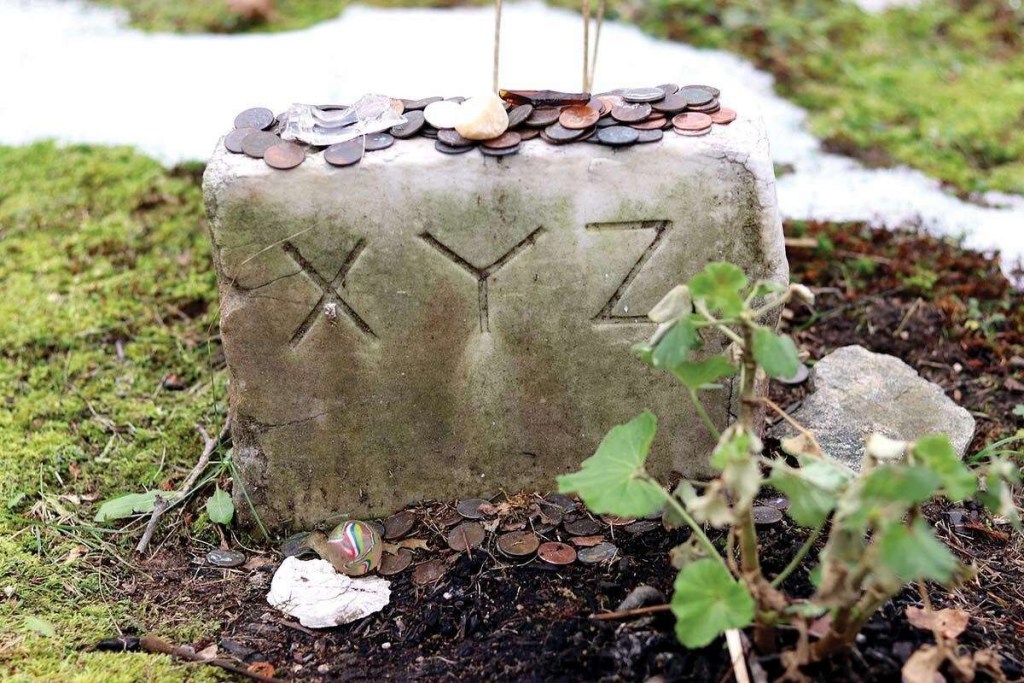
The grave continues to inspire local folklore, as well as attracting tourists. Visitors often leave a coin on top of the “XYZ” grave stone for good luck or protection from a curse.
POSCRIPT
With the help of the Pinkerton Detective Agency the faceless robber was believed to be Frank Ellis, a storied bank robber, who also went by the aliases Frank Howard and Tommy Brent. No name was ever carved into the stone, perhaps because of uncertainly of the man’s identity (since no one ever claimed the body) or, possibly, out of intentional contempt.
Plastic eventually replaced ivory as the primary material used to make white piano keys because it was less expensive and to preserve the African and Asian elephant.


edgar allen poe supposedly had/has a mystery woman visitor
LikeLike
Wasn’t aware of that coincidence.
LikeLike
Please you like this post, Margaret T.
LikeLike