Before there were the music bastions of Nashville, Motown, Los Angeles, or “The Muscle Shoals Sound,” there was New York City’s Tin Pan Alley. That name came to identify an aggregation of music producers, lyricists and publishers in the late 19th to the early 20th century located along 28th Street between 6th Avenue and Broadway. How the name Tin Pan Alley was coined is an apocryphal story, but, nonetheless, is fixed in American lexicon. And, undoubtedly, is uniquely an American story.

The Origins of Popular Music
Before broadcast radio and recorded music, Americans had to produce their own — usually at home. The preferred instruments were the small, affordable types like a “fiddle,” a guitar, and a harmonica. Of course, there was the harpsichord, the precursor of the piano. Those instruments were large, expensive, and affordable only to wealthy citizenry.
The piano was the favored instrument for wives and young woman to master. Women were typically responsible for providing musical entertainment in the home during special occasions; it was the family parlor that kept music teachers, music shops and music publishers in business during The Gilded Age and The Progressive Era of the 20th century.
Early pianos lacked cast iron plates and therefore were unable to support high string tension. Thanks to American inventiveness, the introduction of cast iron plate transformed the piano into the iconic instrument we know today. The cast iron plate, the component across which the piano strings are strung, carries 30,000 – 40,000 pounds of pressure and is the heaviest component of the piano. Though the sound board (a flat piece of specially chosen shaped in a particular way to resonates sound) is probably the most important component of a piano, without the strings remaining properly tuned everything would be off key.
According to Sound American, “In the years after the Civil War, Americans were buying more than 25,000 pianos a year and about half a million people were learning piano by 1887. Based on a rough statistical record from the year, this meant about one in 29 households, nationwide, contained someone learning to play music at home.”

(“The cast iron plate is the single heaviest piece in a piano. Traditionally painted in a golden bronze color, it is one of the most visually striking components of any grand piano. The plate’s function goes beyond the cosmetic. A carefully cast frame, this large piece of cast iron sits above the soundboard. Its purpose is to absorb the lion’s share of the over 40,000 lbs of tension produced from the hundreds of piano strings.”)
Song Publishing In New City
Songs and their corresponding sheet music were produced for home musicians. New music was also needed for theatrical performances and vaudeville shows. Lyricists and composers, sometimes working together to meet the demand, generated as many new songs as possible giving birth to what is now referred to as popular music. Sheet music prior to that change in consumer demands tended to be spiritual songs or classical music.
To meet the demand for new, popular music, an enterprising founder of the first publishing house to specialize in popular music, Willis Witmark, relocated from the entertainment zone of Manhattan to 28th Street and was the seed that sprouted into Tin Pan Alley.
Tin Pan Alley was both a physical development and a cultural creation. “Between 1893 and 1910, this section of West 28th Street between Sixth Avenue and Broadway became known as Tin Pan Alley, often cited as the birthplace of American popular music and [for] making sheet music available to countless American households.”


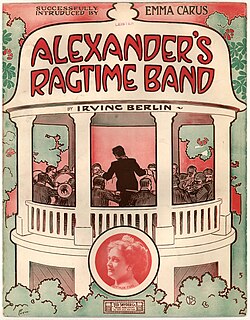

Copyright laws were not enacted until the late 19th Century, before the passage of those laws song writers and composers had not qualms about copying another creators song. Despite that, many a great song was written and composed within the few buildings of Tin Pan Alley.
For those who faced discrimination, Tin Pan Alley was a haven, a place that the only attribute that mattered was talent as a composer, performing artist and music publisher. Hence, Tin Pan Alley employed many Black and Jewish composer, lyricists and singers.
As Tin Pan Alley grew, so did the Country’s interest in the people, process, as well as the locale and cluster of music publishers that generated the new songs. Accounts credit a journalist, Monroe H. Rosenfeld or an anecdote from Harry von Tilzer for popularizing the name Tin Pan Alley. The name likely came from one of the critics’ comparison of the cacophony of many cheap, out-of-tune upright pianos (and the percussive, “tinny” sound they produced.)
The Tin Pan Alley Project, a 501(c)(3) Nonprofit Organization
The Tin Pan Alley Project is an organization that fosters works to maintain an appreciation for the historic beginning of American popular music and the modern music business. By telling the stories of the songwriters, music publishers, and performers — many of whom were Eastern European Jewish immigrants and Black Americans — who created the sound and the business of music in the early 20th century, the project brings the power of music as an essential element of American cultural history.
Tin Pan Alley composers and lyricists that had profound careers:
Irving Berlin; Sammy Cahn; George M. Cohan; George Gershwin; Ira Gershwin; Oscar Hammerstein II; Scott Joplin; Cole Porter; Richard Rogers; and many others.
Notable Hit Songs:
“After The Ball” (1900) – written by Harry Von Tilzer
“Ain’t She Sweet” (1927) – written by Charles K. Harris
“Alexander’s Ragtime Band” (1911) – written by Irving Berlin
“All Alone” (1924) – written by Irving Berlin
“Baby Face” (1926) – written by Benny Davis and Harry Akst
“Bill Bailey, Won’t You Please Come Home” (1902) – written by Huey Cannon
“By The Light of the Silvery Moon” (1909) – written by Gus Edwards and Edward Madden
“God Bless America” (1918; revised 1938) – written by Irving Berlin
“Hello Ma Baby (Hello Ma Ragtime Gal) (1899) – written by Joseph E. Howard and Ida Emerson
“Let Me Call You Sweetheart” (1910) – written by Leo Friedman and lyrics by Beth Slater Whitson
And there are many more.

