President Franklin D. Roosevelt gave one of his annual State of the Union addresses to Congress on January 6, 1941. It was the start of his 3rd term in office and the world was confronted with Hitler’s occupation of Western Europe; Italy’s occupation of Ethiopia and North Africa; and, Japan’s push into occupy large areas of China and islands in the Pacific Ocean. All were set on supporting their economic sphere and expanding their territorial control.
Roosevelt needed to explain to Americans the importance of providing both moral and material support to European allies. More importantly, the President knew that Europe was fighting the spread of Fascism, Nationalism and Imperialism, forms of government that, if allowed to spread, would adversely impact the United States. With those concerns in the forefront it was important for all Americans to understand what was at stake. Roosevelt’s State of the Union was designed to convey that message in no uncertain terms. The Philadelphia Enquirer of January 8, 1941 echoed Roosevelt’s speech.
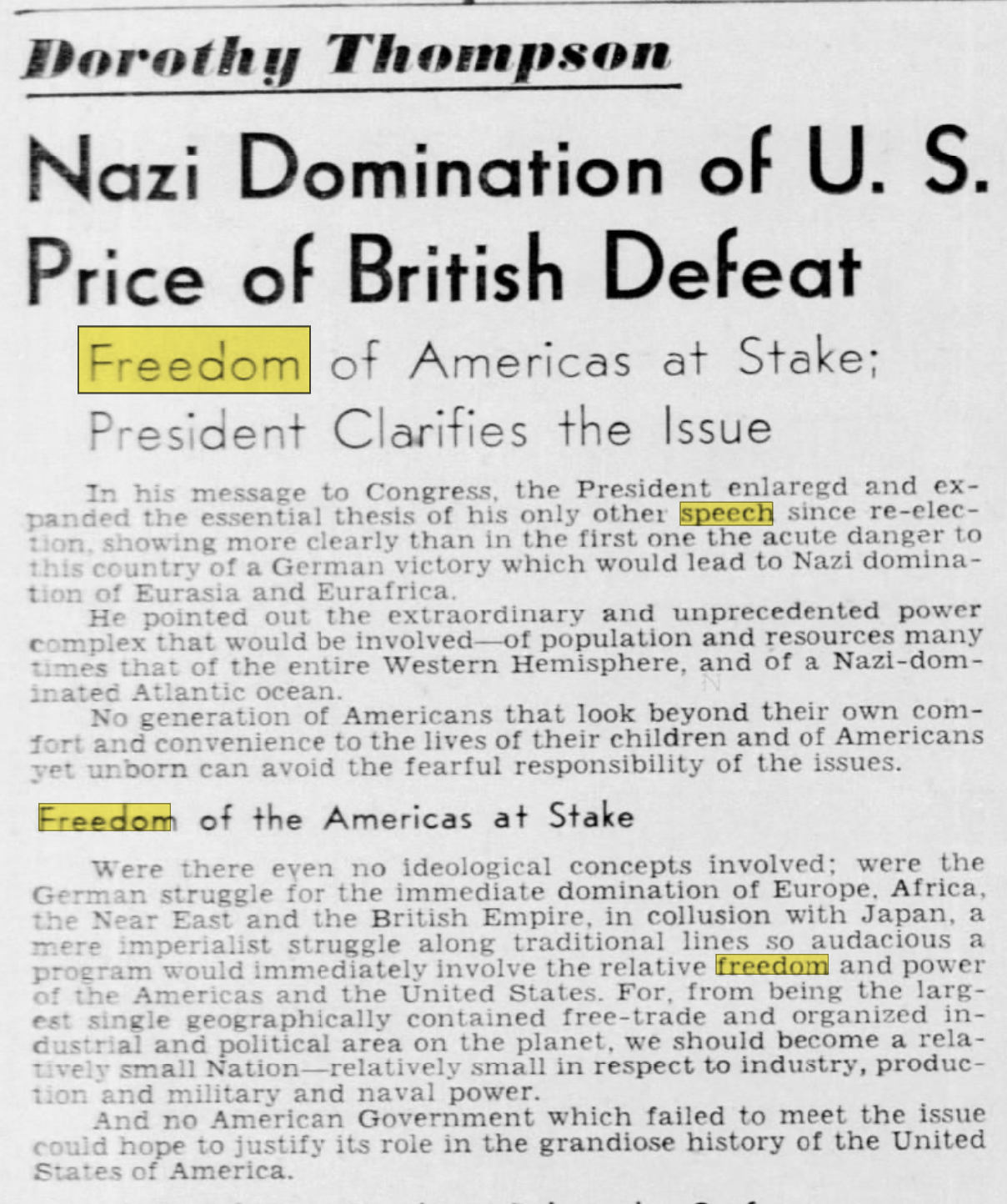
One portion of Roosevelt’s speech was eerily prophetic:
I suppose that every realist knows that the democratic way of life is at this moment being directly assailed in every part of the world–assailed either by arms, or by secret spreading of poisonous propaganda by those who seek to destroy unity and promote discord in nations that are still at peace.
During sixteen long months this assault has blotted out the whole pattern of democratic life in an appalling number of independent nations, great and small. And the assailants are still on the march, threatening other nations, great and small.
Therefore, as your President, performing my constitutional duty to “give to the Congress information of the state of the Union,” I find it, unhappily, necessary to report that the future and the safety of our country and of our democracy are overwhelmingly involved in events far beyond our borders.
Roosevelt was preparing the Country for a war he felt was inevitable. That the outcome of a war could threaten the security of the United States; its form of government; and, the people’s way of life. That Speech has come to be known as The Four Freedoms Speech.
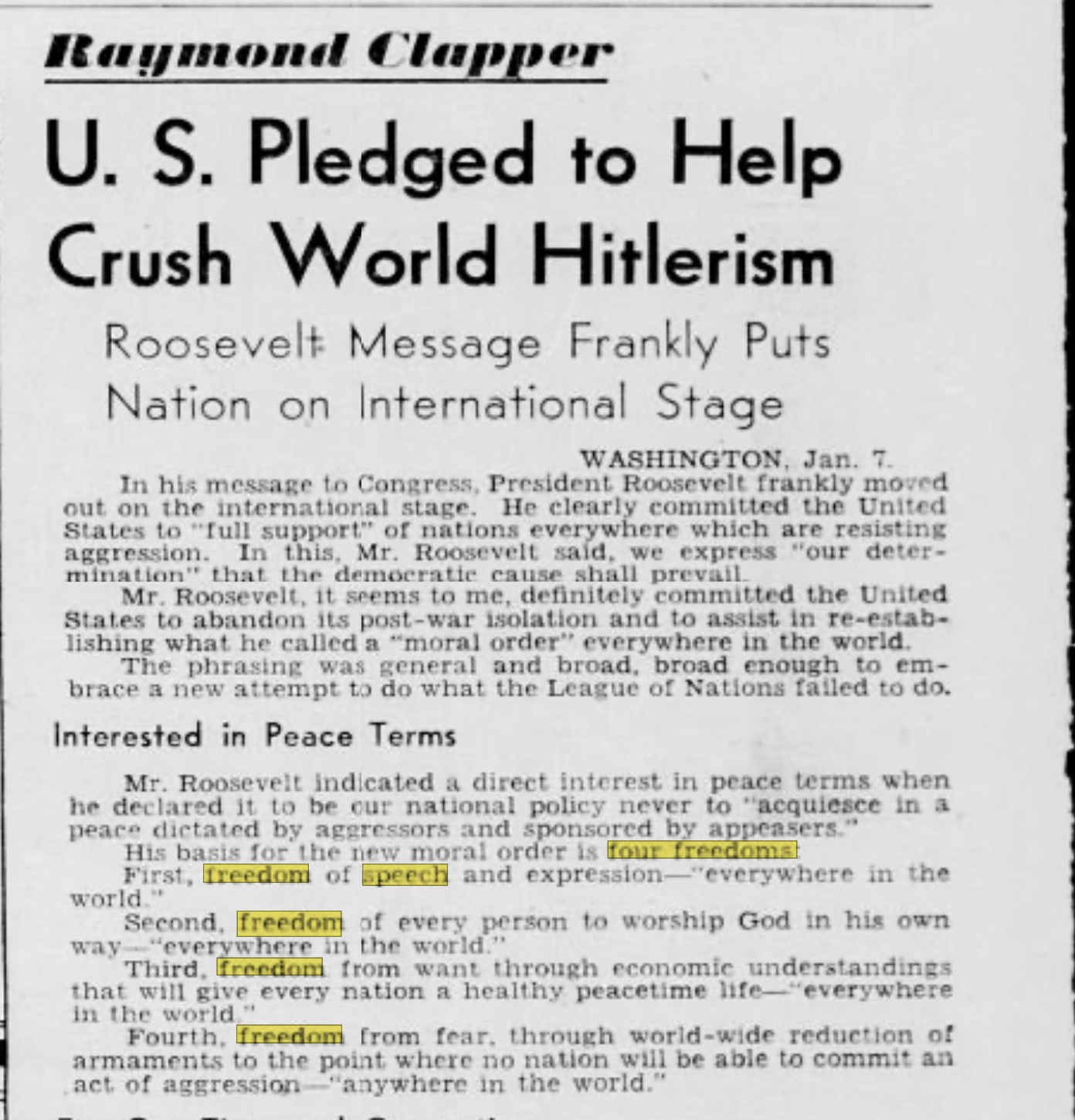
Only a matter of months following Roosevelt’s Four Freedoms Speech proved to be prophetic when Japan executed, on December 7, 1941, a surprise and unprovoked attacked on the United States Pacific Fleet at its Pearl Harbor Naval Base in Hawaii. President Roosevelt had no choice but to declare an immediate “State of War” between the United States and Japan. That monumental event was used by Nazi Germany, an ally of Japan, to also declare war against the United States.
Roosevelt’s Message
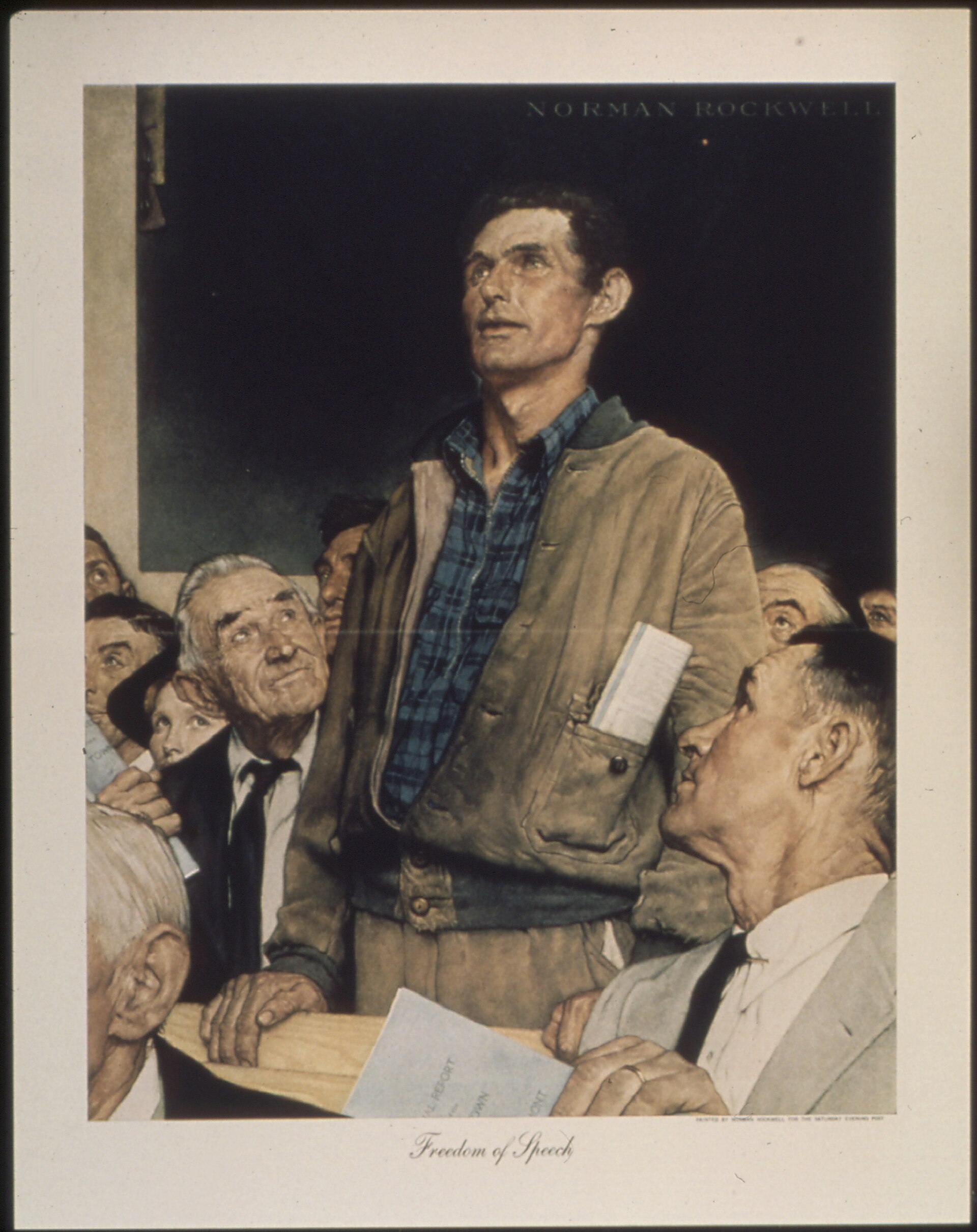
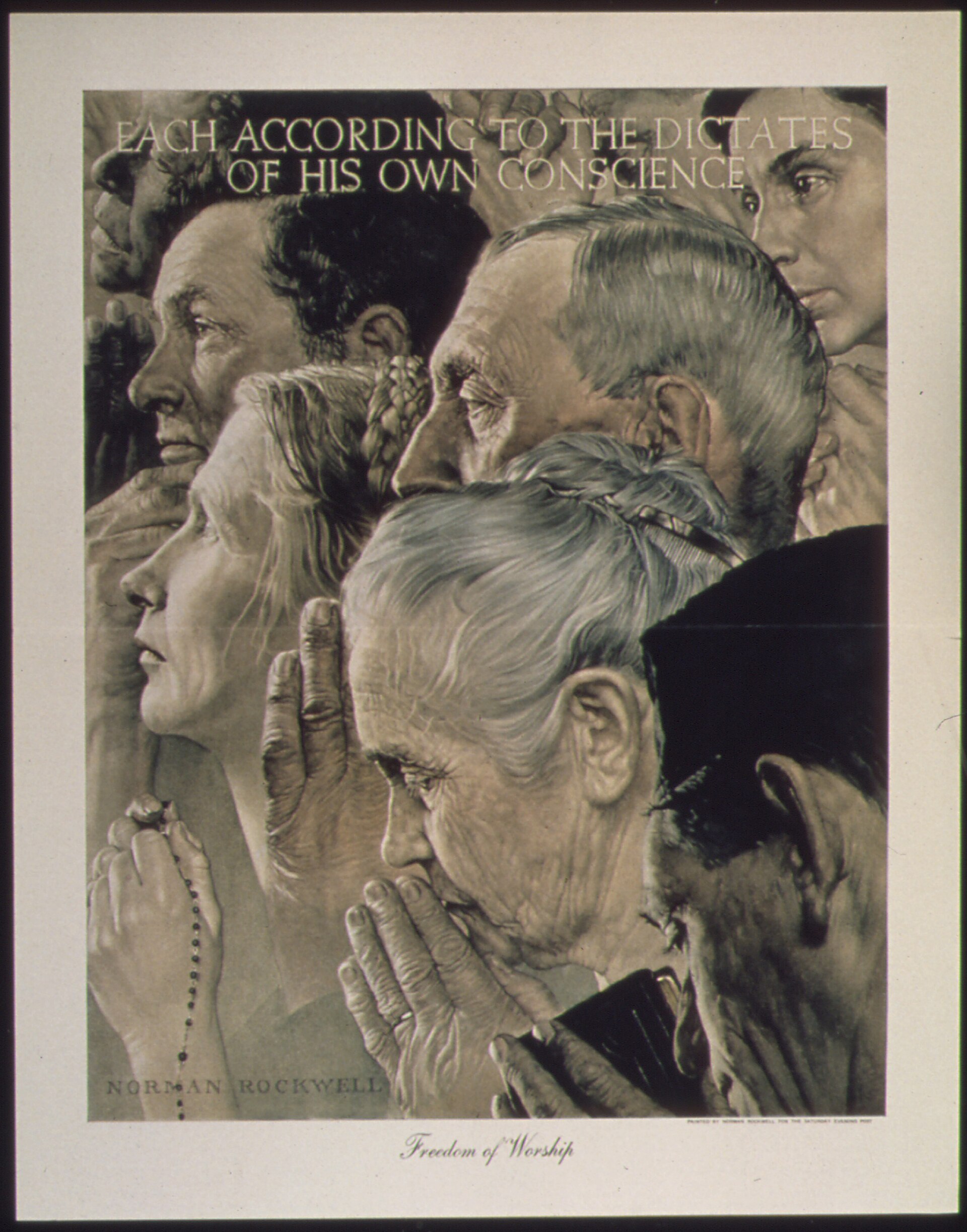
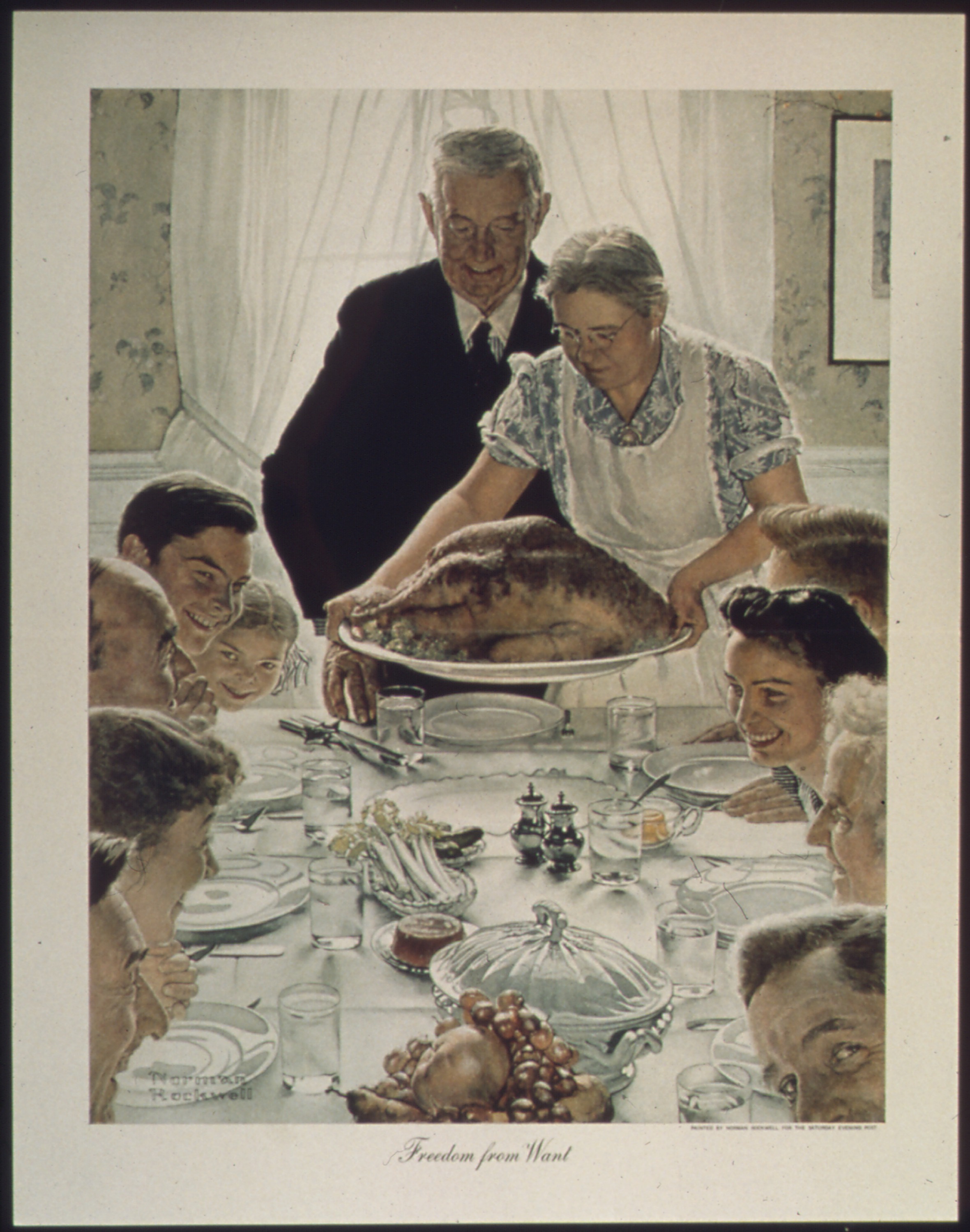
Words were and are not the only way to convey a message. Art, well done, can also communicate a message and stir emotions. Normal Rockwell, one of America’s best known illustrator of the 20th century, knew that better than anyone – he had been doing it for years for the cover of magazines. As a proud and patriotic American, Rockwell was inspired by Roosevelt’s Four Freedoms Speech, so much so that he transferred the message in the speech to canvas. All one has to do is see the paintings to understand Roosevelt’s (and Rockwell’s) message. Rockwell’s four works were made into U.S. Postage Stamps and posters to inspire the purchase of war bonds, for military recruiting, and other propaganda material.
July 2026 being the 250th Birthday of America, it seems appropriate to show homage to the Four Freedoms Speech and Rockwell’s paintings that depict each of them.

Happy Birthday, America!
 old spirituals
I have always enjoyed Rockwell’s depiction of America. We are truly blessed!
LikeLike