Prologue
Folktales are often a scary stories about evil characters. One in particular dates back to the 1600s in France – likely inspired by certain murderous nobles during the practice of feudalism. The story, which tells of a mysterious aristocrat who kills the women he weds as a punishment for their curiosity about him, has many versions throughout the world. The cultural derivations consist of the same critical elements: a scary castle or home; a cunning, nefarious and/or lecherous man; and, a forbidden room or area that only he can enter. It is a legend that has inspired many a murderous man (a few women, too) to try their hand at the lifestyle.
The origin of this tale is not specifically known; what is known is it was first told in written form by French author Charles Perrault in his 1697 compilation Histoires ou contes du temps passé, better known in English as The Tales of Mother Goose. Perrault called one particular story the tale La Barbe Bleue,” French for Bluebeard. The main characters is very wealthy and has blue facial hair that makes him unappealing to women. By inviting several young women to his castle he impresses one so much she agrees to marry him.


While away from the castle for several days he leaves her with keys to explore his castle, specifically saying she should not use the key that opens a specific door. Of course, she goes against his instructions and finds the bodies of several women inside of the room . . . . all his prior lovers or wives.
In May of 2026, the case of Frederick L. Small was detailed in a post on this site, titled A Not So Perfect Murder. Small lived before the antagonist in this posting but is considered an American Bluebeard. This post tells of another American Bluebeard who married women, then cut short their lives solely to abscond with their money and valuables.
The Fiend
Helmuth Emil Max Schmidt walked down the gangway from the S. S. Bremen on November 6, 1913, as thousands of other European immigrants did before and after him. Unlike those other thousands of immigrants Schmidt was not dreaming of obtaining the “The American Dream.” Helmuth had far sinister objectives to achieve in his newly adopted country.
The Immigration Office on Ellis Island recorded Schmidt as 38 years old, 5’6″ tall, with black hair and blue eyes, that apparently made him appealing to women. As an individual identifier, the Agent noted him as having a “fair complexion” that was “Pach Morked,” believing it was “pockmarked” scares from a skin condition. (Schmidt’s facial scars were not pockmarks from a childhood condition but were scars from cuts received during sword duels.) His occupation was recorded as “Mechanic.”
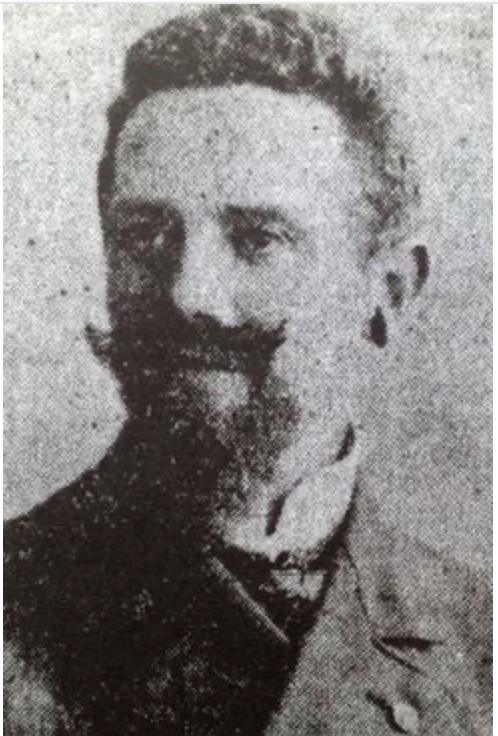
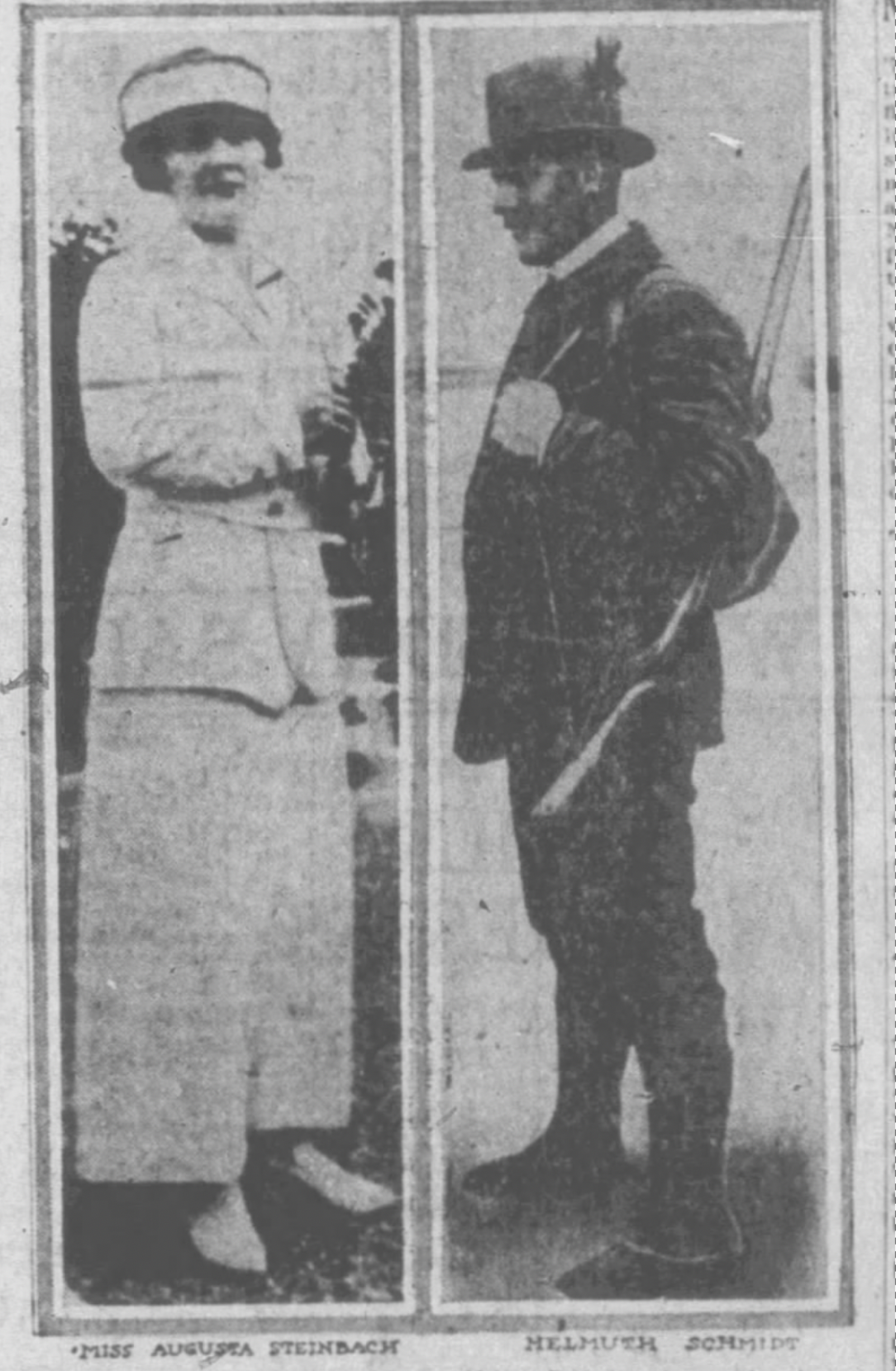
Only one portrait photograph of Schmidt has ever been discovered. It was likely taken before he immigrated to the United States because a wife he wed in America was surprised to see him with a beard.
Schmidt was an enigma the minute he stepped foot on American soil. One ship’s manifest listed a man with the Surname Schmidt that arrived from Germany on or about the time Helmuth supposedly came to America. The mystique is that the Given Name written on the manifest is not Helmuth. The manifest records a man with the Surname of Schmidt and a Given Name of Mase debarking the S. S. Bremen. Coming to know Helmuth Schmidt’s character and history, it is likely he entered the United States under an alias. Based on his known birthdate and other personal information, ancestry.com identifies the man as Helmuth Emil Max Schmidt. Nothing recorded on the day of his arrival indicates he had a daughter or any other person accompanying him, though he did report he was married.

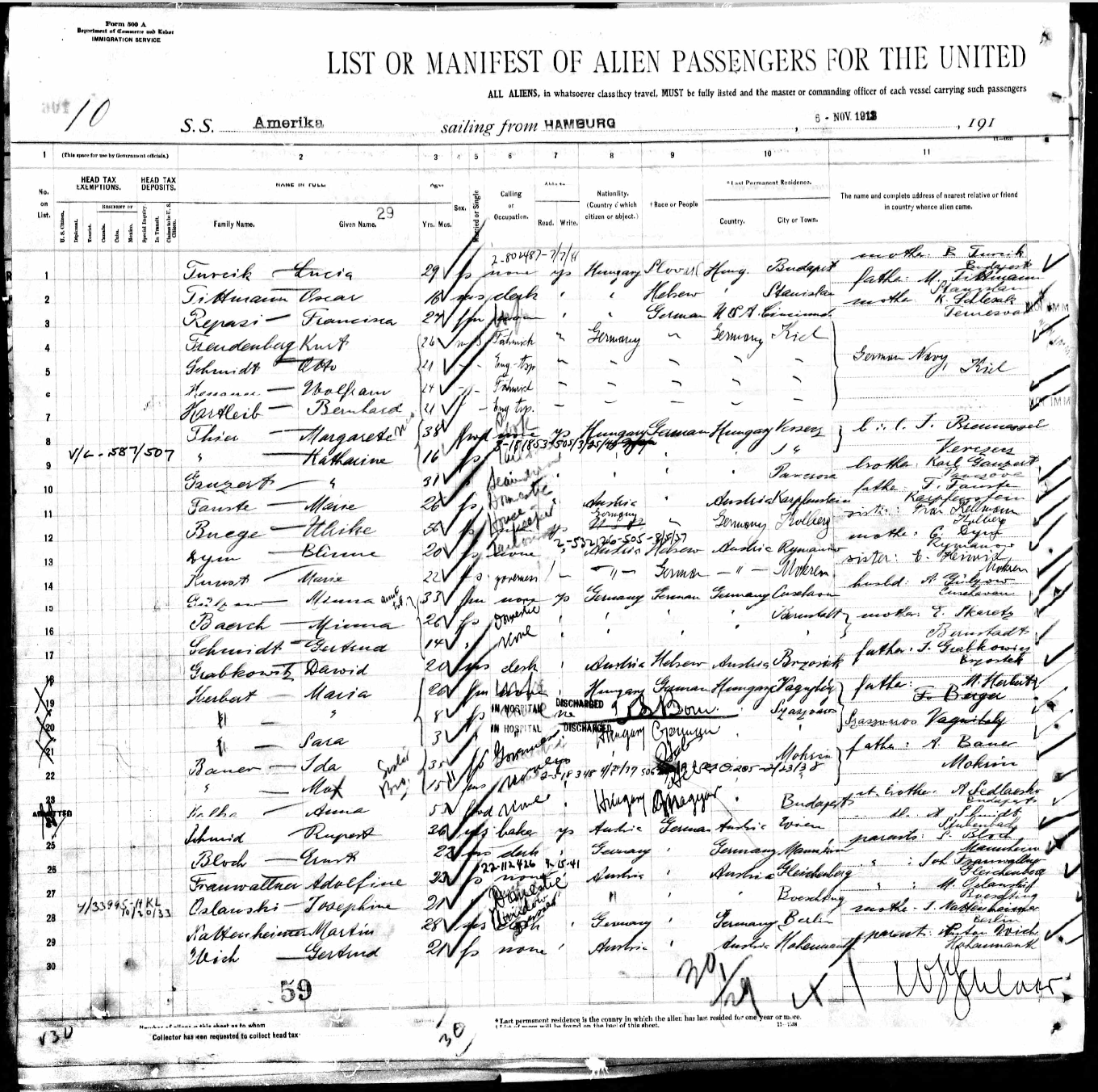
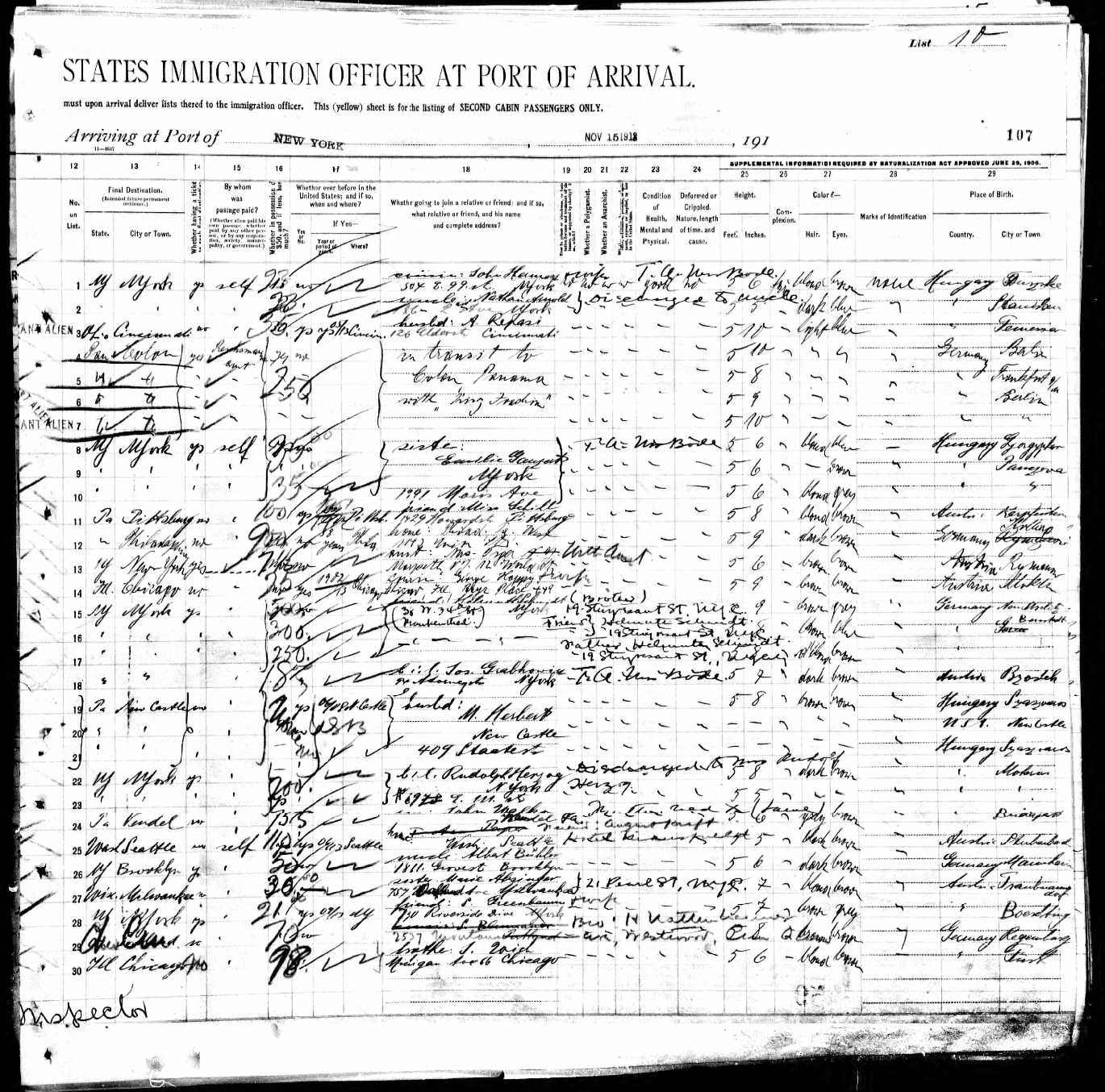
Helmuth Schmidt did have a daughter, Gertrude, who arrived in America on November 15, 1913, aboard the S. S. Amerika sailing from Hamburg, accompanied by two adult women. Their names are listed on lines 15, 16 and 17 of the Passenger Manifest. The first name on line 15 is indiscernible, but doesn’t appear to be the name of one of the woman he presented later as his wife. The other woman’s name is Margareta Baersch.
Sidebar: Gertrude was also called “Trudchen” by her father. It is the a diminutive form of Gertrude in German, meaning “spear of strength” or “strong spear.” It is not commonly used today and is often associated in historical context. The name is fitting for Gertrude, vis-á-vis her behavior. The name “Trudchen” is very apropos.
The Fair Maiden
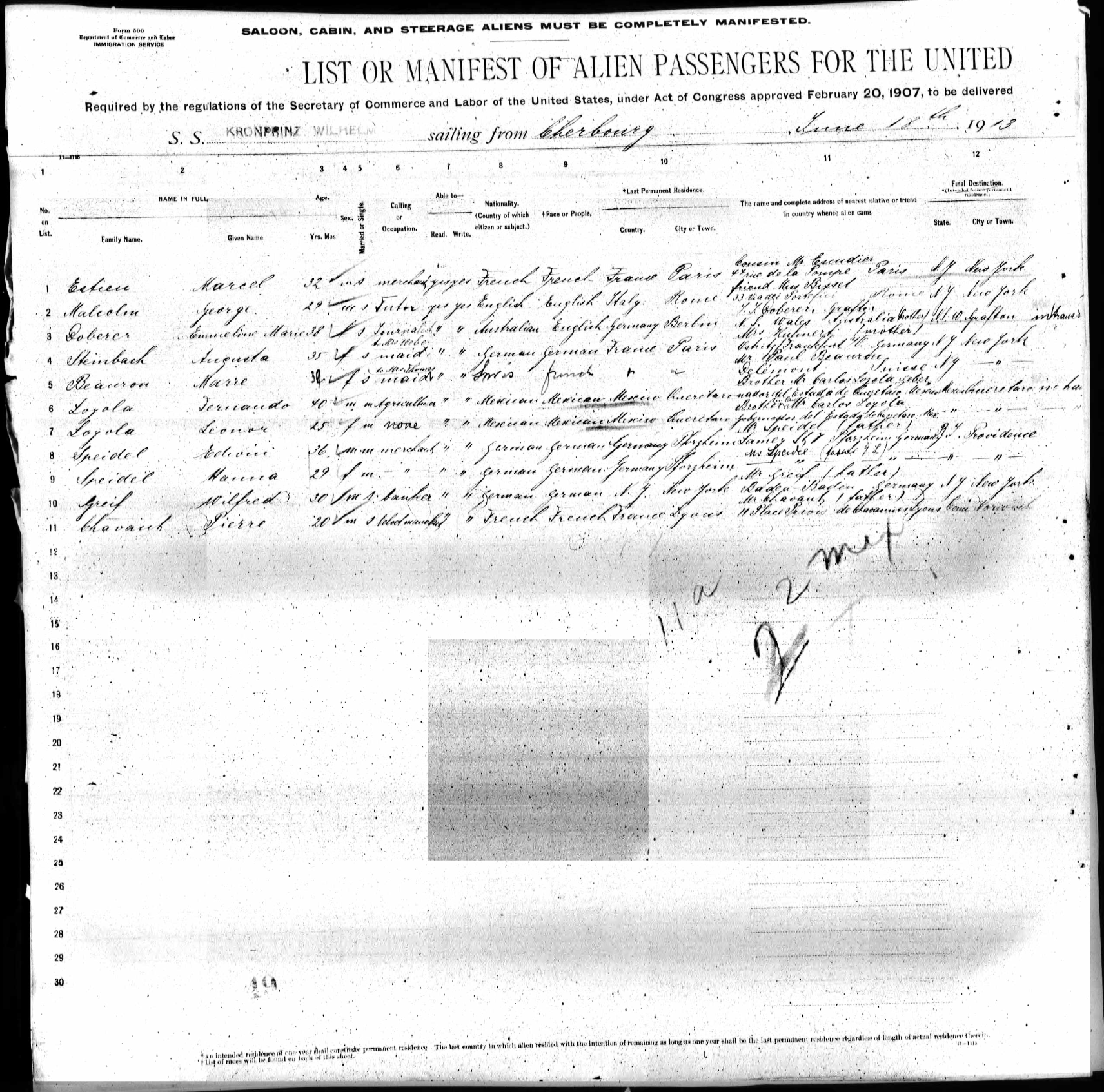
The Kronprinz Wilhelm docked at Ellis Island a few months before the S. S. Bremen, disembarking its passengers on June 24, 1913, that boarded in Cherbourg, France. One passengers, a 35 year old, unmarried woman by the name of Augusta Steinbach was traveling as a companion of an American couple, Mr. & Mrs. Charles Weber. Augusta left a respectable position as a domestic in Paris after moving there from Berlin where she had been a “lady’s maid” for an aristocratic German family. She hoped to find employment in America and, one day soon, have a loving husband, children and her own home.

Augusta was the fourth passenger listed on the ship’s manifest when the SMS Kkronprinz Wilhelm docked at Ellis Island.
Augusta easily found employment in New York among its elite class. Her first employer was as a lady’s maid to a wealthy New York banker who lived on West Fifty-Fourth Street. The family was excited having the multilingual, vivacious German and very much valued her presences in their home.
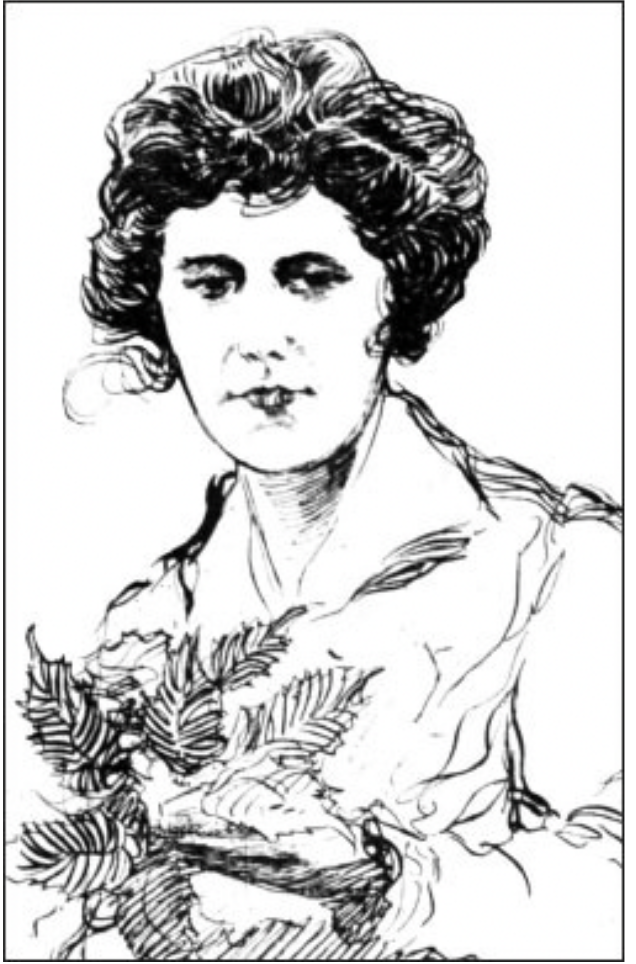
A similarly situated woman, Agnes Domaniecki, left Germany in April 1914. Agnes was 30 years old and had worked with and become a close friend of Augusta. Agnes joined Augusta in New York, often getting together when not working to speak to each other in German and gossip about New York’s gens du monde. While the women were safely living in America, World War I was ravaging large areas of Europe. Augusta was especially interested in the War because her brother had joined the military and her sister was a nurse in Constantinople, known today as Istanbul.
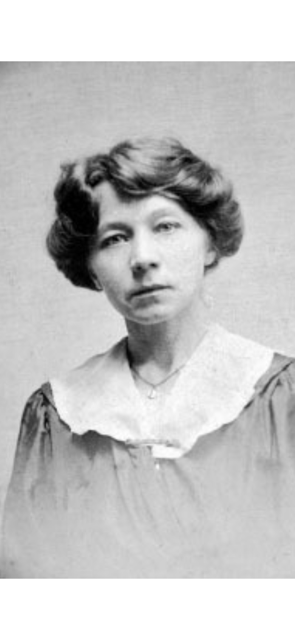
Tremors of war between France and Germany were another impetus for Agnes and Augusta, Germans living in France, to decide to immigrate to America.
Fate would eventually bring together Helmuth, Augusta and, indirectly, Agnes in their adopted country, but their life in America would not be as they envisioned.
“Never Trust A Man With Two First Names [Or Last Names]”
As was asked of all immigrants in the early 1900s, Schmidt was queried where he was going within the United States and with whom he would be staying. Schmidt informed the immigration agent he was going to Massachusetts to stay with someone named Sudw Salzberg. (No person by that name was located on any manifest record.) Instead of going to Massachusetts, Schmidt diverted to New York (though he may have also spent time in Philadelphia) until his daughter, wife and maid arrived, all four settling in a cottage in Lakewood, New Jersey.
While in the Lakewood, Schmidt purchased the cottage under the name Emil Braun. He told neighbors and acquaintances that one woman was his wife, the other a servant and the other, of course, his daughter. As soon as possible, Schmidt opened a jewelry store using the front porch of the cottage as the foundation of his business.
Six months after his arrival in Lakewood the two adult women were noticeably absent. They almost disappeared simultaneously. When asked their whereabouts Helmuth said his wife returned to Germany and took the servant with her. But when his 15 year old daughter asked of their whereabouts his answer was, “Greta (the servant) married and moved to Denmark.” To anyone other than a young girl that explanation would have been very suspect.
To a rationally thinking adult, the believability of Schmidt’s explanation of why he left Germany and settled in New Jersey requires great gullibility: he said he wanted to start a chicken farm in New Jersey. (That is an interesting business to start in New Jersey because it was, and is today, known as the Garden State; the nickname was first used in 1876 by a Camden, New Jersey lawyer at the Philadelphia Centennial Exhibition. The State and City is the reason the Campbell Soup Company established its headquarters there in 1869.) Helmuth’s undeniable reason for leaving Germany was to avoid military conscription and also to evade German authorities who wanted him for criminals reasons.
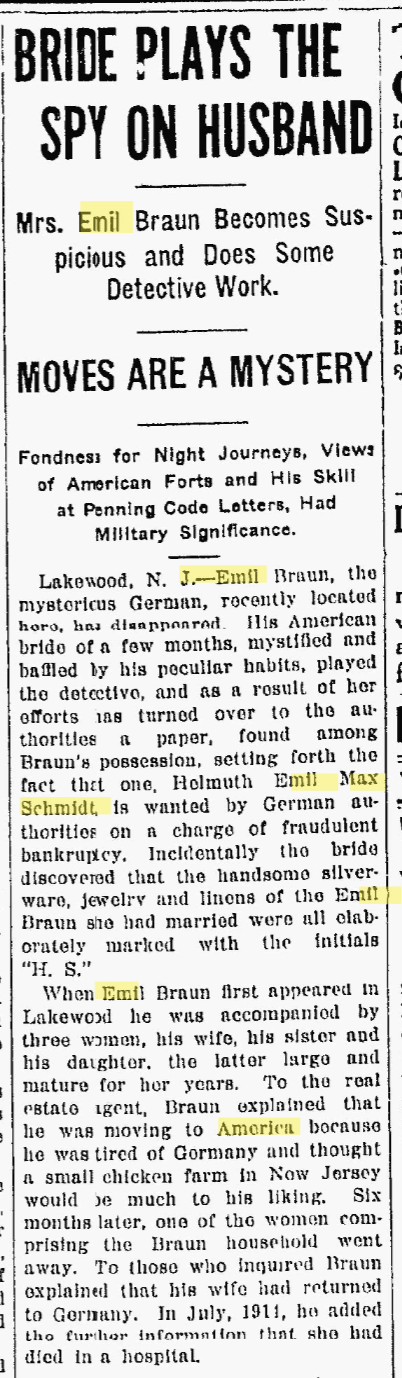
Two major events took place in the life of “Emil Braun” in 1914: the start of World War I and another marriage. When the War hit the news, Braun displayed a sudden interest in the military fortifications in the area and less interest in New Jersey chickens. He attempted to gain entry to Fort Hancock in Sandy Hook, New Jersey, a fortification designed to guard the New York Harbor and an enemy on the Atlantic Coast. He was never granted permission to enter the Fort, which observers said made him visibly upset. It was later speculated that he was attempting to seek favor of the German government by providing military information.
The second eventful occurrence involving Emil Braun in 1914 was his marriage to Adele Ulrich, a stenographer who he attracted through an ad in a German language newspaper distributed in New York. Ms. Ulrich discovered Emil Braun through an ad in the lonely hearts section placed by matrimonial suitors. The pair married on December 30, 1914. One can deduce that Emil later wished he had chosen a different woman when hunting for his next, new spouse since it was Adele who alerted police to his transgressions and modus operandi.

Due to Adele’s efforts, Lakewood police learned that Emil Braun was in fact Helmuth Schmidt, a German expatriate who left his native country because of “fraudulent bankruptcy” charges filed against him.
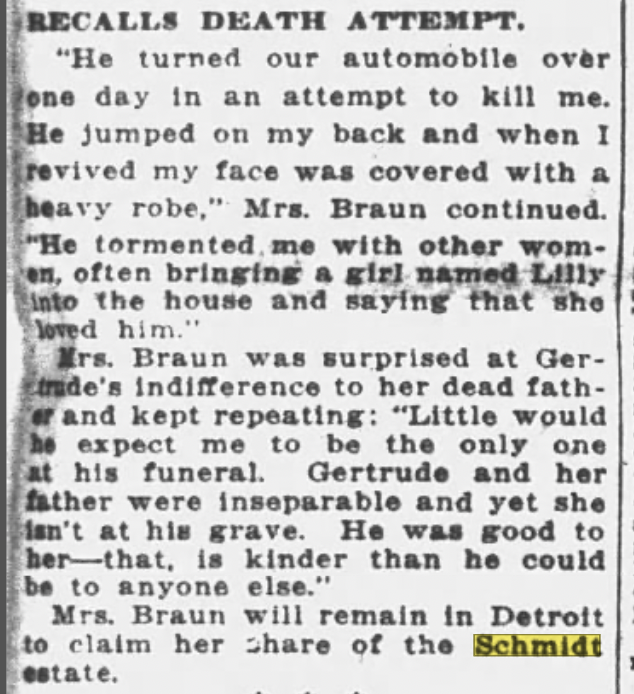
During their time together, Adele was abused by Schmidt on a regular basis. Once he purposely drove his car into a tree in an attempt to eliminate her. Discovering she was still alive lying on the ground, he tried to strangle her to death. She was saved only because another vehicle stopped to offer assistance. Adele later told authorities he even refused, at first, to allow her medical assistance. When she was finally seen by a doctor, she made him aware of the her husband’s actions. That is when Emil Braun disappeared from New Jersey, along with Gertrude.
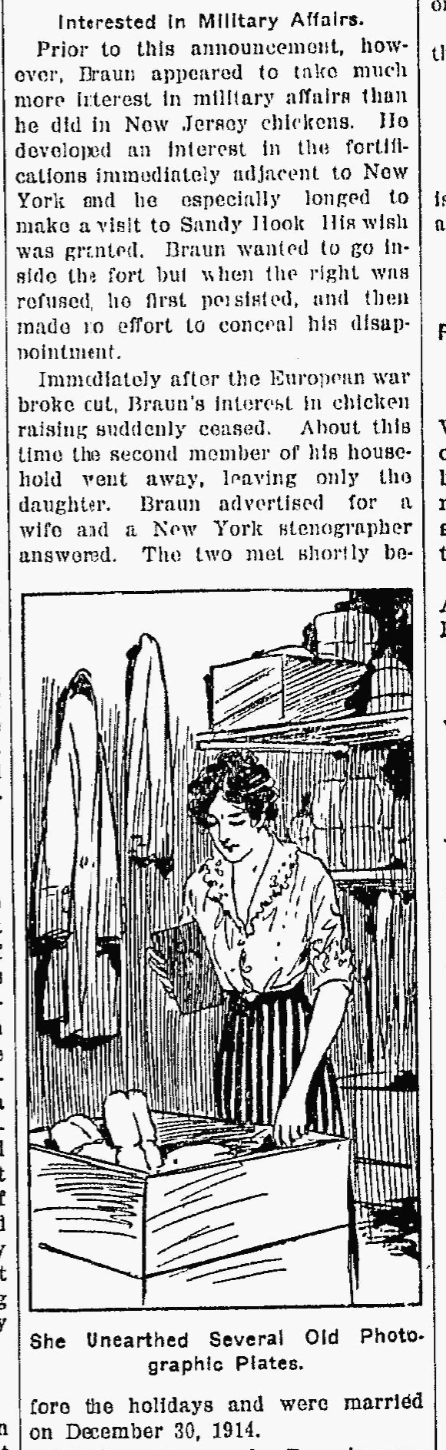
Once Braun was absent from the cottage, Adele searched every square inch of it and came across some revealing items in the possessions Braun left in the home. Things like old photographic plates of his jewelry store in Germany and a bearded portrait photo revealed who she had married. Without hesitation, reported her experienced and findings to Lakewood, New Jersey police – especially his insistence that she not use the house well and how enraged he became if she even went near it.
With the belongings Schmidt left behind was a “sheaf of papers written in German. The Assistant Prosecuting Attorney, George A. Dondero, spoke fluent German and translated the documents for Detectives Crydermn, which read:
Berlin Municipal Police Headquarters, January 20, 1914 – Wanted – Schmidt, Helmuth Emil Max, watchmaker and jeweler. Born July 4, 1876, in Rostock. Last seen in Neukolln, Bert. 1.70m, medium size and height. Hair, eyebrows, and mustache brown. Eyes and teeth complete. Speaks Mecklinburg dialect. Arrest and hold. First Investigator, Court No. 2, Berlin, Germany.
Detroit, Michigan, 1916
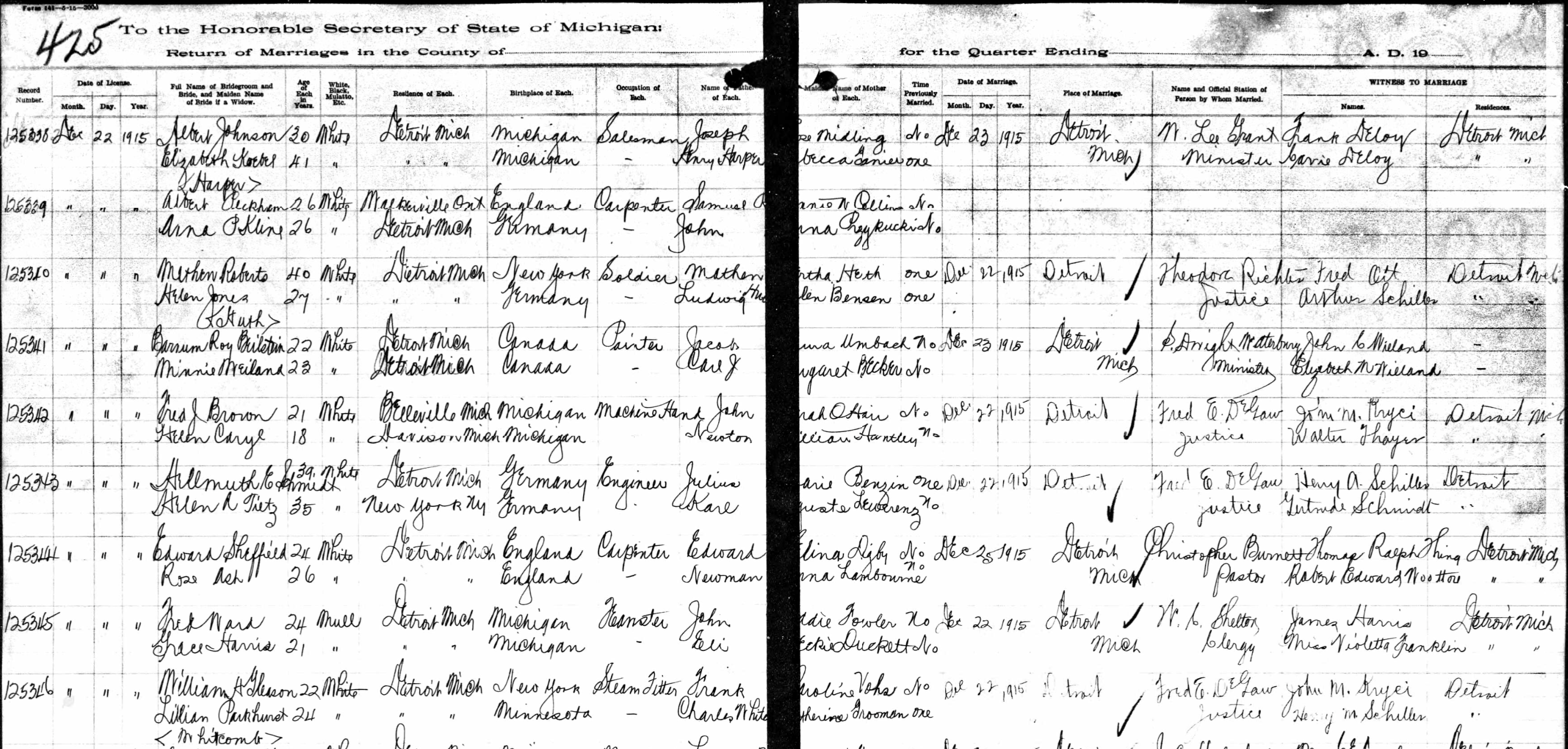
Helmuth escaped the consequences of his actions in New Jersey by relocating to the Detroit, Michigan area, specifically Royal Oak, under an assumed name – Adolph Ulrich. With him, as one would expect, was his daughter Gertrude and a new woman, Irma Pallantinus, who accompanied the duo from New Jersey. As happened to all women who decided to coalesce their life with the lives of Helmuth Schmidt and Gertrude, Irma Pallantinus was abruptly absent from the Schmidt home by December 22, 1915. Based on marriage records, it was during that time frame that Schmidt married yet another woman, Helen Tietz, under his real name, Helmuth Schmidt.
New Yorkers George Rolfe and his wife, friends of Schmidt, were the conduit for him to place two matrimonial ads in the New York Herald newspaper, each under two different names of the suitor: George Roloff and Herman Neugebauer. Schmidt described himself in the Roloff ad as Good-looking mechanic, 38 year old . . . [with]weekly wages, $80. In the Neugebauer ad he purported to be a Gas Inspector, 37 years old, without dependents, very respectable and very good looking. In the Neugebauer ad he claimed to earn $180 per month. Both ads asked interested well-meaning persons to send their response to general delivery, Royal Oak, Mich. Helmuth had found a new city to wield his treacherous ways.
Like a trout lured to a fishing fly, Augusta Steinbach responded to both ads, eventually deciding on accepting the response from Herman Neugebauer. Her close and dearest friend, Agnes, who was very intuitive and spiritual, advised Augusta not to travel to Detroit to pursue the man, Herman Neugebauer, as her future husband. Unfortunately, Augusta decided not to heed Agnes’s advice; instead, she decided to followed Herman Neugebauer’s travel instructions to Michigan. Augusta said farewell to her dearest friend, Agnes, and boarded a train to Royal Oak, Michigan.
Herman provided Augusta with a physical description so she could identify him at the train station; he even provided a description of what he would be wearing. Convinced she was going to meet the man of her dreams, Augusta, now age of 40, closed her bank account on February 1, 1917 and attempted to cash about $1,000 in German war bonds. The bank refused to honor any Germany bonds or notes as World War I was raging in Europe against Germany. Concerned she would disappoint her new future husband to whom she told she had $580 in cash, she borrowed $300 from Agnes, according to news reports. A parting request made by Augusta of her friend Agnes was to ship her trunks to Michigan . . . . which she did.
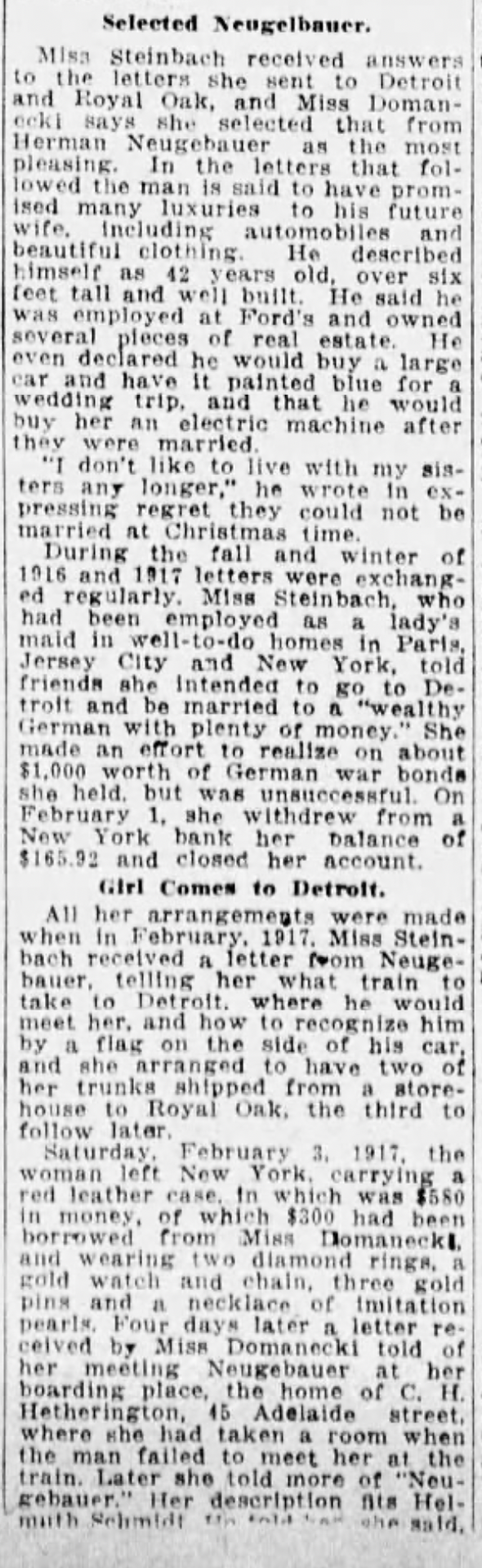
Upon her arrival at the Royal Oak train station, Herman Neugebauer was nowhere to be found. After a long wait, Augusta walked down the street and was fortunate enough to find the boardinghouse of “Thomas H. Hetherington on 45 Adelaide Street in Detroit.” Hetherington sold antique furniture from a storefront he owned and rented vacant rooms above it. At the time, Augusta thought she would need accommodations for only a week or so; that eventually turned into a month’s stay. Hetherington and his wife, Louise, took a liking to Augusta, the German immigrant from New Yorker. She was larger-bodied but quite attractive. She was youthful looking with her auburn colored hair styled in the popular manner in the late 1890s and early 1900s; that is, styled after the ideal woman drawn by illustrator Charles Dana Gibson. The Hetheringtons enjoyed her girlish manner, her German expressions and her head-lowering when she mispronounced English words. She would often giggle then grin. (Louise Hetherington would later say that Augusta was “a big country girl” who behaved with a playful sexual attraction toward Neugebauer.)

When Schmidt finally connected with Augusta she was impressed by his polite manner, his fancy attire and the new Maxwell model car he drove. It was fortunate that the Hetheringtons saw him because their actions and statements would later help police identify Schmidt. At the time, Schmidt was working as a mechanic at the Ford Motor plant under the assumed name of Emil Braun. Detroit police were able to learn this by sharing information back and forth with New York City detectives. A piece of information that was helpful came from Augusta herself having informed the Hetheringtons where Schmidt lived, including a description of the home.

Finding new prey was Schmidt’s métier. While wooing Augusta he was also communicating and wooing Helen Tietz of New York using his actual name, Helmuth Schmidt. The couple married on February 9, 1917, his daughter, Gertrude, was one of the witnesses to the marriage.
Augusta did visit Neugebauer’s home and was introduced to his sister, Helen, and his daughter, Gertrude. That experience was enthusiastically described to the Hetheringtons who was so impressed with the well kept home.
The last time Herman Neugebauer visited the boardinghouse was on March 11, 1917, when he arrived to move Augusta out of the boarding house. According to the Hetheringtons, she wasn’t certain where he was taking her but she supposed it was to be married within the next few days. (Augusta had written to Agnes in an earlier letter specifying the wedding date was set for March 17, 1917, a date that must have come from or with concurrence by Neugebauer, and that she communicated to the Hetheringtons.) That would be the last time the Hetheringtons would see their endearing boarder.
The Disappearance
Augusta sent letters to Agnes that detailed facts about her future husband: his impressive home and when they were to be married. Agnes received a final letter from Augusta dated March 10, 1917 that detailed the wedding arrangements with instructions not to send letters for the next four weeks because she would be honeymooning. That struck Agnes as strange. The handwriting that was typically neat, an Augusta trait, was that but something was different – it was not the typical perfect penmanship from Augusta.
The New York Investigative Incentive
Augusta hand many friends in New York. The news spread of her upcoming marriage and several sent letters and gifts to her last known address – the boarding house address. The Hetheringtons decided they would deliver the items personally to Augusta. So, based on Augusta’s description of the location of her future husband’s home, its style and green shingled roof, it was not difficult to find the home.
The woman who answered the door (it was likely Helen Tietz) basically turned them away because no one by that name lived in the home, she claimed. What the woman didn’t realize was that the door was open enough for Louise Hetherington to see an item displayed that she recognized as belonging to Augusta. After a second trip to the home to confirm the house was the correct one, Helmuth Schmidt’s days of Blackbearding were numbered.
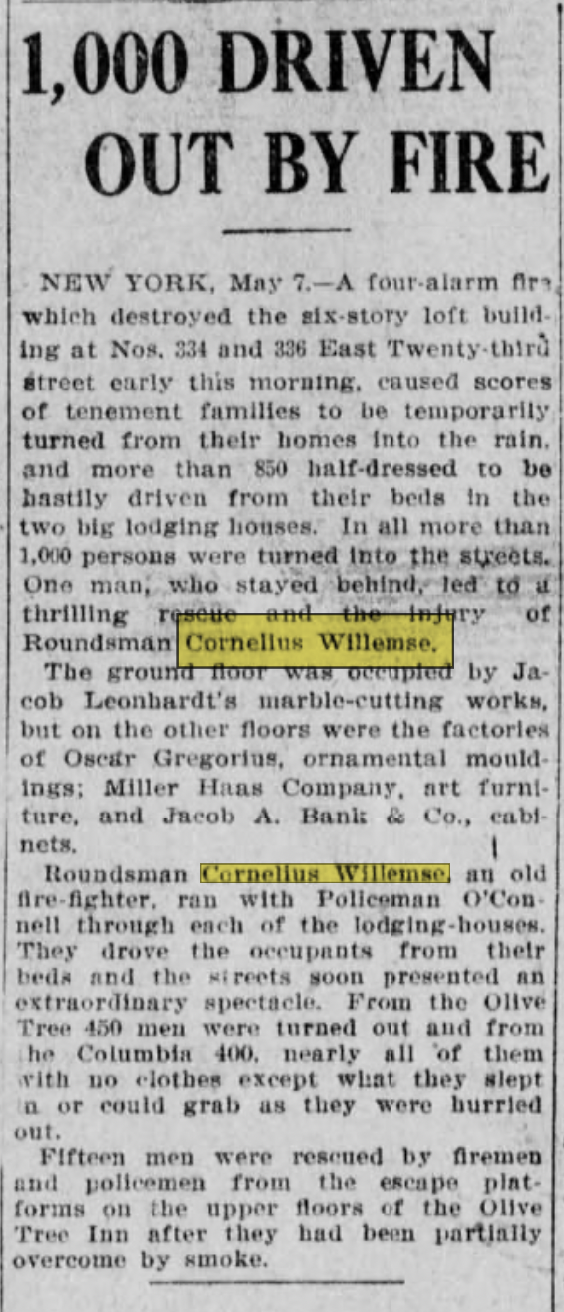
Unbeknownst to Schmidt, Augusta’s trunks were returned to the New York office of the shipping company, after Schmidt had rummaged through them for valuable. Agnes, now confused and concerned, used her society contacts to connect with one of the best Detectives in New York City, Captain Cornelius Willemse. Willemse was somewhat of a hero in the City having saved many ordinary New Yorkers while a Roundsman Officer. He was even shot pursuing miscreants on behalf of the fine people of New York City.
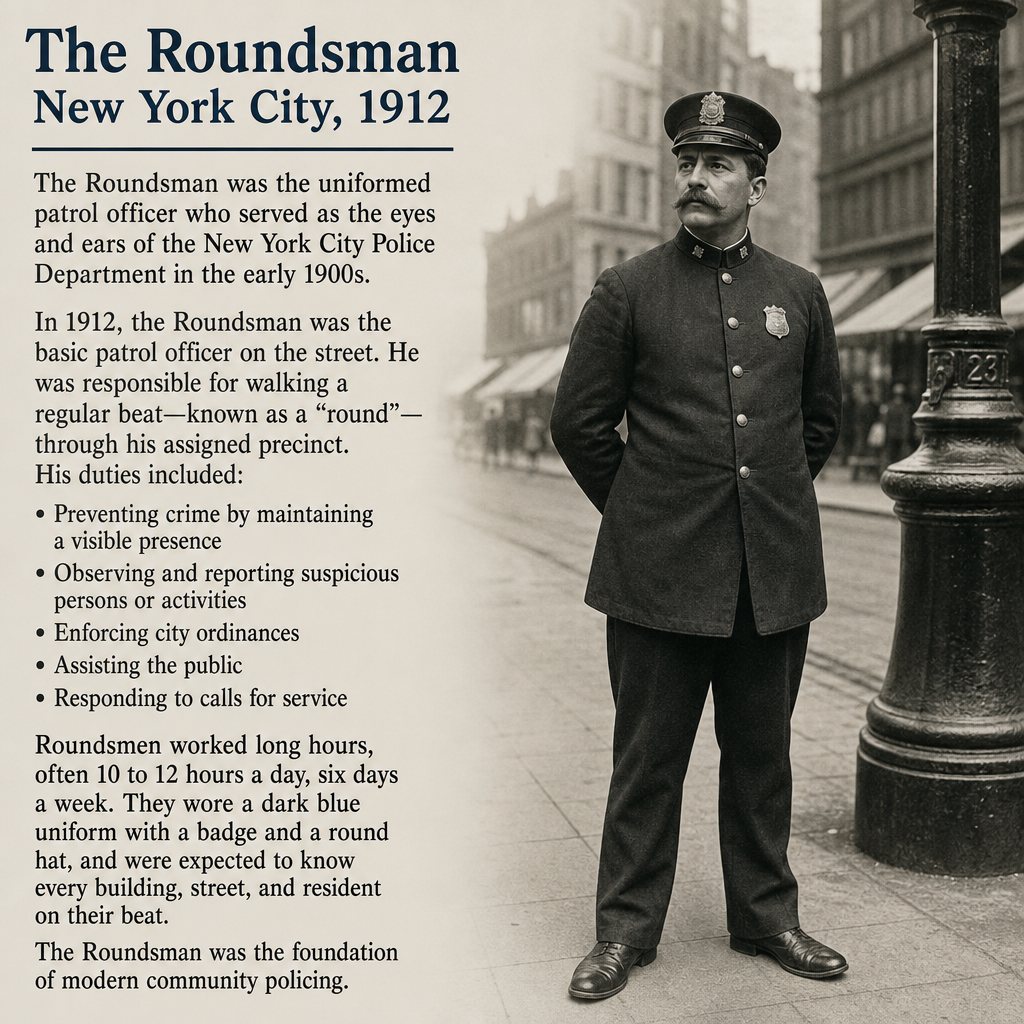
It was serendipitous that Acting Captain William Willemse, a Dutch farm (“Boer”) boy who immigrated from the Netherlands, had grown-up in the United States, happened to speak fluent German and English. And, more importantly, was one of the best detectives in New York City. Willemse was so respected that President Woodrow Wilson used him as his personal bodyguard when needed.
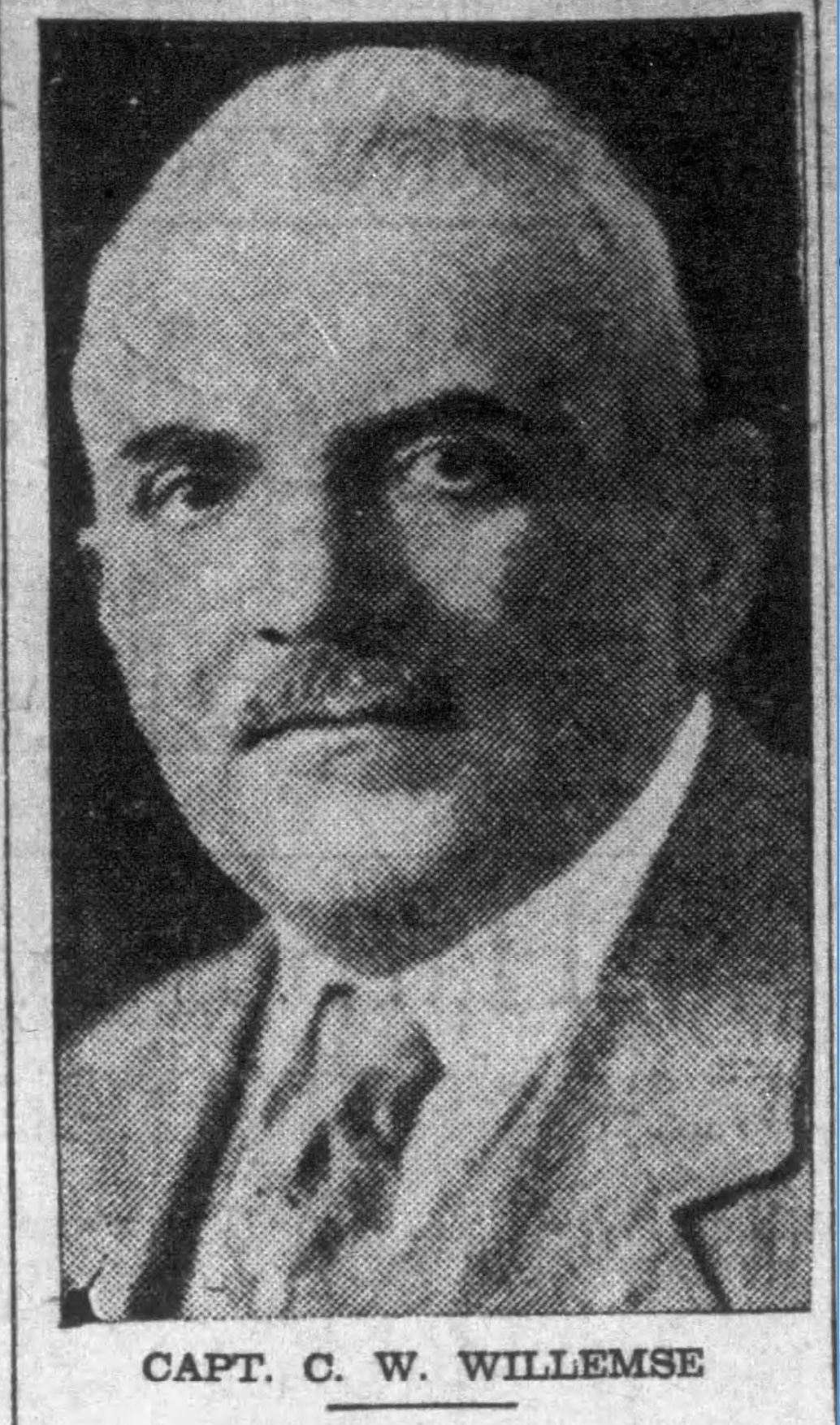
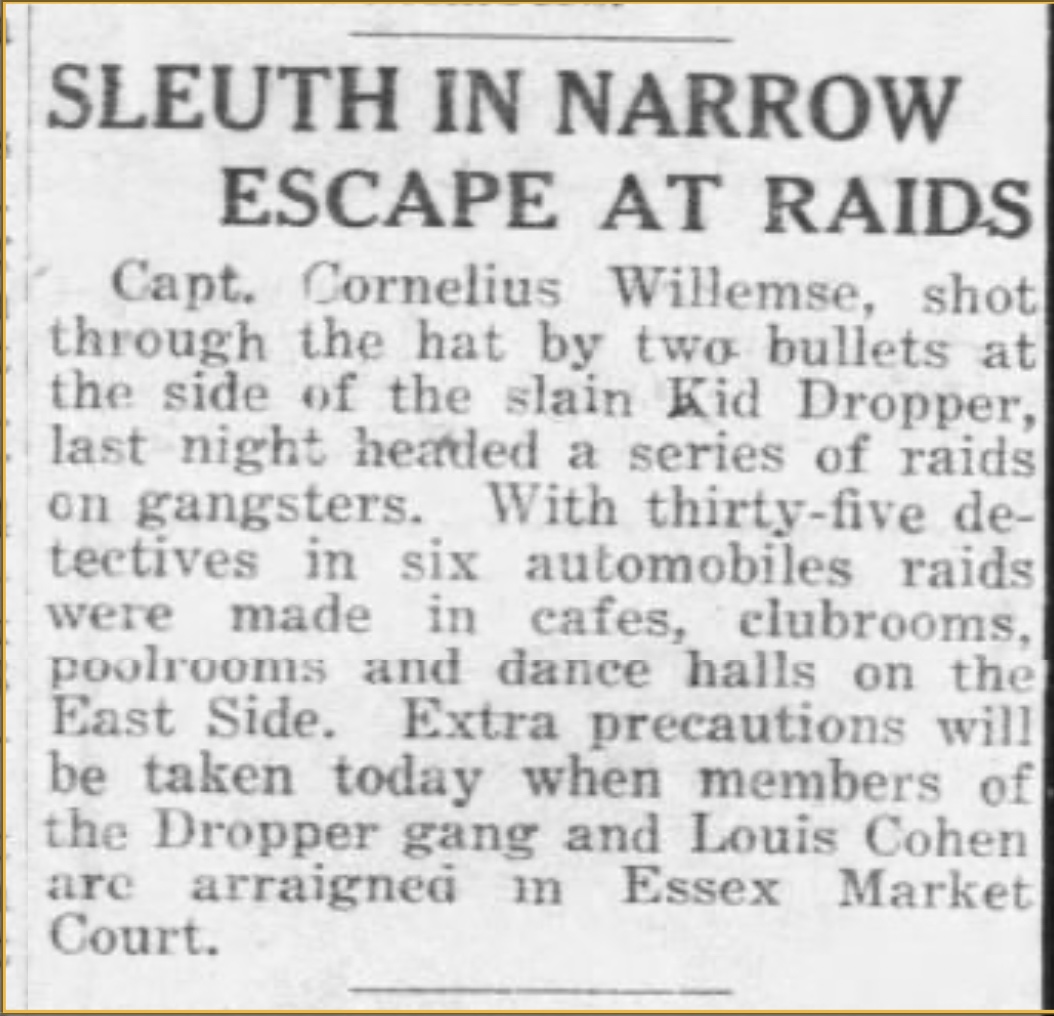
Through Agnes’ contacts in New York’s high society, she met with Captain Willemse, detailed Augusta’s quest and asked the New York Detective for his help. The seasoned detective immediately started an investigation. Assisted by other New York City detectives, he searched volumes of newspapers looking at matrimonial ads, finally discovering the ads that Augusta responded to and that the same man in Michigan placed both ads.
Agnes had also written to Michigan authorities about her missing friend, seeking assistance in finding her. When Willemse contacted the authorities in Michigan the priority of the case of the missing woman shifted to one of higher priority for Royal Oak’s County Prosecutor, who had been occupied with other significant cases.
Of course, Michigan police learned that Helmuth Schmidt had moved from New Jersey to Royal Oak and connected with Lakewood police. Willemse became aware of the Lakewood, New Jersey case of missing women, then coordinated his investigation with the authorities in New Jersey and Michigan. To that point, Royal Oak authorities had based their investigation solely on communications with Agnes, while Lakewood had based its investigation only on the information from Adele (Schmidt) Braun’s report of abandonment. Lakewood police came to realized that Emil Braun was not the ordinary evaporating husband case, so to speak. It was Willemse who provided the nexus between Helmuth Schmidt’s missing women cases in multiple States.

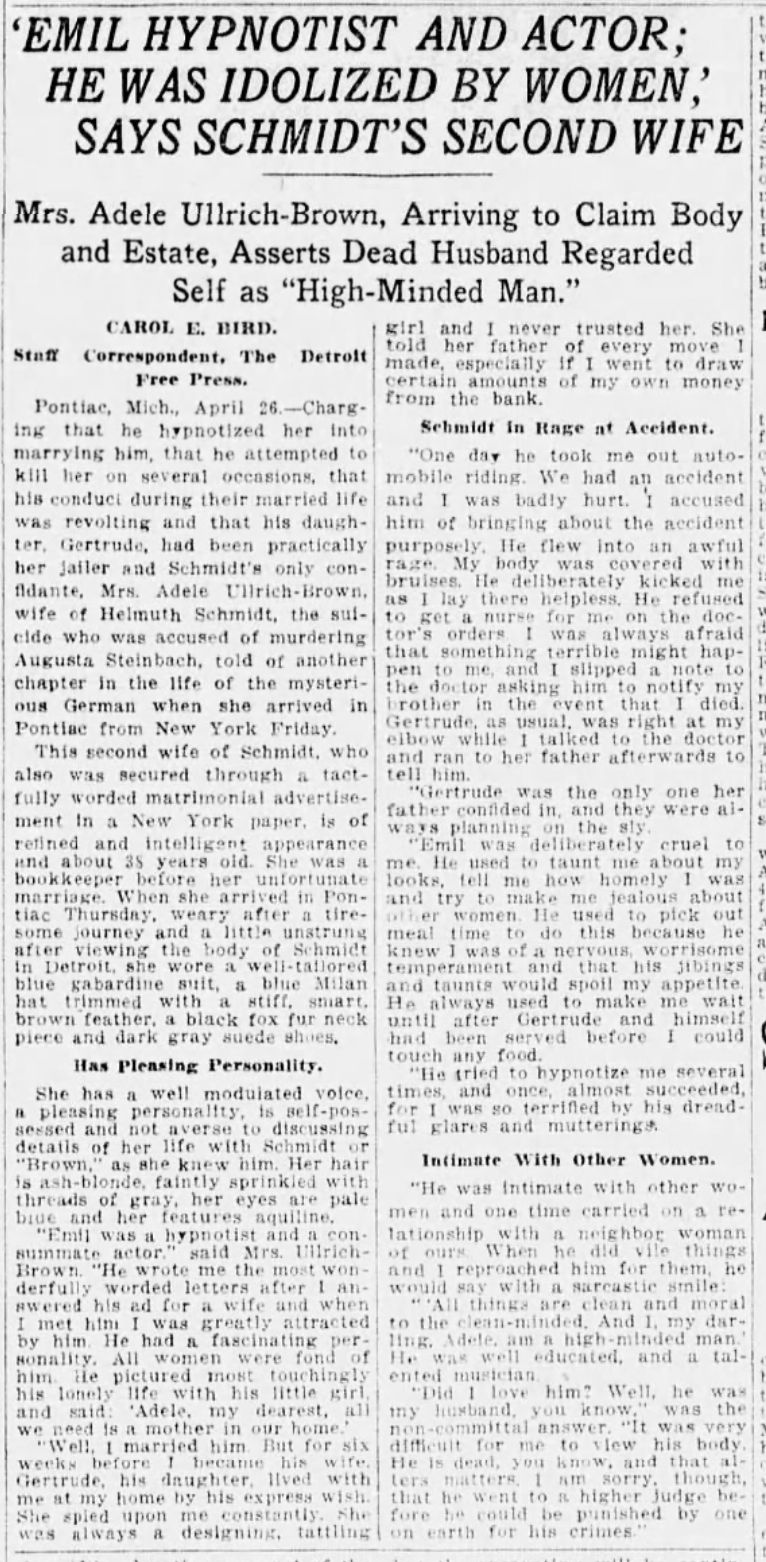
Adele made a point of informing Lakewood police that Schmidt’s daughter, Gertrude, lived at her home for a time and “spied upon [her] constantly. She was always a designing, tattling girl and I never trusted her. She told her father of every move I made, especially if I went to draw certain amounts of my own money from the bank.”

Sheriff Green from Royal Oak Michigan police travelled by train to New York three months after Agnes wrote to Detroit authorities; he met with her and the New York police. Upon his return to Michigan, Glen Gillespie, District Attorney of Oakland County, spoke with Agnes Domaniecki (some newspapers spelled it “Domanie”) when she later travelled to Michigan determined to fight on behalf for her dear friend. While in Detroit, Agnes identified jewelry and some other items that she knew belonged to Augusta that were found in Schmidt’s home. Her testimony, in addition to statements from the Hetheringtons and Schmidts neighbors, resulted in the arrest of Helmuth Schmidt, his wife, Helen Tietz-Schmidt, and Gertrude, his daughter. Not long after their arrest, Helen Tietz-Schmidt and Gertrude were released by the police due to a lack of evidence to support their culpability in the murders under Michigan’s State law.
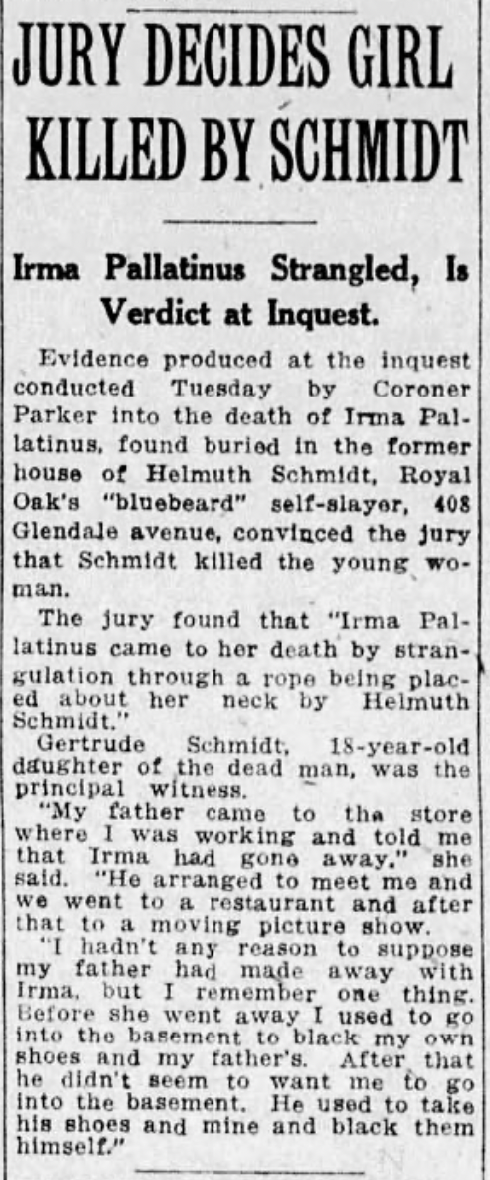
Schmidt’s Finality
The interrogations of Schmidt by Michigan authorities produced a confession, but not that he killed Augusta Steinbach. Helmuth insisted she committed suicide by taking poison when she learned he was married. He did admit burying her body, later digging it up, dissecting it and burning it for complete disposal of her remains.
Before Michigan could finish it investigation of the Bluebeard murderer, Helmuth Schmidt devised a way to commit suicide in his cell by dropping a heavy metal bed, that was hinged to the cell’s wall, onto his skull.

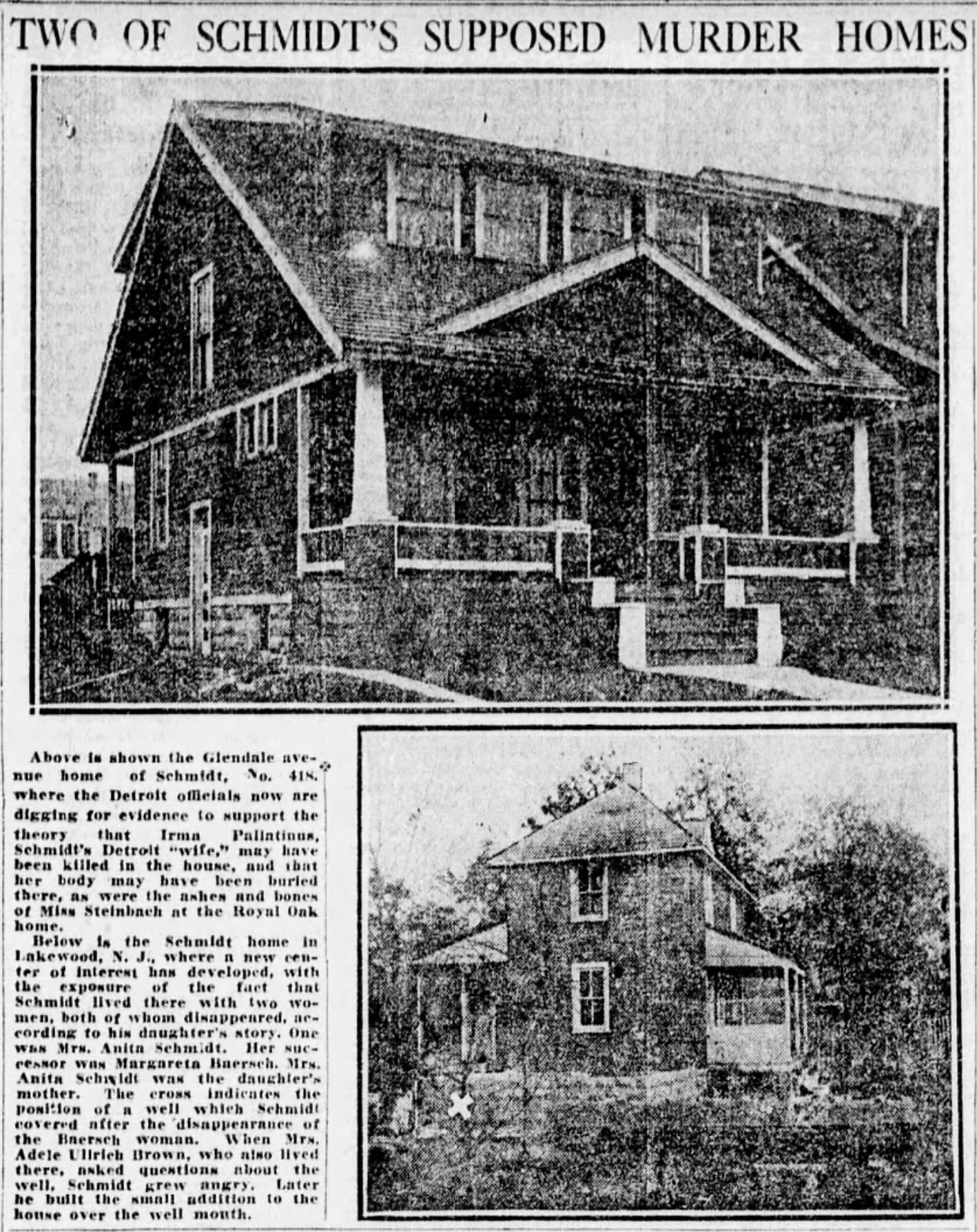
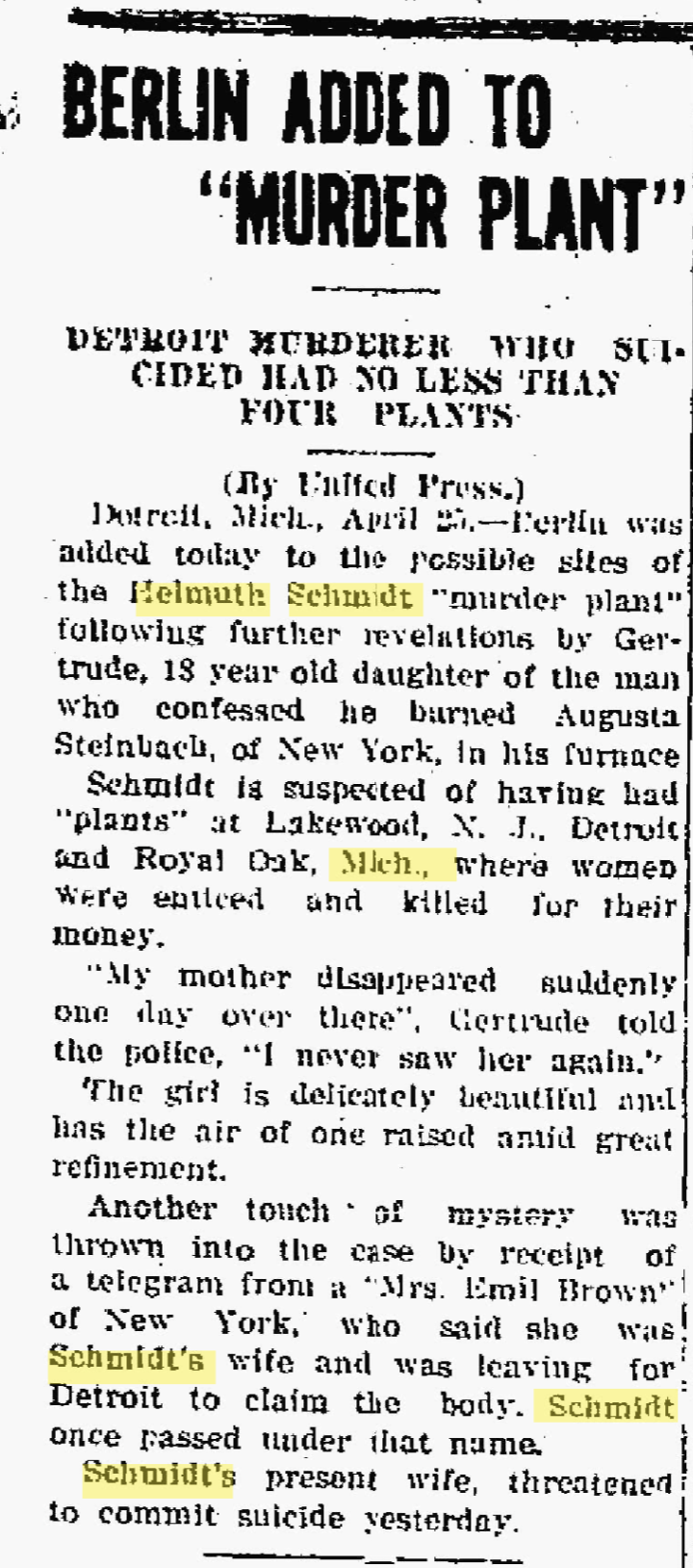
During the investigation, Royal Oak authorities received a communique from Berlin police who also wanted Schmidt on murder charges. Adding to Schmidt’s trail of intrigue, the Michigan police received a telegram from a “Mrs. Emil Brown” (reported the The Evening Chronicle, April 25, 1918) in New York that she was the legal spouse of Helmuth Schmidt and was arriving to claim the body and her money he absconded from her in the amount of over $3,500.
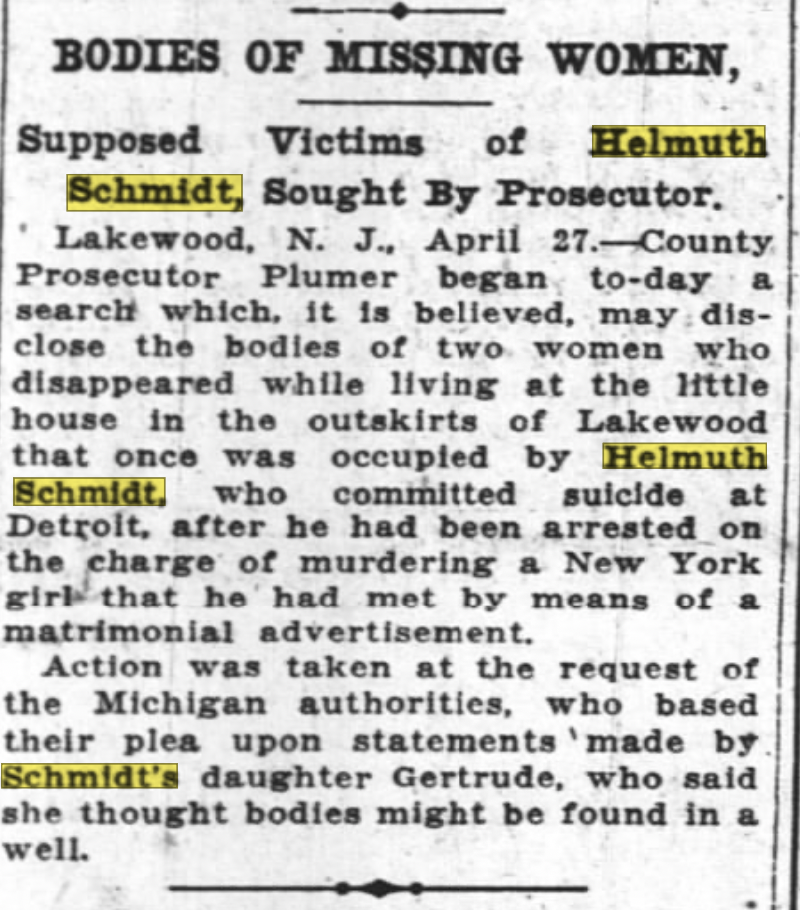
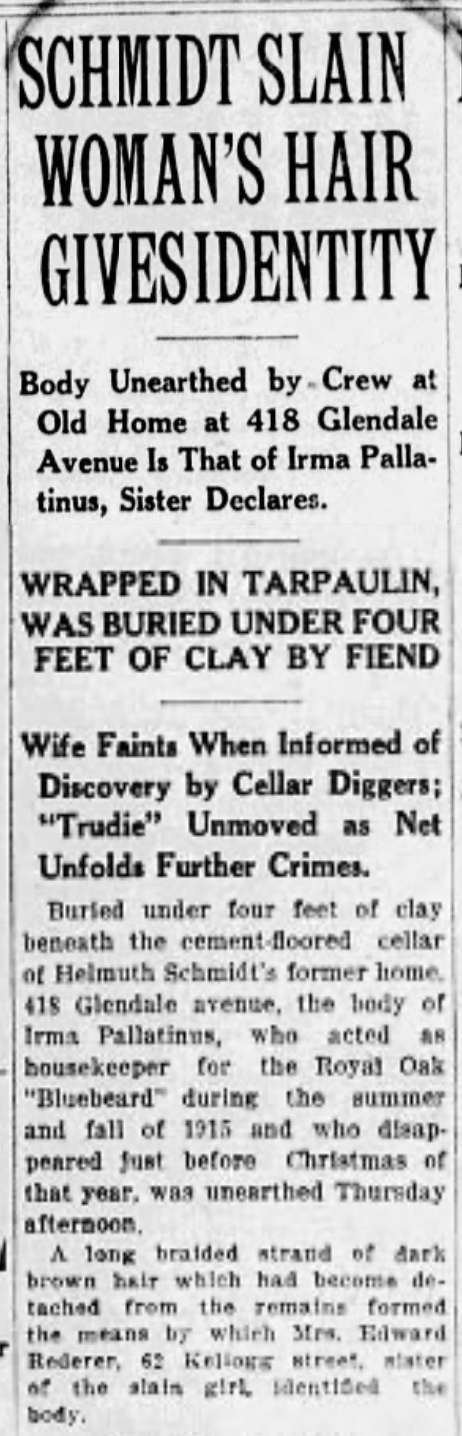
A thorough search of Schmidt’s Royal Oak home uncovered “[T]he mummified body of a woman . . . under the cement floor of [the] house . . . occupied for more than a year by Helmuth Schmidt, the confessed slayer of Augusta Steinbach, a New York domestic.” Those remains determined to be of Irma Pallatinus, whom Schmidt married in New Jersey, travelled with her to Michigan where he ended her life for her money and valuables. Her sister was able to identify her from remains that included her sister’s long, braided brown hair.

As Schmidt’s trail of living and dead wives was unearthed, literally and figuratively, his last wife,” Helen, and his daughter, Gertrude, emphatically denied any knowledge of Helmuth’s actions. All they knew was what he told them. (A mental image occurs to me of Sergeant Schultz in the vintage TV series “Hogan’s Heroes,” who always chants, “I hear nothing. I know nothing. I see nothing. I wasn’t here. I didn’t even wake up this morning!”) These two women persisted in saying they were out of the house for a time and upon their return learned the woman left for varied reasons, e.g. she took money and deserted him; or, she went back to Germany to marry.
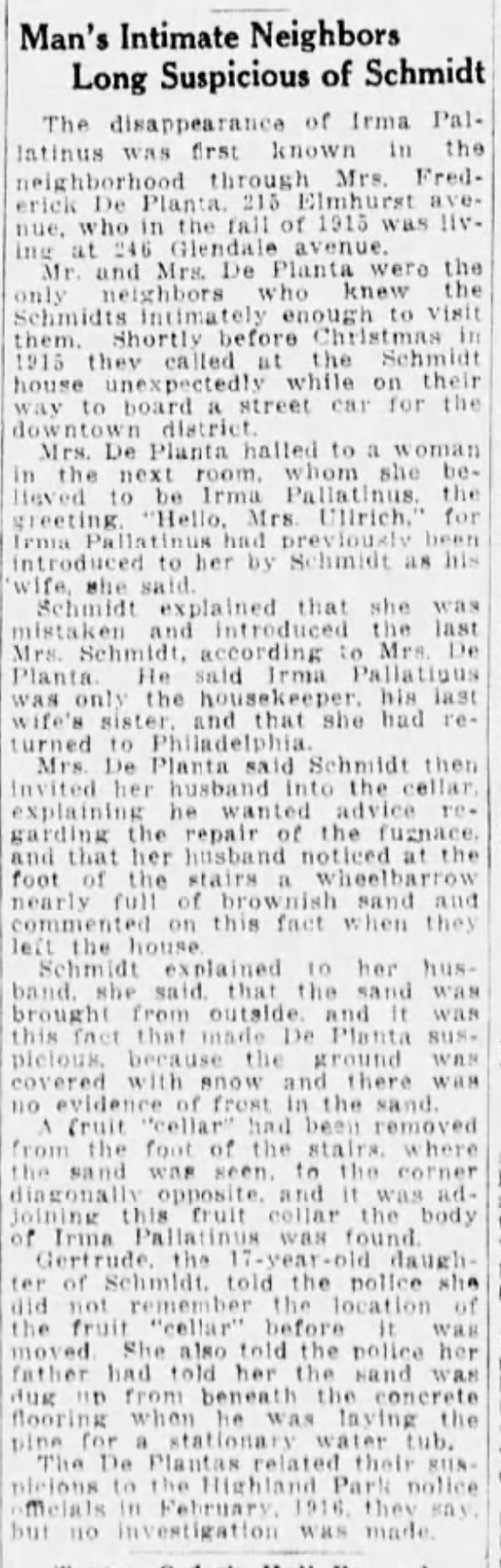
Schmidt could not explain away the testimony of his neighbors who were familiar with the residents on a personal basis.
Needless to say, Adele Ulrich Braun’s abominable romance and statements regarding Gertrude moved investigators and the media to alter their perception of the shy, unassuming young woman. Carol Reed of the Detroit Free Press was one who went from sympathy for “Trudie” to seeing her was a willing accomplice.
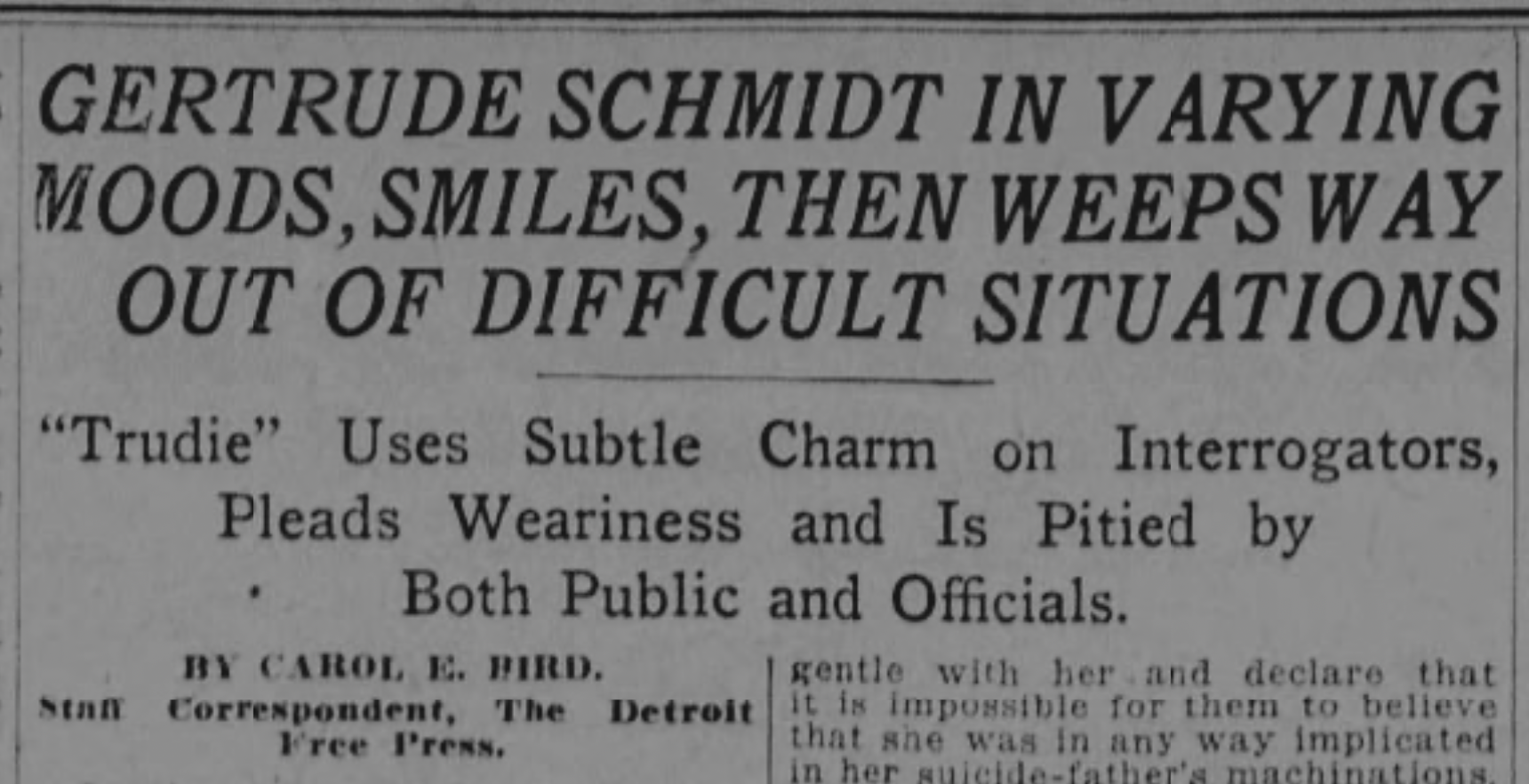
Gertrude Schmidt did charm her way out of any implications of her father’s crimes since the prosecutor opined that Gertrude had no culpability under Michigan law and not to bring charges against her.
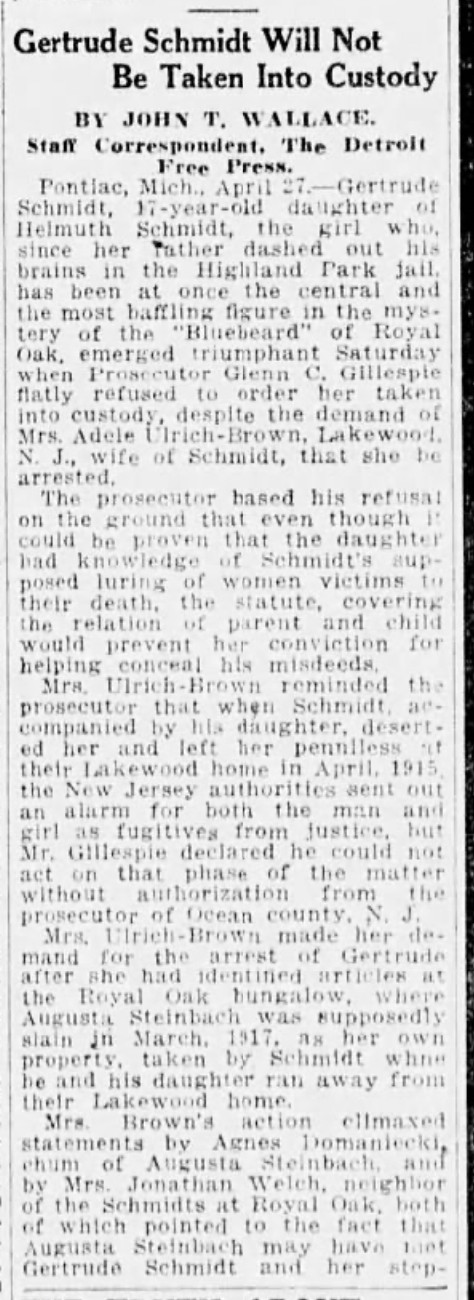
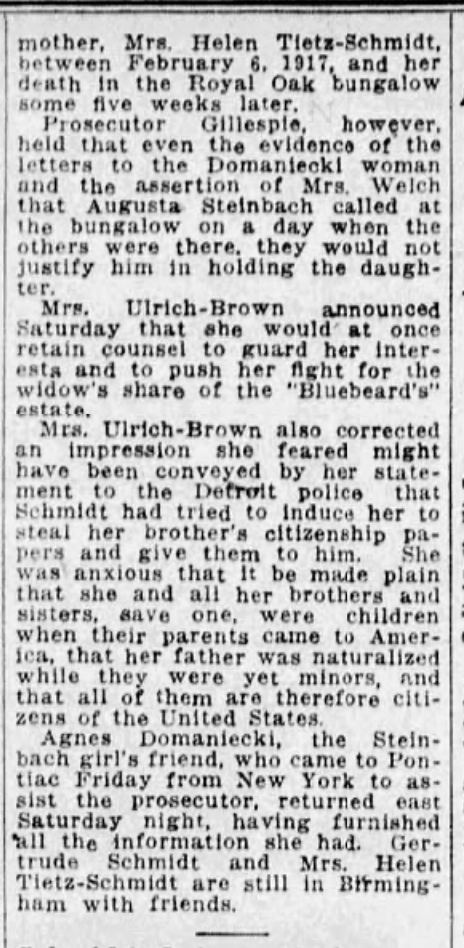
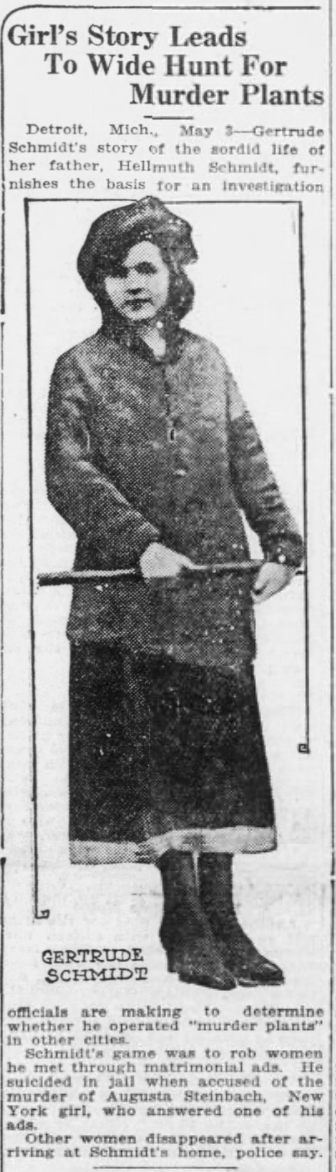
La Crème de la Crème is that Helmuth Schmidt’s rampage of theft and murder was end by a few of the women he swindled. Helmuth didn’t hang himself in his cell as many other murderers “caught dead to rights” did and do. No, not Helmuth! It so happened that the beds in the jail cells were hinged to the wall. The bed frame was made of heavy metal. Helmuth, it was reported, lifted the bed and dropped it on his own skull. It literally and figuratively “put out his light of life.”
Evidence against Schmidt came from many sources, one was Helen Tietz-Schmidt’s sister, who was duped into helping cover up Schmidt’s crime.
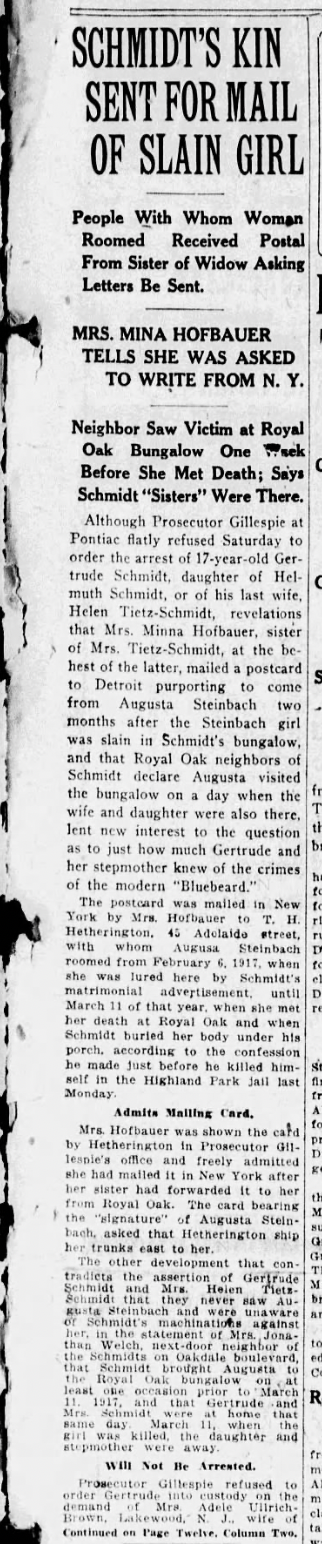
One can only imagine the reaction of the Royal Oak police when another “Mrs. Helmuth Schmidt” from Chicago . . . asked for a picture of the man who, she believes, is the same to whom she was married in 1916 and who, she allege[d], robbed her of $2,000 and deserted her. (Source: New York Times, May 4, 1918.)
Another investigative revelation came from another of Schmidt’s New York City wives who he married under the name of John Switt. Her name was Anna Hocke. Hocke told authorities that she, now 43, met the man she now knows to be Helmuth Schmidt in late 1914. The duo were married for all of three (3) days when her new husband ditched her along with $1,400 of her cash. It was in December of that same year that Schmidt and Gertrude traveled from New Jersey to New York to visit Adele Ullrich. It was also within that timeframe that Schmidt caused Margareta Baersch’s disappearance, telling Gertrude in a letter that she had returned to Denmark.
When the investigation reach a conclusion, the Royal Oak police and Prosecutor Gillespie had a chronological list of Schmidt’s treachery and dead wives:
December 1914: Anita (“Anna”) Schmidt, Gertrude’s mother, disappears
December 13 – 19, 1914: Margareta Baersch disappears
December 17, 1914: as ‘John Switt,’ marries Anna Hocke in New York
December 17, 1914: abandons Anna Hocke Swift
December 30, 1914: as “Emil Braun,’ Schmidt marries Adele Ullrich
April 24, 1915: abandons Adele Ullrich but while married to Adele engages and marries Irma Pallantius who he takes to Detroit when he relocates; and, he changes his name to ‘Adolph Ullrich’
September 1915: as ‘Herman Sharon,’ begins correspondence relationship with Helen Tietz
December 20, 1915: Irma Pallantinus disappears as of that date
December 22, 1915: as Helmuth Schmidt, marries Helen Tietz
February 9, 1917: as ‘Herman Neugebauer’ meets Augusta Steinbach
March 11, 1917: Augusta Steinbach disappears
The Aftermath
The two women who were closest to Schmidt at the time of his arrest, his daughter Gertrude and his latest wife, Helen, were never prosecute as accessories despite first hand testimony by Adele Ullrich-Schmidt that contradicted Gertrude’s claim that she had no idea of her father’s actions.
After Helmuth Schmidt’s arrest the two women moved in with friends, the Kurth family, who lived in Birmingham, Michigan, another suburb of Detroit. The family is shown on the 1900 U.S. Census. By the time Helen and Gertrude moved in Otto Kurth was deceased and all or most of the children were out of the house except for Erick, the youngest, who was a few months older than Gertrude.

Schmidt’s funeral took place on April 30, 1918. Needless to say, it was not crowded. The ONLY attendee was Adele Ullich-Braun. Schmidt’s daughter, Gertrude, told the funeral director she was too busy to attend.
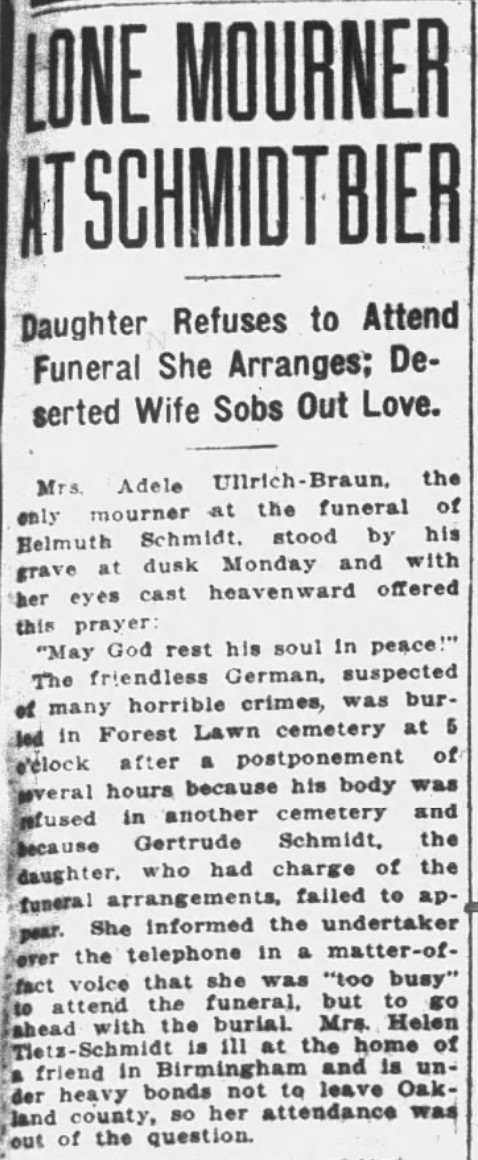
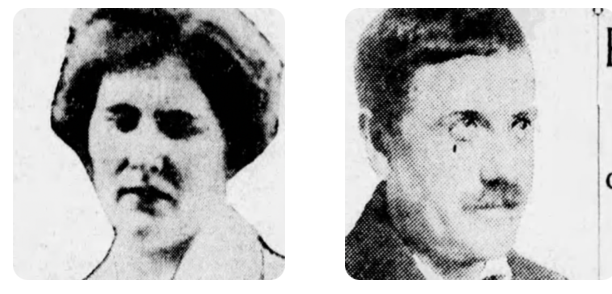
With the story was a photo, few of which exist of the principal characters involved in this saga.
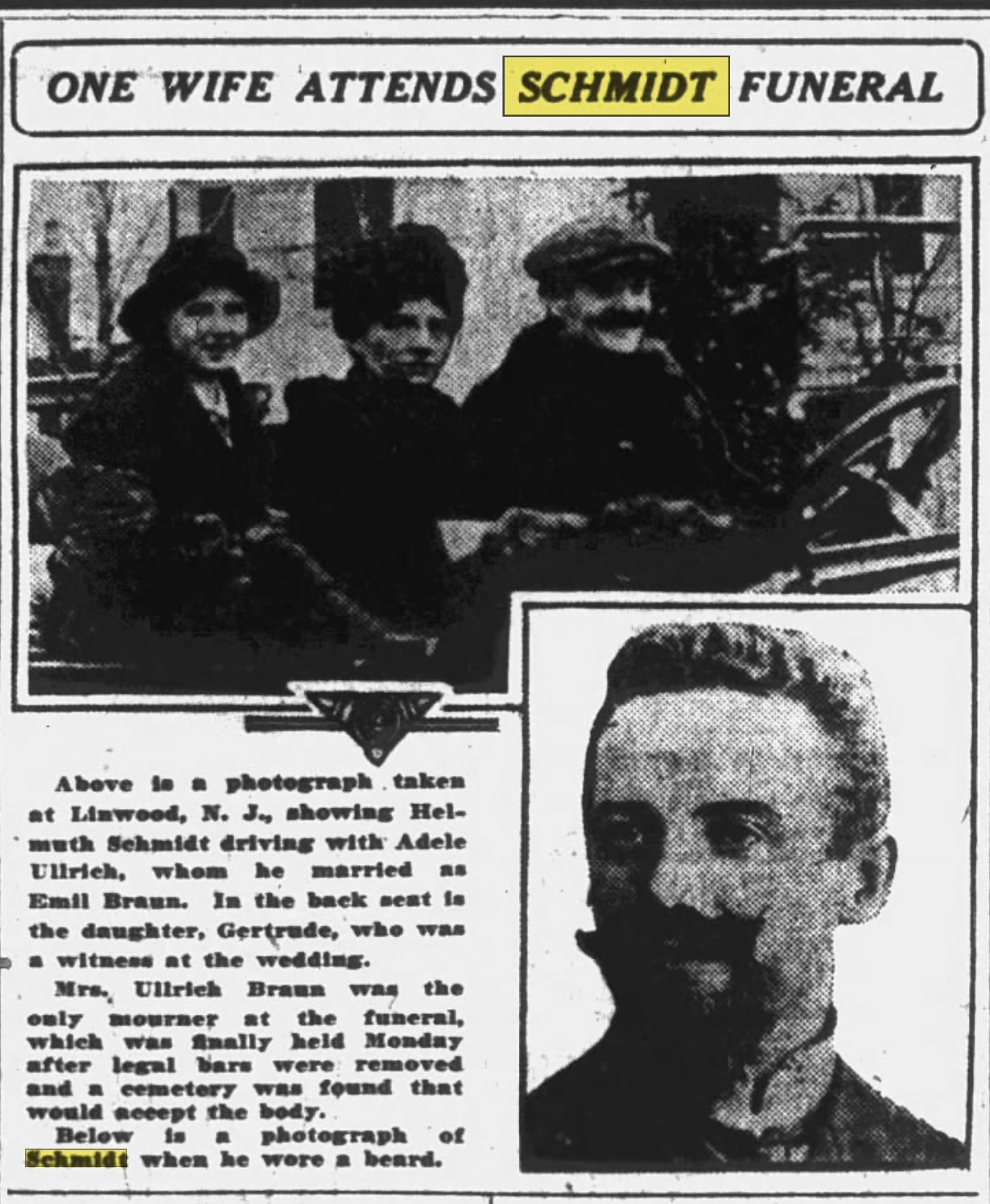
Adele was an attraction to reporters. Many stories describe her as a polished, somewhat sophisticated woman. How she fell for Helmuth Schmidt was, as Winston Churchill said years later about Russia, is “a riddle, wrapped in a mystery, inside an enigma.” She may have tried to answer the curiosity by explaining Schmidt’s magnetic personality from a woman’s perspective.
Schmidt’s estate was also a matter of contention for a time between Gertrude and the wives he left in his wake of desire to obtain wealth through perpetual matrimony.
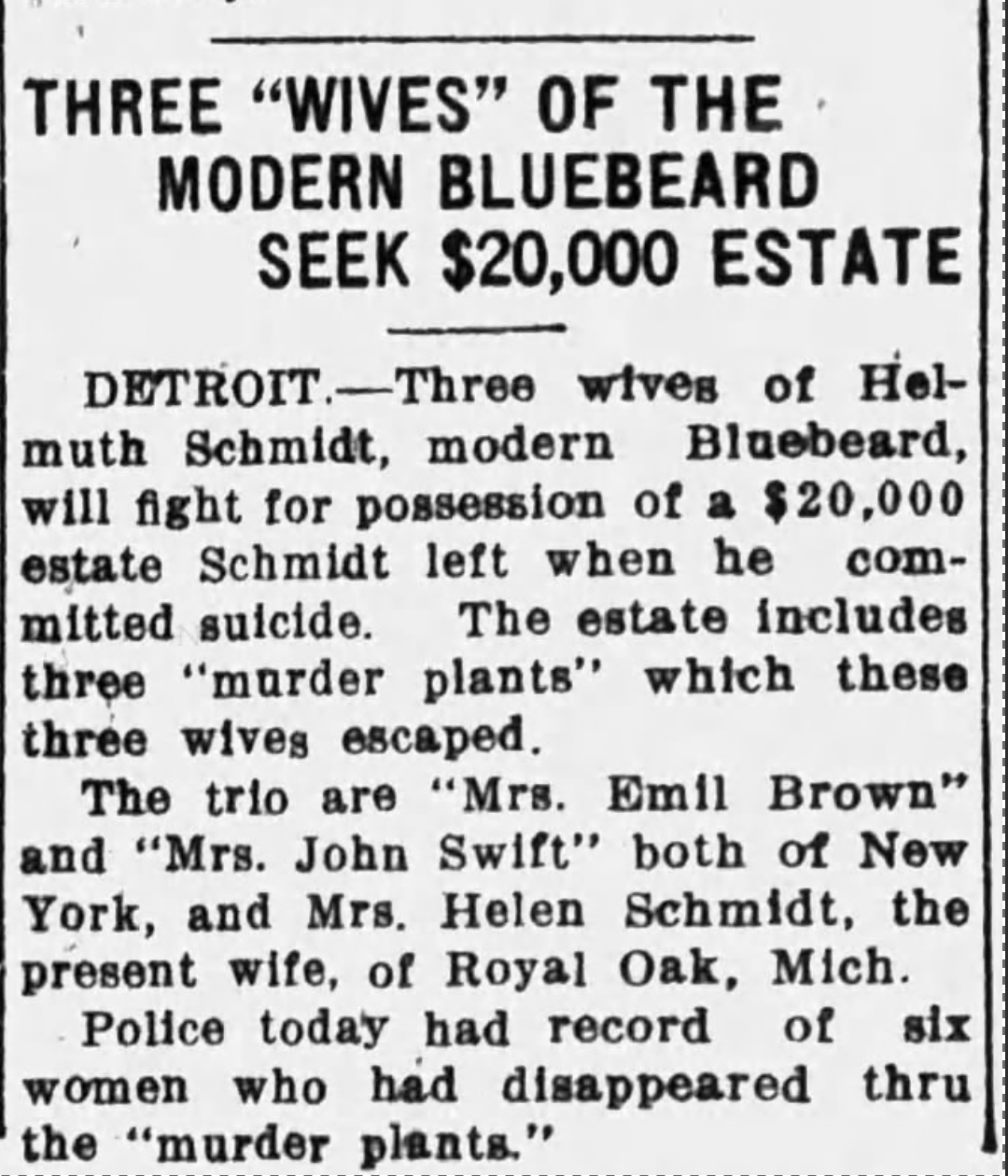
At the end of July 1918, after days of courtroom wrangling in which only Adele sat as a witness to claim her rights, the Probate Judge decided that the legal spouse of Helmuth Schmidt was Adele Ullrich Braun. His ruling opined that Adele was the rightful heir and owner of all Schmidt’s properties. Despite the judge’s decision, the three women decided to end the fighting to avoid further legal battles. In a written agreement, a “peace settlement” so to speak, the women came to mutually acceptable terms.
In a gracious gesture, Adele agreed to divvy the estate three-ways. Gertrude received a portion of the furniture and the genuine silver set that was handed down from her father’s family. The Royal Oak home was given to Helen. Adele, despite her generosity, may have kept the least valuable piece of property from the estate, the Royal Oak, Michigan, house. Selling the home was a challenge because it had been owned by the “Bluebeard” killer and it was a disaster area after the search for evidence and human remains by the police.
It is worthy of inclusion in this post an opinion written by Miss Buda Stephans, a Staff Correspondent for The Detroit News, that was included in a story of April 27, 1918. It is one newspaper journalist’s perspective of “Trudie” Schmidt, the young daughter of a homicidal father.
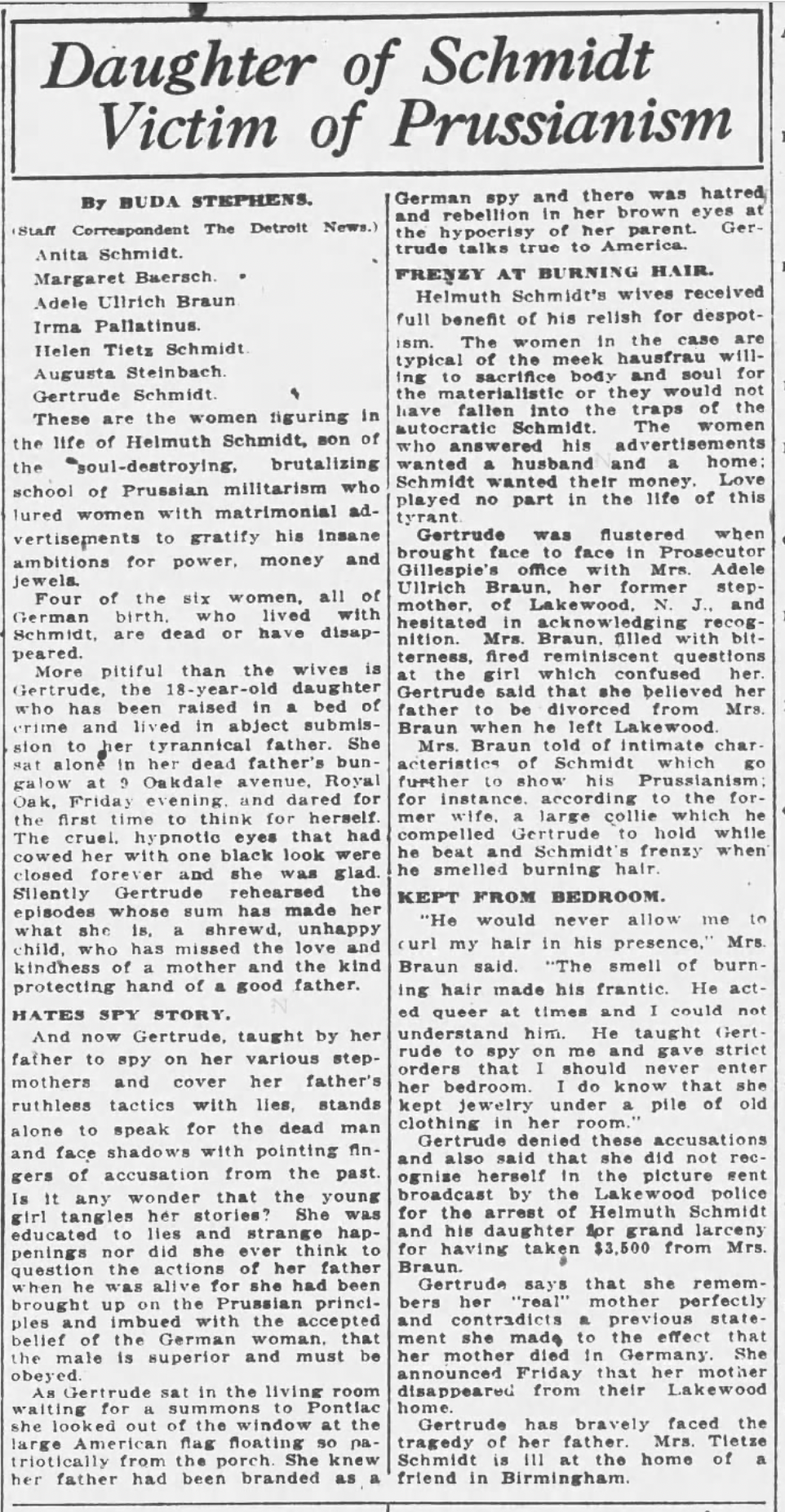
It was reported that both Gertrude and Adele claimed responsibility for Helmuth Schmidt’s body for burial. Adele did eventually acquiesce to Gertrude’s wishes.
The Rest of the Story
While living with the Kurths, Gertrude and Erich Kurth found an attraction. They were married on April 20, 1919 and remained together until their respective deaths. Gertrude died at age 52 on November 19, 1952. Erich lived over thirty years longer; he died on February 14, 1985. The couple had three daughters: Anita, Margaret and Gertrude.

Helen Schmidt is not listed in the 1940 U. S. Census as a family member of the Kurth’s. She is, however, listed as such on the two prior U. S. Census sheets.


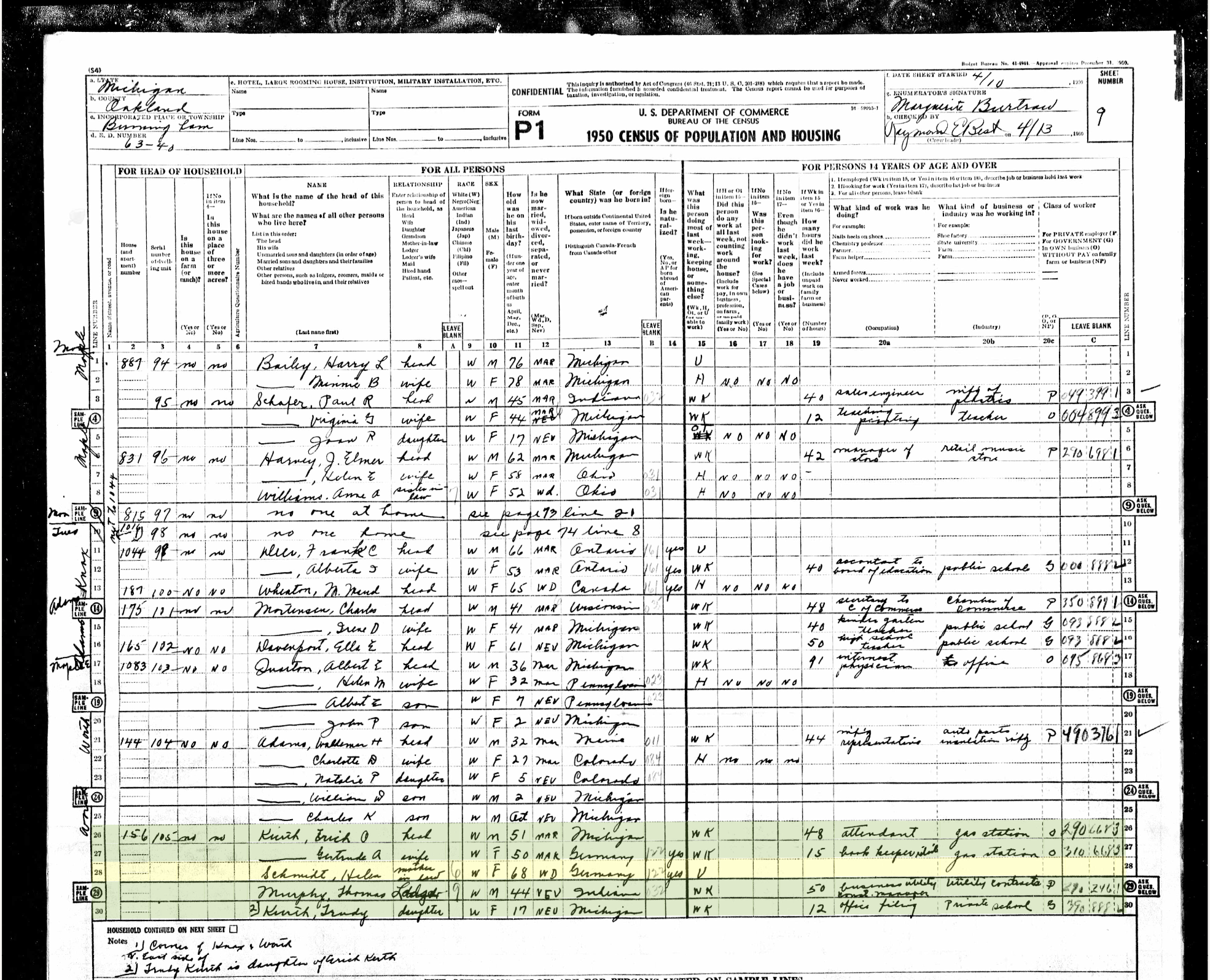
No further public census data is available beyond 1950 through ancestry.com. Since Helen Schmidt died at age 71 in 1952, she likely lived with her son-in-law and/or a granddaughter, as she called them.
In addition to the many newspaper stories used to write this post, some of the finer details were gleaned from an excellent book written by Tobin T. Buhk, The Shocking Story of Helmuth Schmidt: Michigan’s Original Lonely Hearts Killer.
Comments and observations are invited regarding the involvement of Gertrude Schmidt-Kurth and Helen Tietz-Schmidt in the deaths of the women caused by their father and husband, respectively, known as Helmuth Schmidt, The Bluebeard.

