The Bertillon system was developed by Alphonse Bertillon, who we’ve mentioned from time to time. With its precise measurements , this system of identification was considered the gold standard at the turn of the century.
The Bertillon identification was a very accurate means of identifying people. When a new prisoner was received, clerks took painstaking measurements of his arms, ears, nose, trunk, head, face, feet, and hand. Their eye color, hair color, missing limbs, tattoos, scars, and deformities were noted. Clerks measured standing height, sitting height, the arms outstretched, and distance between fingertips.
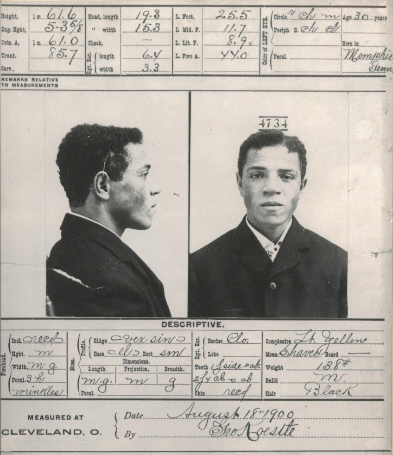
cleveland police museum
This leads us to the case of the William Wests, which came up in the comments not long ago.
Will West entered Leavenworth Penitentiary in May 1903, to serve a term for manslaughter. Will’s mugshot was made, his description was written, and his Bertillon measurements taken.
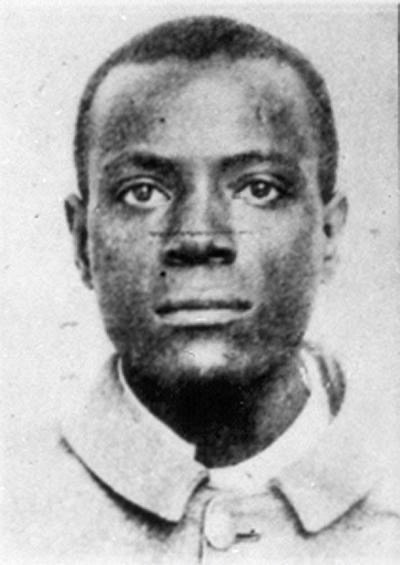
Will West
One of the Leavenworth clerks, McLaughlin, matched Will’s name and description with an existing record. “You’re William West,”McLaughlin said. “You been here before—for murder.” He now remembered Will. He had taken his mugshot when he was received at the prison. He showed the picture to Will.
The amazed prisoner exclaimed, “That’s my picture but it’s not me!”
McLaughlin was initially confident in his identification of Will West as William West. But that soon changed. Despite the name, the picture, and the Bertillon measurements being a match, the officials were forced to admit Will West and William West were indeed different people. William West was still at Leavenworth—he’d never left. He was serving a life sentence.
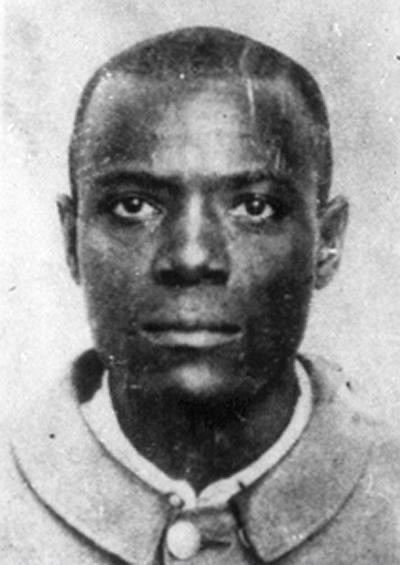
William West
William West was brought in and a silence ensued. The men appeared to be identical, yet they had never met.
Over a year later, fingerprints of Will West and William West were compared. They were completely different.
I see a few differences in their pictures but they do look a lot alike. After this, fingerprints were chosen as the primary means of identification. Fingerprints alone saved the day where mugshots, names, and Bertillon measurements failed.
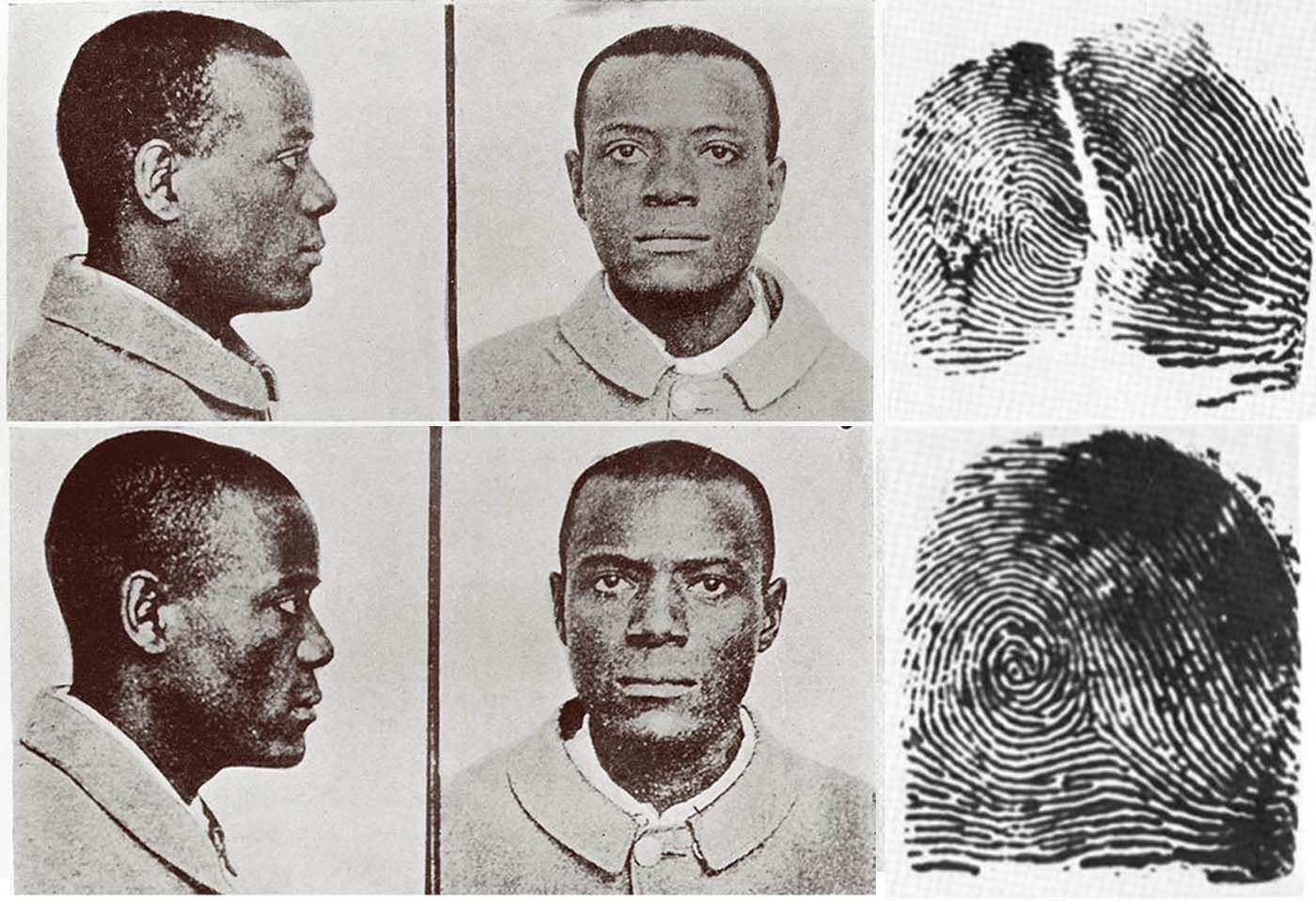
And with that, the Bertillon system fell from its high perch and was completely discarded.
Several possible explanations had been advanced, most credibly that the William Wests were related whether they knew it or not.
Identical twins can have the same measurements, yet never identical fingerprints.
I’ve always heard your fingerprints are absolutely unique to you. I wonder if that could be true? And how is it possible to know? Even if no only living shares your prints, someone in the past may have. That’s a funny thought. what if you had identical prints to some famous person from the past?
Will West, the newer inmate, served his sentence quietly and left, never to be heard of again. William West repeatedly caused incidents in prison.
Despite the early behavioral issues, William made a full comeback and became a model prisoner. In 1916, having spent years earning the trust of the guards, West took advantage of his comparative freedom and walked out of Leavenworth. He was arrested in nearby Topeka the next day and returned to Leavenworth. Nevertheless the parole board decided to set William free, He was released on parole in 1919.
What are your thoughts on this case?
 old spirituals
Many believe that everyone has a doppelgänger.” It appears that Will West and William West found their doppelgänger. Often the difference in physically similar people is their personality. These two failed that test. They both were miscreants.
LikeLiked by 1 person
they seem to be pretty different guys. Will seems more of a promising figure than William.. And manslaughter is a lesser crime than murder
LikeLike
William appears to me to have a hardness in his eyes and face that I don’t see in Will’s eyes and face. I can see a difference especially in their profile pictures; shape of head, etc. I remember my dad pointing out Leavenworth Prison as we were driving by when I was a child. I found it creepy.
LikeLiked by 2 people
I see that too. William was a harder man than Will, so that makes sense. it sounds like he might have redeemed himself later in life. The profiles are definitely different. Sometimes you can feel bad energy in a place where terrible things have happened, long afterwards.
LikeLike
we need someone who reads palms to tell us what that big line down Will’s fingerprint meant
LikeLiked by 1 person
hm. it is unusual. We do have a reader who reads palms! linerluv. maybe she’ll tell us what it means…
LikeLike
I thought it looked like a deep cut that had healed.
LikeLiked by 1 person
Fascinating! My first thought: they must be related somehow – maybe distant cousins?
LikeLiked by 1 person
They could be! They’re not identical but they certainly favor each other and with the same measurements and name too. If they were related though, neither of them knew it.
LikeLike