I found an interesting cache of photos from turn of the century Montreal. Many of the pictures are a little unusual. I’ll spread it out a little though and show a few at a time.
Most of the people in the pictures had a lot of money. The women were socialites and their homes were filled with prized possessions. I’m not a huge fan of photographs of interiors but the pictures of Mrs. Charles G. Hope’s home got my attention. They gave me a physical sensation as if I’m struggling to breathe.
Many of her things were probably beautiful, but seeing so much crowded into each room gives me an intensely claustrophobic feeling.
Once in a while, my senses seem to get crossed. For instance, a certain sound always makes me think of and see the color blue. This is called synesthesia. When I looked at these pictures, I smelled an overpowering, sticky floral scent. Maybe it just looks like the kind of place that would be kept perfumed.
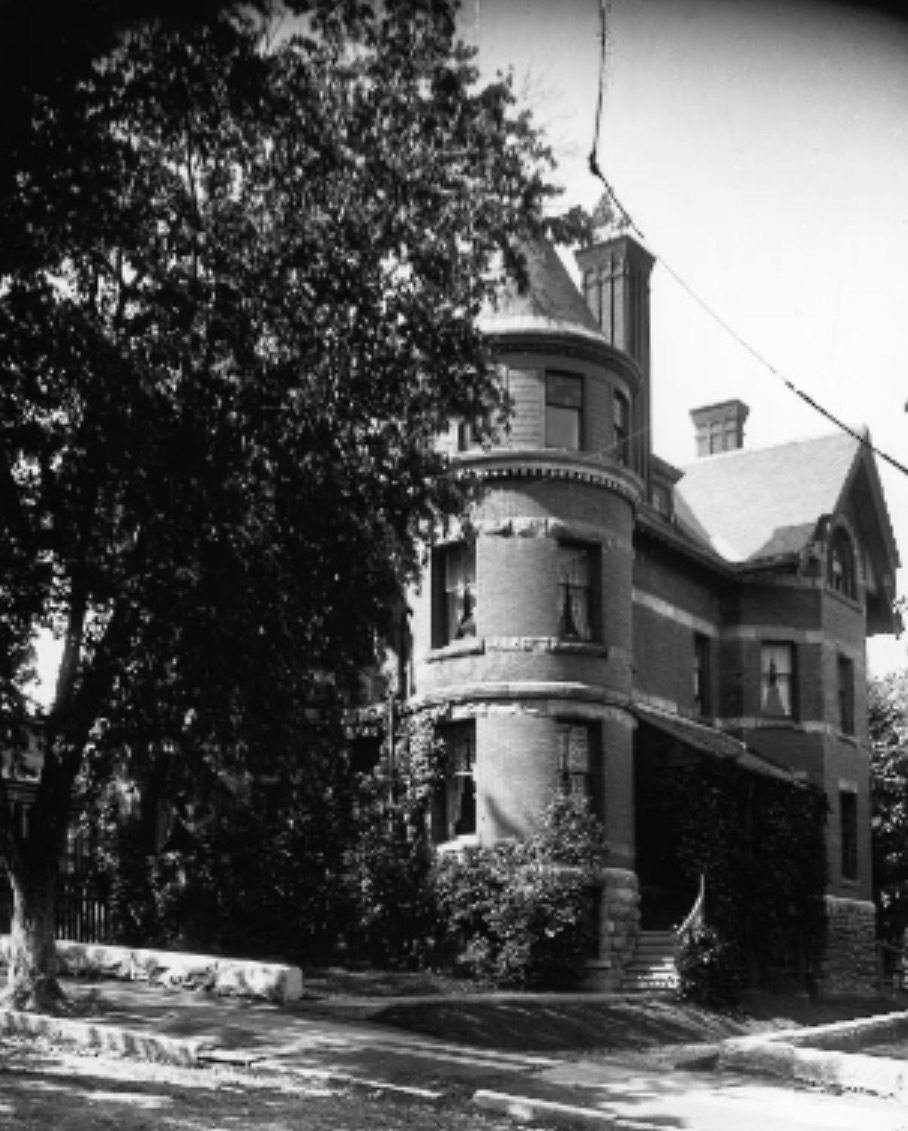
Mrs. Charles G. Hope’s beloved home was a large house, on Drummond Street. The shadowy and elaborate exterior is a clue about the interior
McCord Stewart Museum Montreal
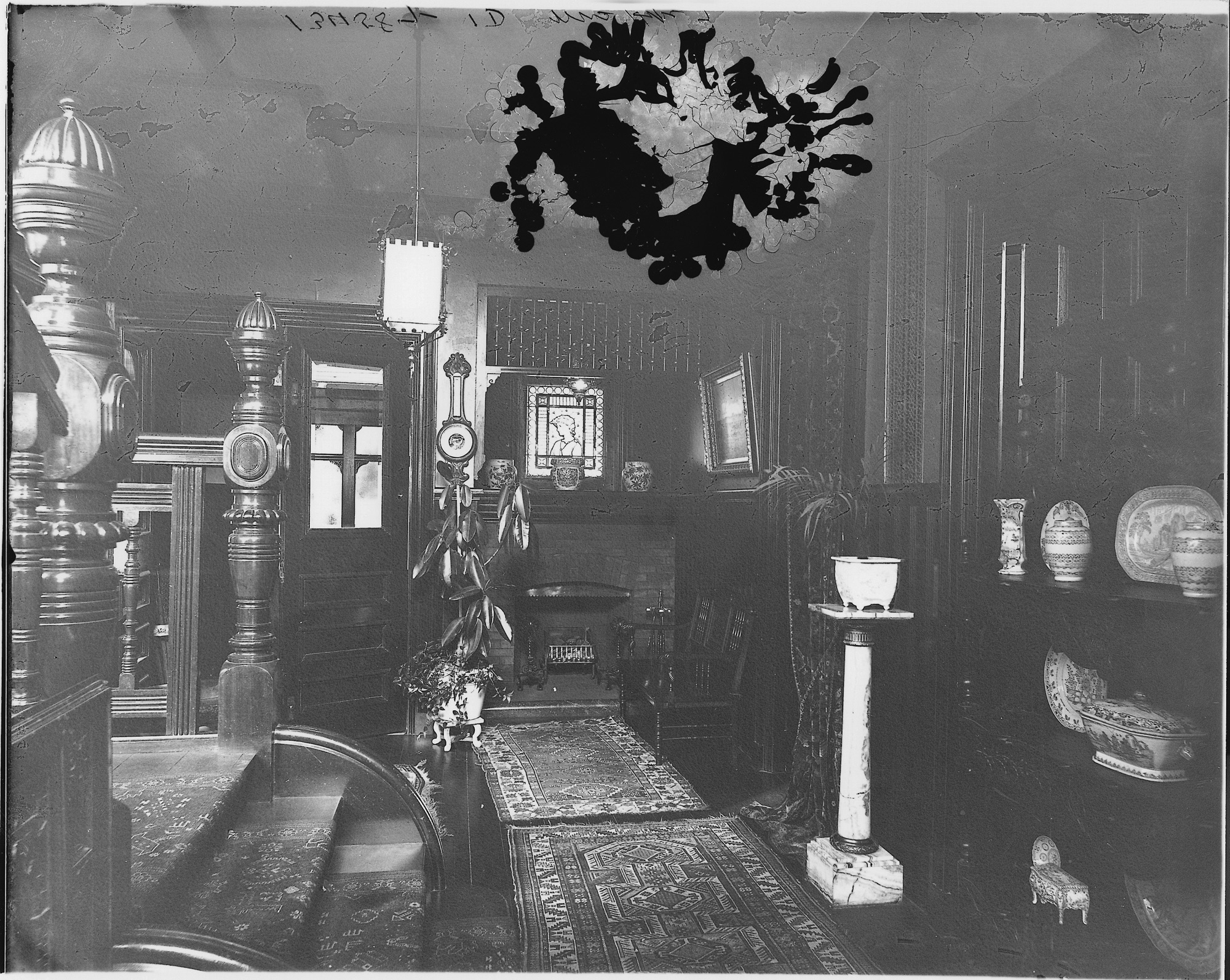
A damaged photo of the foyer shows it was dominated by a huge staircase. It looks like the windows in the front were heavy leaded glass. Figurines and pottery abound.
McCord Stewart Museum Montreal
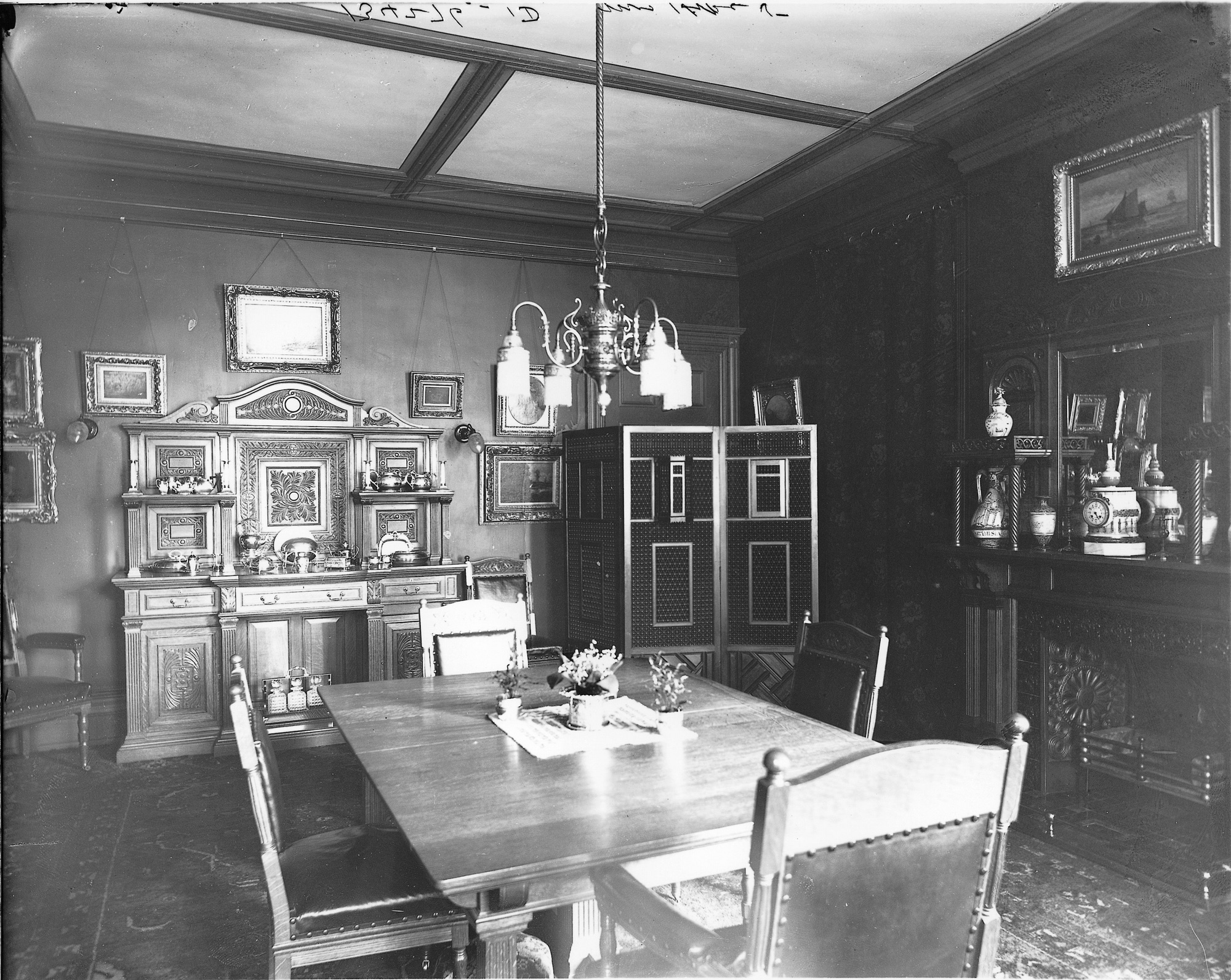
The dining room I rather like. It’s got a lot of potential. It’s crowded but it’s the only part of the house with a surface that is not covered in things.
McCord Stewart Museum Montreal
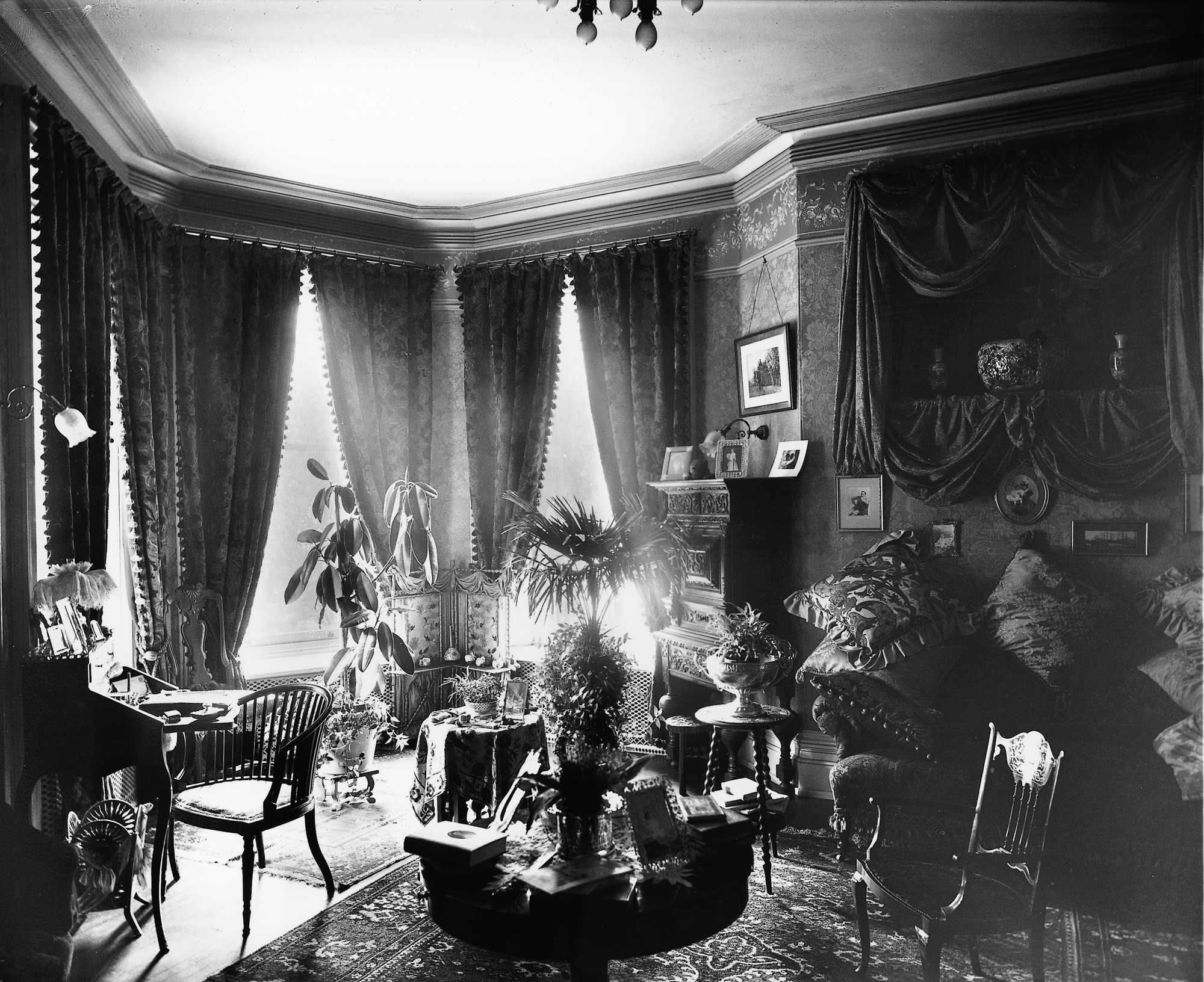
There weren’t a lot of places to sit in this unnamed area of the house. Most of the space is devoted to pillows and displays. The heavy curtains might be lovely.
McCord Stewart Museum Montreal
One corner of the drawing room is blocked by a curtain. All the furniture seems to have been pushed into one corner but I’m willing to bet there is more out of the frame.
The photo is staged, in the sense that someone tried to make it look refined with some artistic confusion. It gives me an anxious feeling . There are knickknacks everywhere, especially on the tiny table next to the straight back chair. I’m curious about the gothic cabinet suspended on the wall above the piano. What could that be?
There is a window in this room but I suspect it was never opened. Mrs. Hope placed so much fabric and glass on it, it’s like a guard against anyone who might have wanted a breath of fresh air.
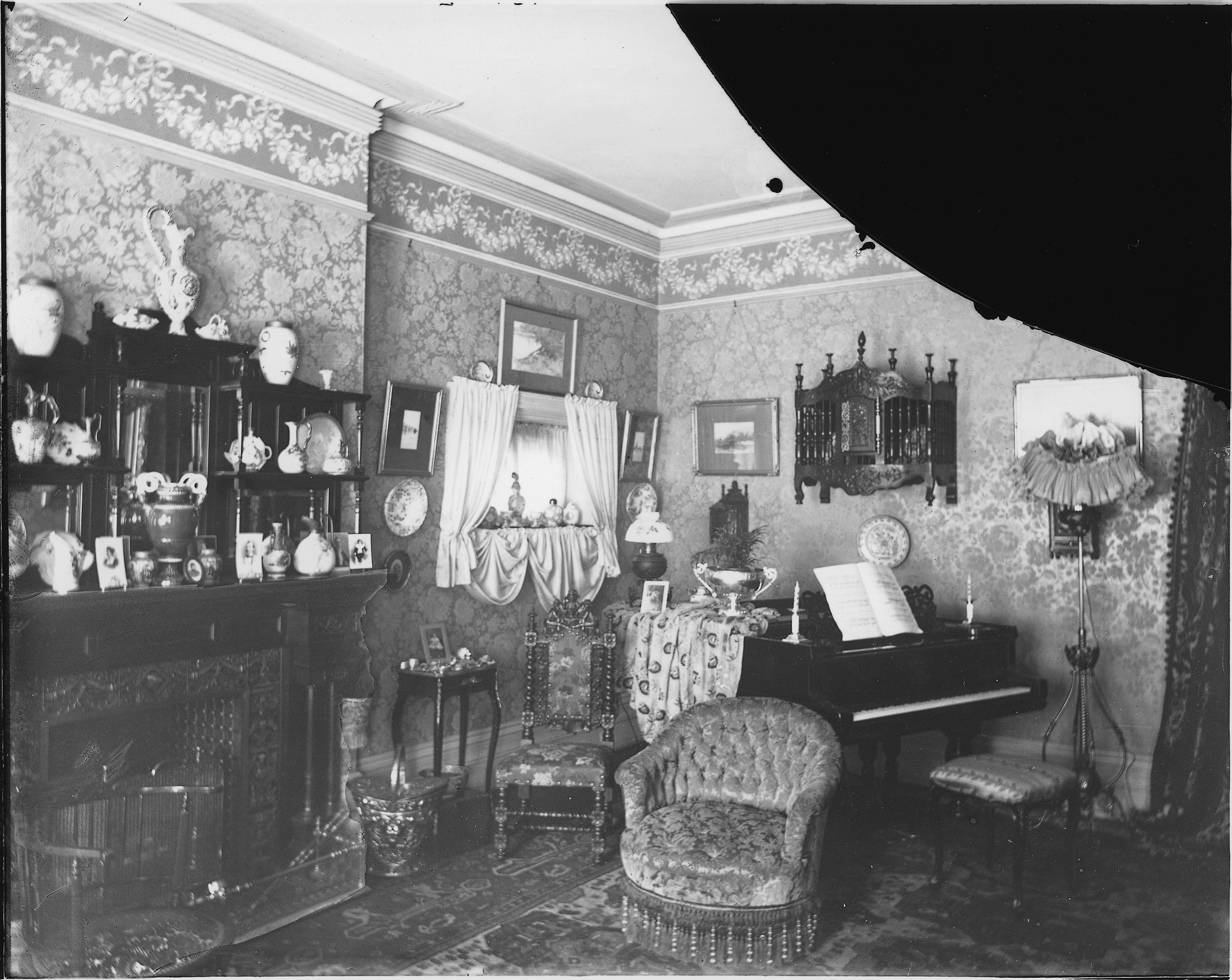
McCord Stewart Museum Montreal
Mrs. Hope filled the living room mantle and the long table by the windows must’ve been inadequate for the other chachkies. If you zoom in, you’ll see she has two ornamental tables atop the long table and their surfaces are covered too!
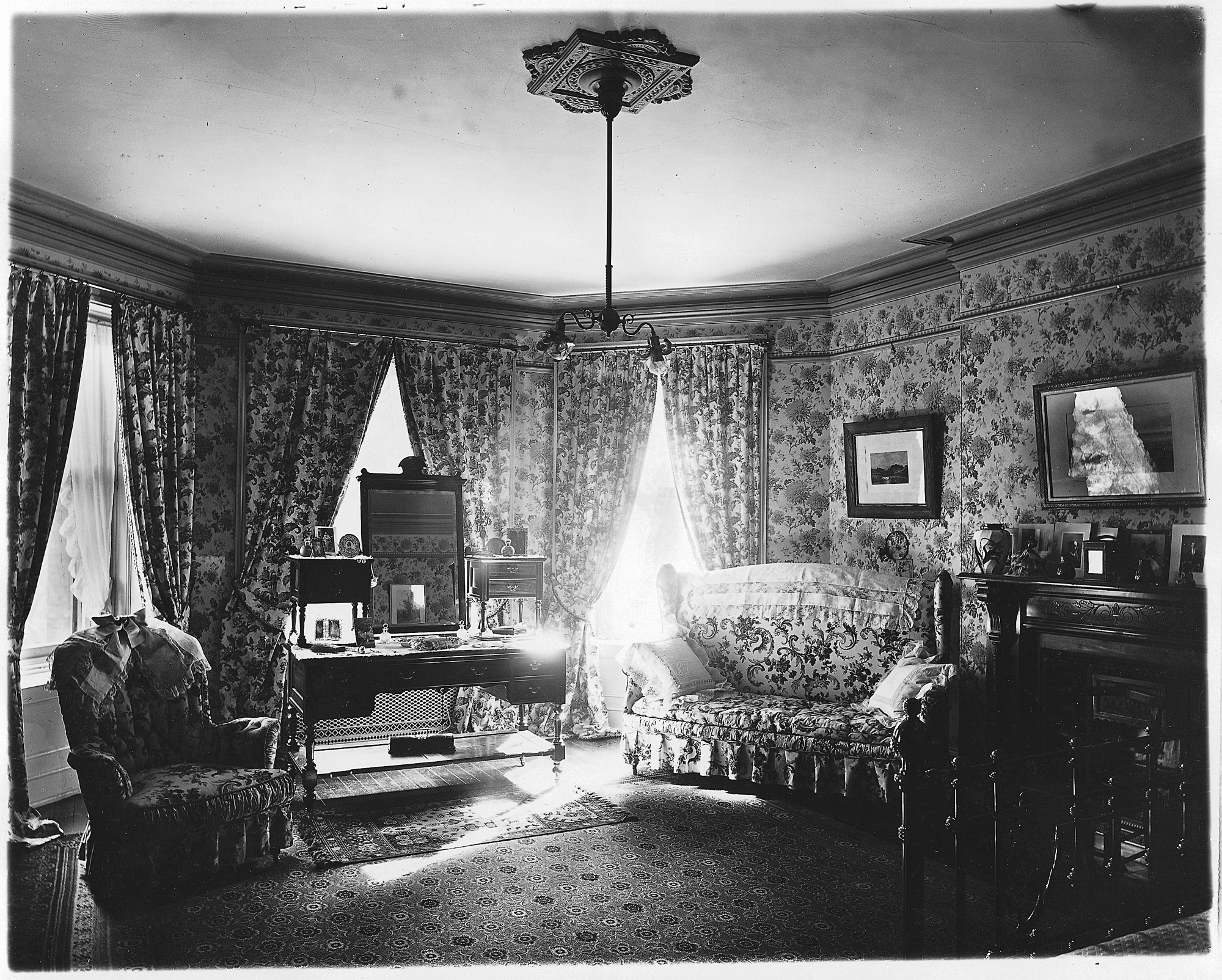
McCord Stewart Museum Montreal
If you guessed Mrs, Hope neglected the bedrooms, you would do her an injustice. Her touch is evident here. It looks like a guest bedroom, where every inch of space has been thoughtfully covered in items.
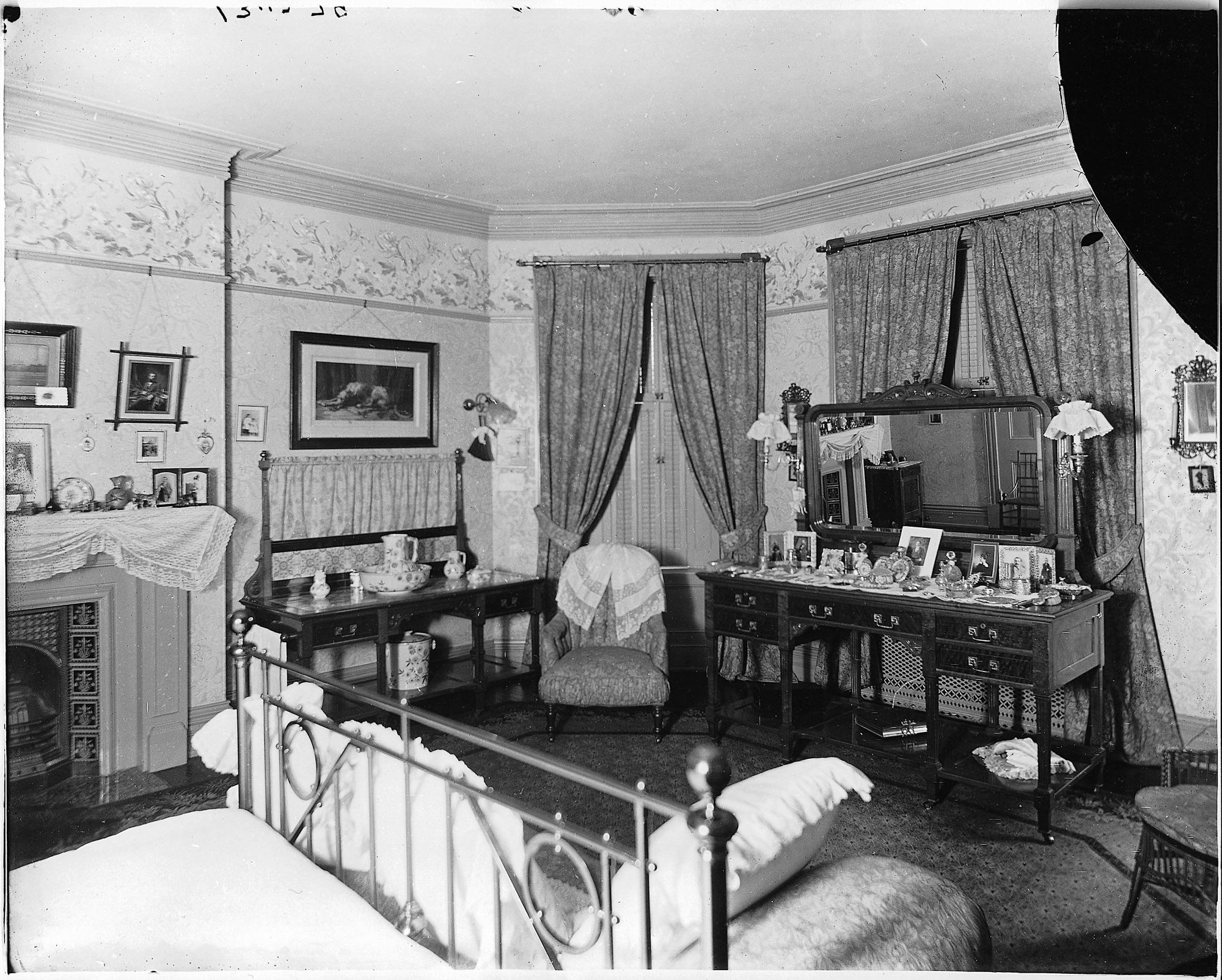
.McCord Stewart Museum Montreal
I thought I had one more picture but I can’t find it and we got a good look, didn’t we? I didn’t mention the busy wallpaper and absence of light but it definitely helps to create the atmosphere.
What do you think? Am I too hard on Mrs. Hope’s style? I’m probably too minimalist in theory but in practice I have way too much stuff! My house couldn’t withstand my own critique!
 old spirituals
Could poor old Ed Burdick be under all those pillows in one of those pictures? This lady definitely knew how to smother a home. Those heavy draperies and clutter on every surface are overwhelming. I believe the cabinet above the piano is a What-Not cabinet. I see what looks like a China plate on display inside. I’m surprised she doesn’t have a beautiful embroidered velvet and satin crazy quilt displayed in the parlor. They were all the rage at that time.
LikeLike
Interior design in the early 20th century was different compared to today due to both architecture and design practices.
Ceilings were higher, offering much more area to be covered with decorations. Notice the horizontal moulding high on the wall in several of the photos; that is a “picture rail” positioned about 2 feet below the ceiling. It is intended especially for hanging paintings and other framed items by a wire; it provided strong support for heavy objects and allowed for positioning any size object at any level on the wall. Today’s practice is to attached the wall hanger into the wall, at a position that allows the item to hang at eye level. In the photos, some of the framed items are considerably above eye level.
Also, furniture was heavily constructed and more ornate. These features, I believe, make a room look and fell more cluttered.
Lastly, I believe that Americans in that era wanted to project affluence by displaying everything from simple tchotchke, to family heirlooms, to valuable newly purchased items. Those items were placed with some sense of interior design, but sometime they were placed wherever there was an open space available.
LikeLike