Musical accompaniment: Heartaches by Al Bowlly
Do you ever imagine what your life would be like if you lived in another time? I have a well-known preoccupation with the early 1900s. But I might be even happier living in the 1930s, if only for the indoor plumbing and those incredible cars they drove.
The 1930s are not a decade most people associate with happiness, but in my version, it would be glorious. I would hang around with John Barrymore and Barbara Stanwyck. I’d fraternize with James Cagney and Dorothy Parker. I’d marry Orson Welles and shun Ernest Hemingway. I’d live in a palatial estate.
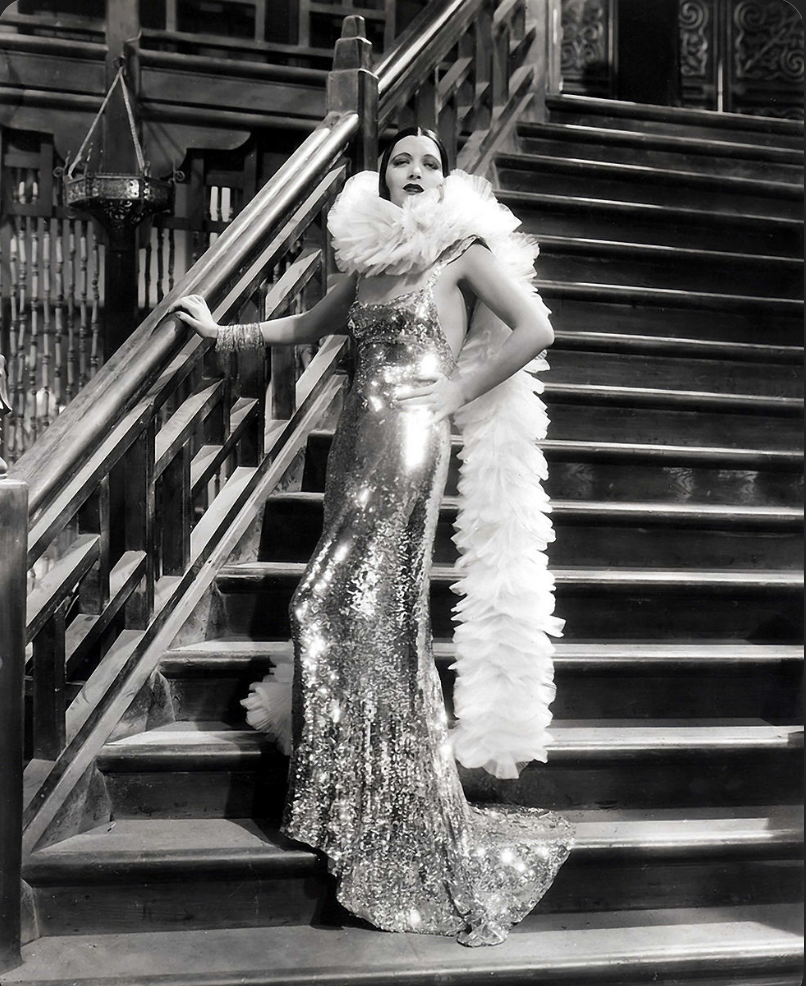
As an actress, I could take or leave Kay Francis. However, I would love to borrow her evening gown. It looks like the kind of apparel you could wear once only, but I would challenge that. Checking the mail? Chit-chatting with the neighbors? Not without my floor-length metallic evening gown, I’m not.
screenchic
It makes me wonder, why don’t we make beautiful things now?
Take buildings for instance. We spend plenty of money on construction. Buildings often take a long time to erect. But then the results are underwhelming. There’s no new building that cause me to think, “The splendor of this building is truly worthy of a metallic floor-length evening gown.” Or even one that demands a feather boa. As long as we’re building expensive things, why don’t we make them beautiful?
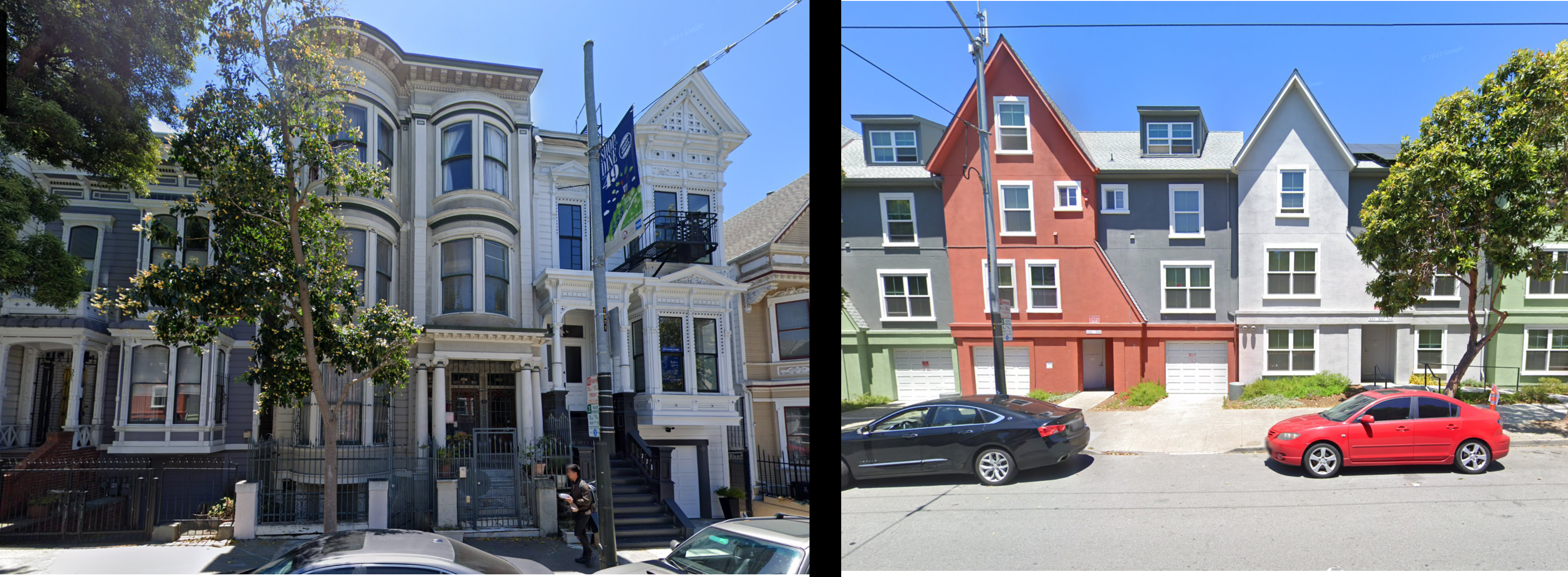
Last week I was on Haight Street in San Francisco. I passed these gorgeous old Victorian homes with curved bay windows and porticos, and gables and balconies and decorative trim. They were probably built around the same time but they’re not alike. You’d never find a Victorian home quite like these anywhere else on Earth. Someone designed these homes to be monuments to a beautiful world. They were built with craftsmanship and patience. They’re distinguished.
Directly across the street are another group of homes. They too look like part of a set. There’s nothing wrong with their appearance and I should say I’ve lived in places that didn’t look as nice as they do. But the comparison must strike even a casual observer forcefully. They’re flat. There’s no ornate detail, no decorative molding, no spindle work. You could find a house exactly like it in any other city. It looks like they could have sprung up overnight.
It didn’t occur to me to take a picture but Google Maps had it covered.
Google Maps
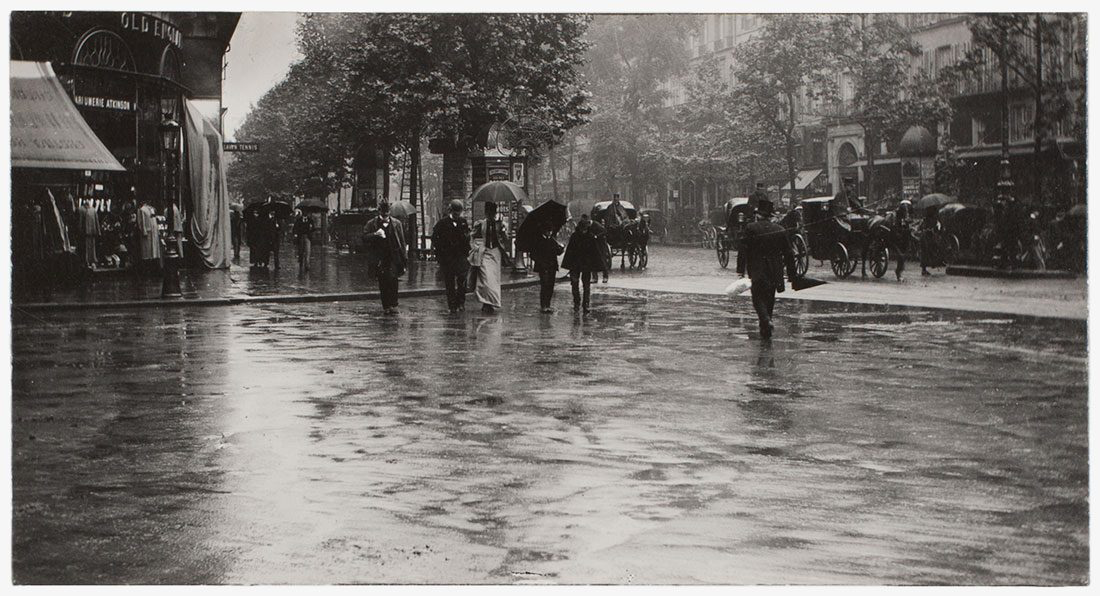
Anyway, what was this post even about? Ah! I wanted to show you a picture from 1894 by one of our resident photographers here on Old Spirituals, the prolific Alfred Stieglitz. He called it “A Wet Day on the Boulevard, Paris.”
Art Institute of Chicago
Could you imagine living in such a place? I don’t mean Paris, because that city suffers from the same problem we just examined in San Francisco. When the buildings fall into disrepair they’re replaced with modern construction. I meant the Belle Époque.
This gives Stieglitz’ photograph a frozen quality, like a fly in amber. He managed to capture a moment in time that is closed to us forever. Look at the carriages, the clothes, and the spotless streets. How I wish we could bring this lost world back again.


The 1930’s and those wonderful clothes!
LikeLiked by 1 person
weren’t they lovely? I love how beautiful and feminine the clothes are.
LikeLike
I relish The Gilded Age and the early 1900s, too. I think of them as the “Good Old Days,” vis-á-vis current social practices, norms and values. People lived a simple lifestyle, many agrarian in nature, that unencumbered them from the ills of society. It nurtured a naïveté about the world. The Amish of today are the closest to that era.
I must say, au contraire to the style of dress of that era. I do admire the dress standards of the time. But there is no way I want to wear a top hat, a suit and tie and high-top shoes just to go into public. And the thought of wearing a shirt and a separate starched collar is, especially now, something I would find very uncomfortable.
Just yesterday I said to my wife, “I’ve reached the point where all I want are clothes that are easy to put on, comfortable to wear and easily removed.” Then I added, “And, packaging and jars that are easy to open.” In 1909, opening a glass jar wasn’t a challenge; it didn’t require a special tool, gripping material nor 15 minutes of your time. Oh, I long for the good old Mason Jar!
LikeLiked by 1 person
I imagine if you went to your local park or the grocery store, wearing a beautifully tailored suit, high top shoes, and a top hat, your appearance would not go unremarked. I’m all for improving how we all dress, but we’ll have to work our way up to top hats.
I hear you about the hard-to-open jars! Have you ever tried Talenti gelato? It’s heavenly. They’ve perfected it. But they’ve also chosen to distribute it in jars that are specially constructed so that no human hands can open them. So unless you live next door to a cooperative gorilla who will open it for you, you need to purchase special tools to get to the gelato.
LikeLike
yes. the way you write about it seems to call us to better times
LikeLiked by 1 person
thank you, Ruby!I hope so. I want people to see how great our era was.
I’ve been working on a little project that I hope will be interesting to you and other people here. It’s not specific to the early 1900s but it has to do with how our language changes are linked to how we think and act.
LikeLike
Hm ok looking forward to it
LikeLike